Annual submission of a BPS application is mandatory in new Organic Farming Scheme
The Scheme reopened last Monday...
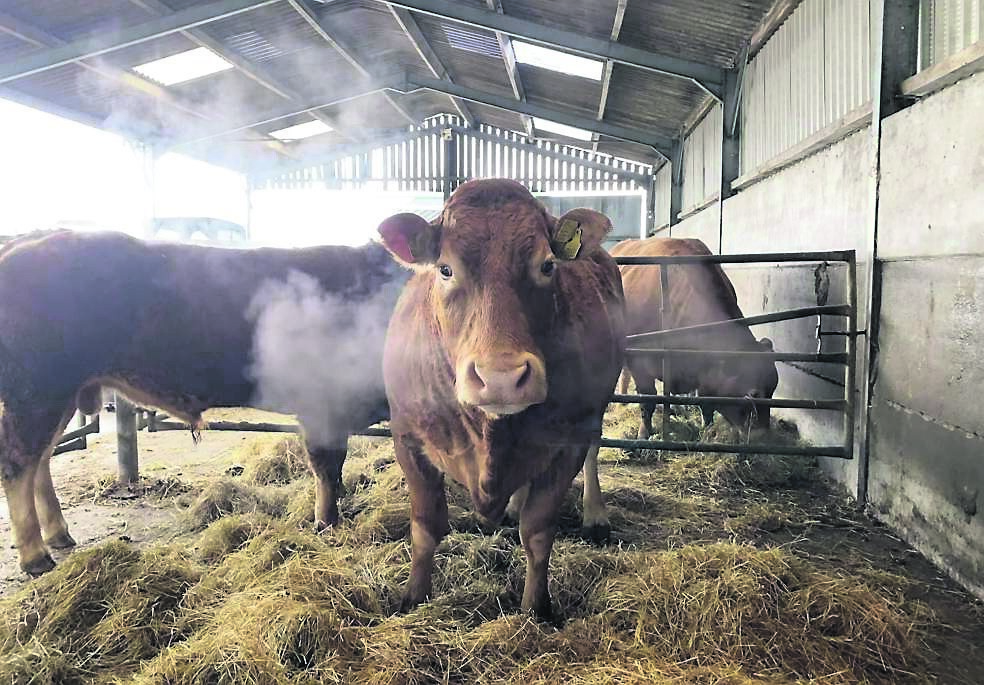
Bedding materials, preferably organic, must be provided. If 50% of the floor area is bedded, up to 50% of the floor area may be slatted. File Picture.  

Bedding materials, preferably organic, must be provided. If 50% of the floor area is bedded, up to 50% of the floor area may be slatted. File Picture.  

Minister of state Senator Pippa Hackett this week reopened the Organic Farming Scheme for new applications from farmers.

What is the Organic Farming Scheme?

It provides financial support to farmers, to encourage production of organic food.

How do you qualify?

To be eligible for payment, you must:

n produce livestock and crop products according to EU organic standards.

n complete an approved training course.

n farm and manage the land included in the application.

n register with, and be approved as an organic operator, by a private inspection body.

n have a minimum farm area of three hectares, for horticultural producers the minimum is one hectare.

Partial conversion

Partial conversion of the farm to organic farming is allowed, however:

n if organic and conventional crops are to be produced, different species, or different varieties that can be easily differentiated at all stages of growth and production, must be used.

n if organic and conventional livestock are produced, different species must be used.

Frequently asked questions

If you want to go organic, what do you need to consider?

First, decide is organics an option for you. If you can answer yes to some or all of these questions, then you should consider switching to organic production.

Crop systems

1. Can you incorporate a grass/clover break into your rotation?

2. Do you have a source of farmyard manure/slurry on or near your own farm?

3. Can you see yourself farming without relying on pesticides and synthetic fertilisers?

Animal systems

1. Is your current stocking rate below two livestock units per hectare?

2. Can your animal housing be modified to incorporate a bedded lying area?

3. Do you already use no or relatively low levels of synthetic fertiliser?

What factors should
I consider?

Conversion

Prospective organic farmers must undergo a two-year conversion period before their produce can be sold as organic. Costs associated with conversion include output reduction due to changes in production practices, investment in machinery, certification and inspection costs, etc.

Regulatory requirements

Organic production is governed by EU regulation, which covers all aspects of production, processing, distribution, marketing, etc.

When considering conversion, prospective organic farmers should identify and consider potential changes needed in their holding and farm practices, specifically in relation to welfare and housing, production methods, veterinary, and purchase of stock.

Animal welfare and housing

Under the scheme, permanent housing of all stock is not allowed, while the prolonged confining and tethering of animals is also prohibited.

Bedding materials, that are preferably organic, must be provided.

Provided that 50% of the floor area is bedded, up to 50% of the floor area may be slatted.

Castration and dehorning are permitted where it is judged to be necessary for considerations of safety and welfare.

Production methods

Synthetic chemicals, fertilisers, pesticides and herbicides are all prohibited under organic farming.

Organic material must be used as manure.

Planned rotations are regarded as an essential part of successful organic production, as they help to maintain soil fertility, reduce weeds, pests and disease, provide sufficient organic feed for stock, and reduce risks by maximising the range of cash grown crops.

Veterinary and livestock nutrition

Only where a known farm problem exists may specific drugs be administered.

However strict identification procedures and withdrawal periods must be observed.

Treatment of healthy animals and the routine use of prophylactic drugs is prohibited.

Antibiotics are not generally permitted, and fertility drugs are not allowed.

Only where a known dietary deficiency exists in home grown feeds is mineral supplementation permitted.

Purchase of stock

All purchased livestock should be sourced from organic producers.

In practice, due to limited availability, producers are permitted to buy in livestock from conventional sources, and these animals must undergo a conversion period.

The purchase of non- organic stock however is controlled by your Organic Control Body and may require a derogation from the Department of Agriculture, Food and the Marine, as the competent authority.

How do I start the process?

As a starting point, it is recommended that you discuss the organic option with your agricultural advisors.

They may also advise you on the suitability of organic production to your holding, on the changes required to convert to organic production, and assist you in drafting the conversion plan which you require.

Alternatively, you may draw up this plan yourself.

All organic operators must be certified by an Organic Control Body.

There are two Organic Control Bodies who certify land based organic operators.

They are: Irish Organic Association (info@irishoa.ie – 090 6433680) and Organic Trust CLG (info@organictrust.ie – 045 882377).

Organic operators must also register as organic with the Department of Agriculture, Food and the Marine.

Registration with the Department is usually progressed through your respective Organic Control Body.

Conversion plan

Farmers interested in converting to organic must prepare a plan which involves a detailed description of:

n management practices on the farm.

n the changes required on the farm.

n soil and faecal analysis.

n livestock housing.

n animal health.

n and a land/crop rotation plan.

The plan can be drawn up by the farmer alone or with the help of a farm advisor. A template to assist in drawing up this plan is available from the Organic Control Bodies.

A step by step guide to conversion will be published on the Teagasc website next week.

How does all that link to the Department’s scheme?

The Organic Farming Scheme is co-funded by the EU and supports conversion to and maintenance of commitment to organic farming through area-based payments.

In order to apply for the Organic Farming Scheme, you must have an organic licence from an Organic Control Body.

You must also meet the Scheme conditions regarding minimum area and educational requirement.

Payments under the Organic Farming Scheme are based on areas declared as in conversion and/or organic on your annual Basic Payment Scheme application.

The annual submission of a BPS application is therefore a mandatory requirement.

Who is the scheme open to?

The Organic Farming Scheme will be open to applications from all sectors.

In the event that the Scheme is over-subscribed, successful applications will be determined by a ranking and selection process.

Marks will be awarded for each sector, with the aim of increasing the area under organic production, while prioritising areas deemed to be in deficit.

The areas deemed to be in deficit by the Organic Strategy Group are dairy, tillage and horticulture.

Minister Hackett has stated that she wants to encourage young farmers to convert to organic farming, so will be making provision in the selection process to achieve this.

Furthermore, Minister Hackett has said, “I will also ensure that farmers who were not successful in gaining entry to the previous scheme, but who have continued to farm organically, have their commitment acknowledged, through priority access.”

While the ranking and selection process will prioritise the areas deemed to be in deficit, it is believed that the level of funding provided for this new Scheme will facilitate the entry of 400-500 new farmers into the organic farming system.

This should allow successful applications from enterprises other than those deemed to be in deficit.

What is the
application process?

Applications must be submitted online through agfood.ie.

Instructions for registration on agfood.ie can be found online at www.agfood.ie or you can contact the agfood online services helpline in the Department’s Portlaoise office on 0761 064424 or email to agfood@agriculture.gov.ie.

A guide to the OFS application process is available on the Department’s website at https://www.gov.ie/en/service/d46aec-organic-farming-scheme/.

When will I know if my OFS application is successful?

The closing date for the Scheme is April 30, 2021.

The detail required to process your application is obtained from your Basic Payment Application.

The closing date for BPS applications is Monday, May 17.

Once administrative checks on BPS applications are finalised, the selection process in respect of OFS applications can commence.

It is anticipated that it will be September or early October therefore before OFS applicants can be informed if their application is successful or not.

Where can I get extra information on organic
farming?

Teagasc have developed a series of new organic factsheets to give information to farmers considering organic enterprise options.

In addition, a new guide “Organic Farming – A Step-by-Step Guide to Conversion” has been developed and is available on the Teagasc www.teagasc.ie/ organics website.

What are the full terms
and conditions?

Copies of the Organic Farming Scheme terms and conditions are available on the www.gov.ie/en/service/d46aec-organic-farming-scheme/ organic page.

More in this section

Farming

Newsletter

Stay ahead of the season. Sign up for insights, expert advice and stories shaping Irish agriculture.

Cookie Policy Privacy Policy Brand Safety FAQ Help Contact Us Terms and Conditions

© Examiner Echo Group Limited