'Overall soil fertility reached a very low status' - ICOS
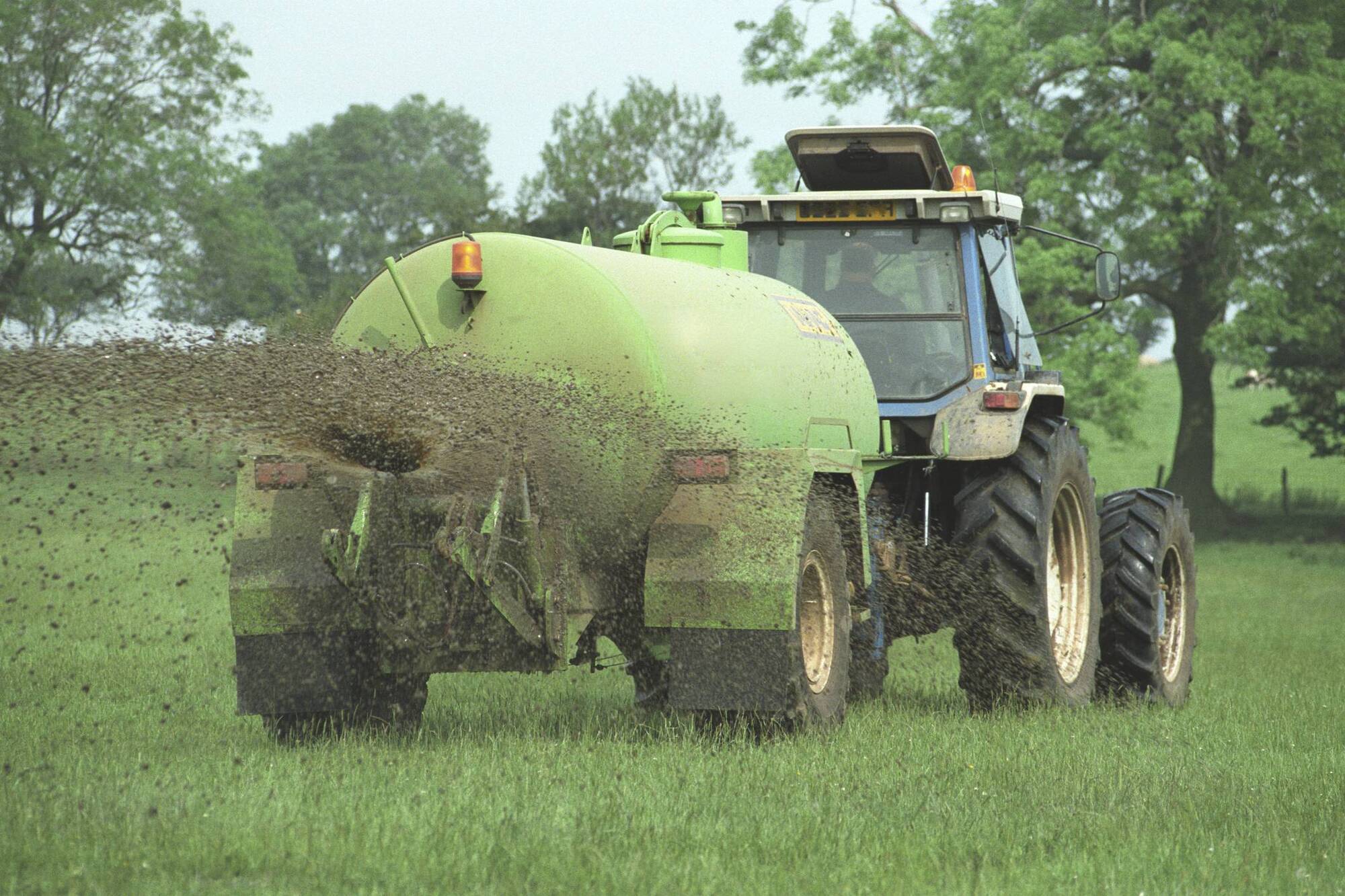
ICOS said new training initiatives should include agricultural contractors who spread the vast majority of slurry. File Picture.
ICOS, representing co-ops, has called for the provision allowing phosphorous build-up on farms with stocking rates of 130 kg of N/Ha or above to be allowed continue.
In its submission to the review of Ireland’s Nitrates Action Programme, ICOS said overall soil fertility in Ireland reached a very low status between 2013 to 2015, with just 10% of soil samples showing good overall fertility in terms of pH (over 6.2), P and K (index 3 or better).
With 62% of soils index 1 or 2 for P, ICOS said the build-up of P on low-index farms enables optimum soil fertility for farm sustainability.
Farmers availing of these P allowances are required to undertake a nutrient management plan and participate in a Knowledge Transfer programme, which ICOS says should be continued.
ICOS welcomed the nitrates review proposal for more streamlined record-keeping but said the Department of Agriculture, Food and the Marine (DAFM) must fully consult with stakeholders prior to changes being implemented (a regime similar to that for pesticides, where sales are recorded on a farm-by-farm basis, may be considered).
ICOS expressed support for the broad principles of the Ag Climatise and EU Farm to Fork Strategies, which set out very ambitious targets to reduce overall fertiliser usage.
“However, it is vital that the reporting of fertiliser sales, if implemented, does not result in excessive costs at local level. The continued emphasis must be on the correct fertiliser application based on soil testing and nutrient management planning,” said the co-ops’ representative body.
The organisation aslo highlighted its support for increased requirements to participate in training courses or knowledge transfer events, for all farmers and advisors.
“As a starting point, no farmer sets out to cause environmental harm, as farmers are proud custodians of the natural environment. Education should never be seen as a burden, and the sharing of best practice will result in better outcomes.”
ICOS added that the readiness of farmers for knowledge transfer on water quality has been verified in the Agricultural Sustainability Support and Advisory Programme (ASSAP), in which 96% of farmers contacted in priority areas for water quality action were willing to engage.
ICOS suggested mainstreaming of sustainability advice across all advisory and training platforms should be accelerated, including Teagasc, DAFM, co-ops, private advisors, and farm contractors.
It said knowledge transfer or training activities should incorporate interpretation of soil test results is critical.
“There is huge room for improvement in this area,” said a spokesperson.
ICOS also proposed mainstreaming use of online nutrient management planning tools and said nitrogen use efficiency is a key metric to track progress at farm level.
“Developing a greater understanding of a farm’s individual NUE, and setting improvement targets, should be part of future training.”
ICOS suggested Teagasc develop a knowledge transfer campaign for NUE, similar to that of Grass10.
New training initiatives should include discussion groups, agricultural contractors (who spread the vast majority of slurry), and dairy co-op farm advisors and branch staff or managers, alongside Teagasc and other private farm advisors, said ICOS.
Streamside visits as in ASSAP were suggested, in future training.
ICOS said testing of slurry for nutrients by farmers or contractors should be considered and built into record-keeping.