Covid-19 puts new value on dairy ingredients
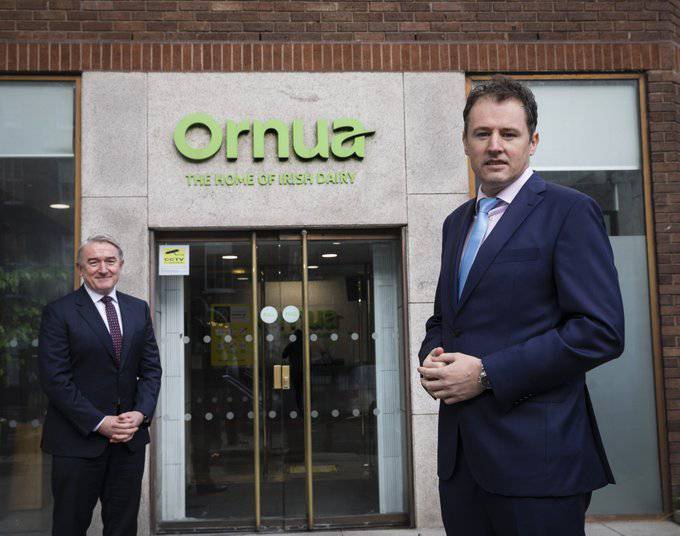
John Jordan, CEO Ornua with Minister for Agriculture, Food and the Marine, Charlie McConalogue.
Butter is back in trend and there has been a huge increase in sales with the Kerrygold brand because of more home consumption and in particular with the increase in home baking.
These were the sentiments expressed this week by the CEO of Ornua, John Jordan, who spoke at length during last Thursday's Irish Creamery Milk Suppliers’ Association (ICMSA) AGM about the impact of Covid-19 on the business, the challenges it continues to face and its mitigation plans for Brexit.
He said a "hard" Brexit would cost Ornua over €100m per annum.
Ornua, meanwhile, is Ireland’s largest exporter of Irish dairy products, exporting to 110 countries worldwide. It has annual sales of over €2.3bn, employs 2,400 people and operates from 10 business units worldwide, including 12 production facilities in Germany, Spain, the UK, Nigeria, Saudi Arabia and China.
The Group is structured across two divisions - Ornua Foods and Ornua Ingredients - and while Covid-19 severely impacted one side of the business, it was the ingredients business that held out over the last few months.
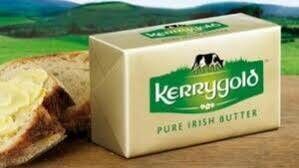
“Overall, though, there has been a positive impact for Ornua - it brought a huge boost to the Kerrygold brand with more home consumption and in particular with home baking and the increase we saw with that,” added Mr Jordan.
“Butter is back in trend and is therefore getting a lot more usage.
“Our ingredients customers also saw a positive impact; for example we supply Nestlé with cheese and they put it on pizzas. Those pizzas were sold as frozen food in the retail sector which saw huge demand and resulted in a growth in our supply chain and to companies like Nestle.”
The CEO went on to say that “by contrast” the food service side of the business “collapsed”.
“The food service side - where we have a very substantial business across continental Europe and the US - collapsed and that put huge pressure on very significant parts of our business,” he continued.
“While the business’s main focus was the health and safety of our employees we also had to ensure that we kept the supply chain and markets open for Irish dairy products.
“Thankfully we did that - none of our facilities closed since the start of the pandemic.
“We were also focused on what was happening to our customers, many of whom came under huge pressure particularly in the retail sector.”
In 2020, Ornua bought €1bn worth of dairy products from its member co-ops but looking ahead, Mr Jordan says it’s very, very uncertain”.
“There is great hope and positivity around what a vaccine might mean but that won’t be short term and even if a vaccine is rolled out in some countries over the next few weeks it is going to impact 2021,” he continued.
“In terms of consumer consumption we don’t know at this stage whether people will continue to eat at home or whether they will be dining out in restaurants.
“There is also the very significant economic impact - the UK’s GDP shrunk by 11% in 2020 - that is the worst economic fall in a year since 1666 when we had the Great Fire of London.
“That fall is replicated in other markets - Ireland’s unemployment rate is running at 21%, we have a weak dollar and we also have to contend with Brexit and tariffs, etc.
“25% of Ornua’s exports go into the UK so the challenge for Ornua is when it comes to Brexit and if there is a hard scenario with World Trade Organisation (WTO) rules that will cost us over €100m per annum.”
Even a soft Brexit, he added, “will add costs for us and make us less competitive”.
To mitigate Brexit, Ornua has exported more stock into the UK so there won’t be delays to customers with product.
The company has also hired more staff and spent additional time with its customers there.
“We have to focus on and manage continuity of supply to our customers when Brexit happens on January 1,” Mr Jordan continued.
“A hard Brexit is going to have a very real impact on Ornua on the return of our products and ultimately a significant impact on milk price.
“There is no market that can directly replace the UK; my own hope and belief is that a deal will be done but Brexit is going to add costs for us.
“The future is bright for dairy; consumers have gone back to basics, they are looking for natural foods and Kerrygold plays a huge role in all of that.
“Dairy growth is outperforming retail growth, the world’s population is growing and we as a nation are very well placed to capture some of that.
“That is a very positive platform on which we can look forward.
“As a company we are focused now on staying close to our customers.”
There have been very significant changes at Ornua in terms of governance structure. It all came about because of conflicts of interest among members of the former board.
The board now consists of the eight co-ops, Arrabawn, Glanbia, Dairygold, Carbery, Lakeland Dairies, North Cork, Aurivo, and Tipperary, all of whom appointed a non-conflicted nominee to the board.
Of those eight, three are farmers and five are from the business perspective.
The Irish Creamery Milk Suppliers Association (ICMSA), Irish Cooperative Organisation Society (ICOS) and the Irish Farmers’ Association (IFA) have three representatives.
“For us as a business, our purpose is creating value for Irish farming families,” said Mr Jordan.
“Because we now have farmers on the board, we have been able to change our relationship with the co-ops, and can now sit down on a much more structured and formalised basis and have much more robust and commercial engagement with the co-ops.
“The move has been both positive and progressive for us and bodes well for the future.”