Thatching is an integral part of our national DNA and must be preserved

Ní hé lá na gaoithe lá na scolb (a windy day is not a day for thatching) is a wise Irish seanfhocail that has recently been given a new focus against a background of house insulation, climate change, and other issues.
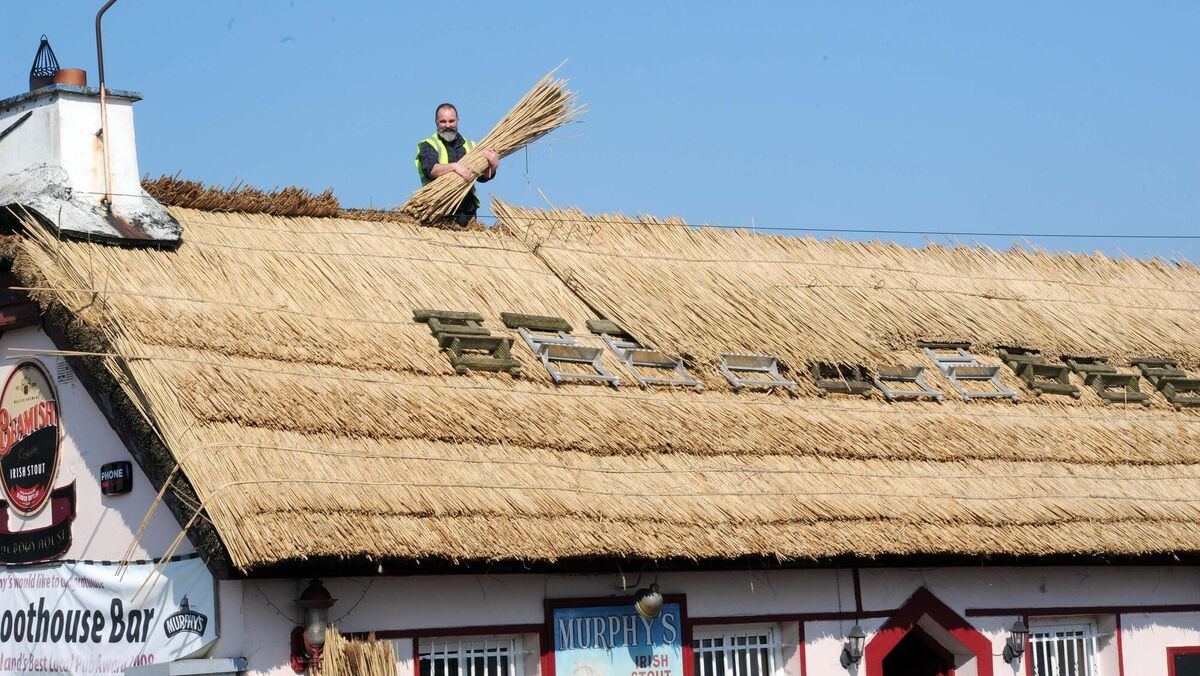
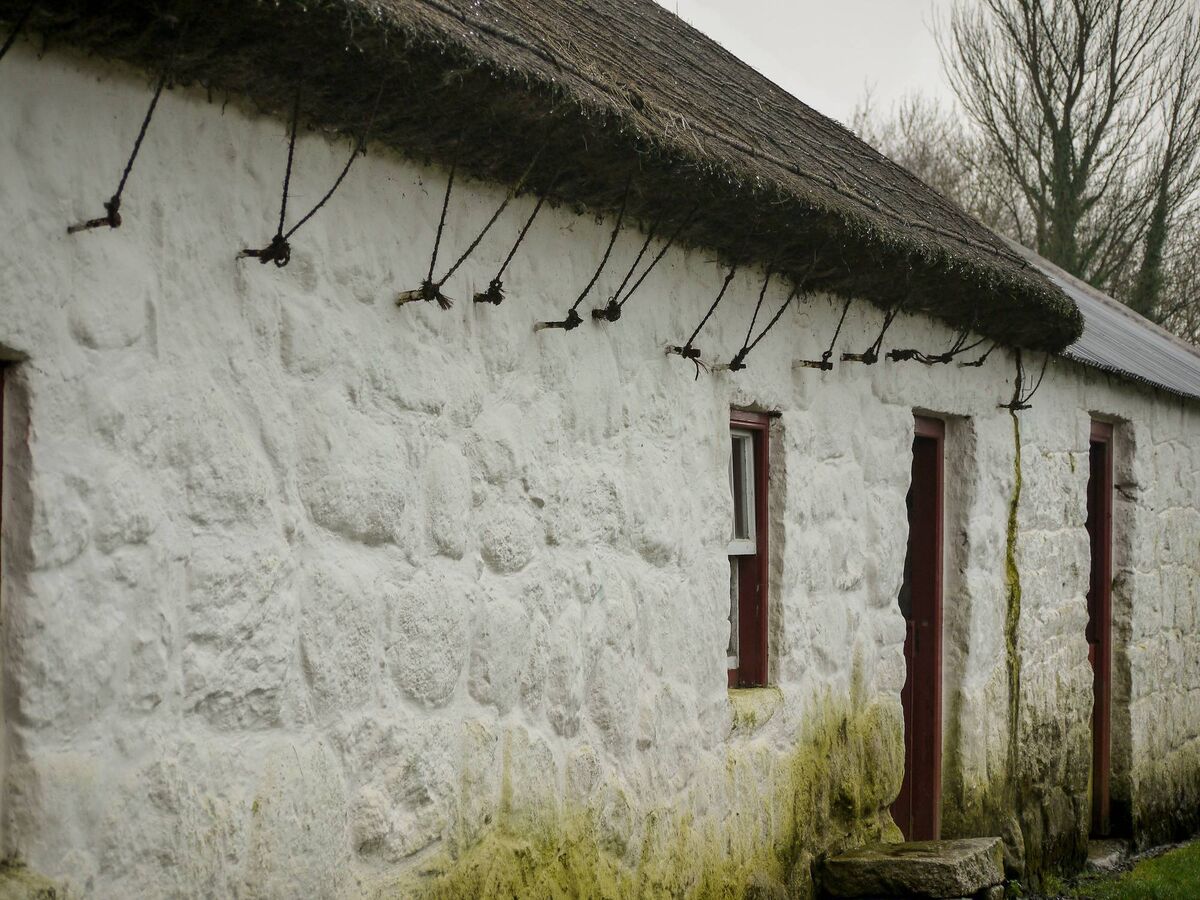
Thatched houses were once a large part of the rural landscape. They were warm in winter, cool in summer but are now a fragile part of the country’s build heritage with fewer than 3,000 of them still in existence.
Most of them are in rural areas and their maintenance can be more challenging and costly than houses with slate or tiled roofs. Some are in decay because their owners can’t afford the restoration costs involved.
These houses were built by people, who used materials available locally such as reed harvested by fishermen in the Shannon estuary, and followed traditional thatching skills handed down through generations, often in the same families.
Modern homes with central heating began to replace the thatched houses in the middle of the last century, but holiday homes and folk parks soon developed with picture postcard cottages becoming a popular destination for tourists whose own countries didn’t have such a rich heritage of buildings.
Housing, Local Government and Heritage Minister Darragh O’Brien recently described our built heritage as the signature that each generation has left on our communities.
Those textured layers of physical history are part of our national DNA.
There are many fine examples of thatched cottages including those in Adare, Co Limerick, which dare from the 1830s when Caroline Countess of Dunraven, wife of the 2nd Earl, ordered that they be built for the estate’s servants and workers.
In more modern times, the Heritage Council funded the refurbishment of a thatched house and the conservation of its contents at Mayglass, Co Wexford, during the period 1998-2000. It is a model for others who wish to undertake work on similar buildings.
A review of the supports available for the renewal of thatched roofs in owner occupied houses, given the fact that the cost of carrying out such work has increased, was sought in the Dáil earlier this month by former agriculture minister Michael Creed.
Mr O’Brien said in general a grant of up to €3,810, or two thirds of the approved cost, whichever is the lesser, may be payable in respect of necessary works under his Department’s thatched roof grant scheme.
In the case of medical card holders however, a grant of up to €6,350, or up to 80% of the approved cost, may be payable in respect of houses situated on the mainland, rising to €8,252 where they are situated on a specified off-shore island.
Financial support is also available for the protection of heritage buildings and historic structures including those with thatched roofs through the Built Heritage Investment Scheme and the Historic Structures Fund, mainly administered by local authorities.
Earlier this month, Minister of State Malcolm Noonan announced that €3m has been allocated for the Built Heritage Investment Scheme in 2021, an increase of 20% from last year, and a further €3 million for the Historic Structures Fund — a rise of over 75% from 2020.
Mr Noonan said now, more than ever, communities must be supported in their efforts to repair, preserve, and restore the built heritage.
Both schemes will support the owners and custodians of protected structures in every local authority area across the country in 2021. Over 450 projects have been funded this year.
Minister of State Peter Burke said it was great to see central and local government working together with owners to progress such projects, ensuring that our heritage is protected as a community asset.
“Covid-19 has allowed many of us to spend more time in our local areas and schemes such as these help us to develop an increased feeling of identity as members of shared communities,” he said.
The issue of securing insurance cover for buildings with thatched roofs was specifically addressed by former Minister Josepha Madigan in the Dáil last year after it was raised by Wexford TD James Browne, now a Minister of State.
He said his attention had been drawn to the fact that owners of buildings with thatched roofs receive quotations of some €20,000 in respect of rethatching.
The then minister said insurance cover and the price at which it is offered is ultimately a commercial matter for insurance companies based on their assessment of the risks the underwriter wishes to accept and adequate provisioning to meet these risks.
“However, it may be useful for owners of thatched properties to approach brokers who specialise in historic buildings, as they are more likely to be aware of the particular requirements of what the sector considers non-standard buildings,” she said.
Thatching skills have been passed on by masters of the craft to younger generations over the years through courses and workshops and have led to some interesting careers being pursued.
A former Senator, Billy Lawless, a Galway native and Chicago businessman, speaking in the Upper House earlier this year, highlighted the case of William Cahill, describing him as “an example of the opportunities that exist for boutique skills”.
Cahill, another Galway man, did a Fás apprenticeship course in the 1980s and worked on various buildings, including Padraig Pearse’s cottage in Ros Muc. He also helped to thatch the roof of the cottage attached to WB Yeats’s castle, Thor Ballylee, in Gort.
He later emigrated to the United States. where he is now hailed as the top thatcher, living in Ohio, working with major theme parks across the country and having his own reed farm.
“I get great satisfaction out of watching the evolution of a thatch roof from start to finish and I feel that I work in harmony with nature," he says.