Calving mishaps that could have been avoided
Veterinary advice for farmers
Calving mishaps that could have been avoided

A broken leg is the  sort of thing that can happen to a calf, when the calving pressure is on, and the farmer is energetically using the jack.

The call came by way of a text message.

This was a new one for me, even after 40 years of practice.

Naturally, I rang back, and after a brief discussion, I was headed off on a call.

The night was dark and the promised rainfall had certainly arrived.

Sheets of rain wafted across the windscreen and every now and then I could feel the jeep being buffeted by the gusting wind.

Not a great night to be out and about, but an animal needed attention.

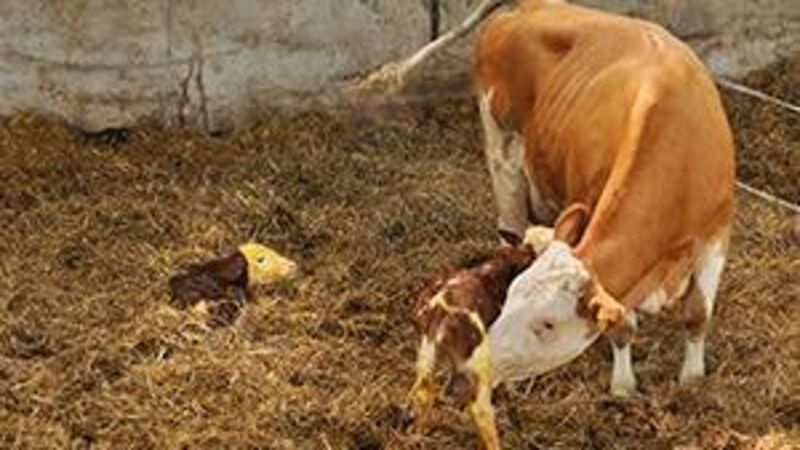
The calf was a massive Charolais bull, possibly 60kg, and during the process of calving, one of the front legs had been broken, just above the fetlock.

This sort of thing can happen when the pressure is on and the farmer is energetically using the jack.

With the legs out a certain distance, any downward pressure exerted on the calving jack can snap the young calf’s leg.

Care has to be taken during the procedure.

Having attached the calving ropes to the calf’s legs just above the fetlock joint, you should make sure that both legs are level.

And when you put the ropes onto the calving jack, the knots should also be evenly spaced from the calf’s legs.

Lastly, a check should be made that the calf’s head is in the passage, and resting on the legs just beyond the ropes.

A slow steady pull should be exerted, pulling the calf straight out rather than downwards.

Sometimes I prefer to let the cow do the pushing, and then take up the slack.

This tends to be more natural.

The calf had well and truly broken its left front metacarpus, the bone just above the fetlock joint.

The hair was dry at this stage, so we set about encasing the leg in a gauze bandage first, held in place by an Elastoplast tape, and then a hard cast that set rapidly.

A bit of pain relief came in the form of an anti-inflammatory injection into the vein.

Pain relief would not be continued beyond this, as we did not want the young calf leaping and bucking around the place before his leg had mended fully.

Having packed my gear back into the jeep, I set off again into the worsening night and headed for home.

Earlier in the day, I had been called to a difficult calving where the farmer could not get the calf’s head up.

I always love a challenge, but on this occasion, I was beat.

The size of the calf was tremendous, and even though the cow was big and roomy, there was no way this calf was coming out the normal way.

“I thought she wasn’t in calf”, said Jimmy, “she was bulling all summer long!”

This can be a common enough occurrence.

There are always what I term as “sexy cows”, cows that have gone in calf but continue to show bulling tendencies every three weeks.

This leads to the farmer thinking they are not in calf.

So he/she decides to put a bit of condition on her, in preparation for the factory later in the year.

The calf, being the recipient of all this extra feeding, becomes enormous, resulting in a caesarean section to get the calf out.

A bit of scanning back in the summer/autumn would have revealed this scenario and possibly saved a share of hardship.

I am constantly surprised, when I am scanning herds, to see the number of animals the farmer thinks either are or are not in calf turning up as the opposite.

A quick call in the morning revealed that the Charolais calf was able to get up unaided and help himself to the milk supplied by his doting mother.

x

More in this section

Farming

Newsletter

Stay ahead of the season. Sign up for insights, expert advice and stories shaping Irish agriculture.

Cookie Policy Privacy Policy Brand Safety FAQ Help Contact Us Terms and Conditions

© Examiner Echo Group Limited