IFA launches Brexit Emergency Policy
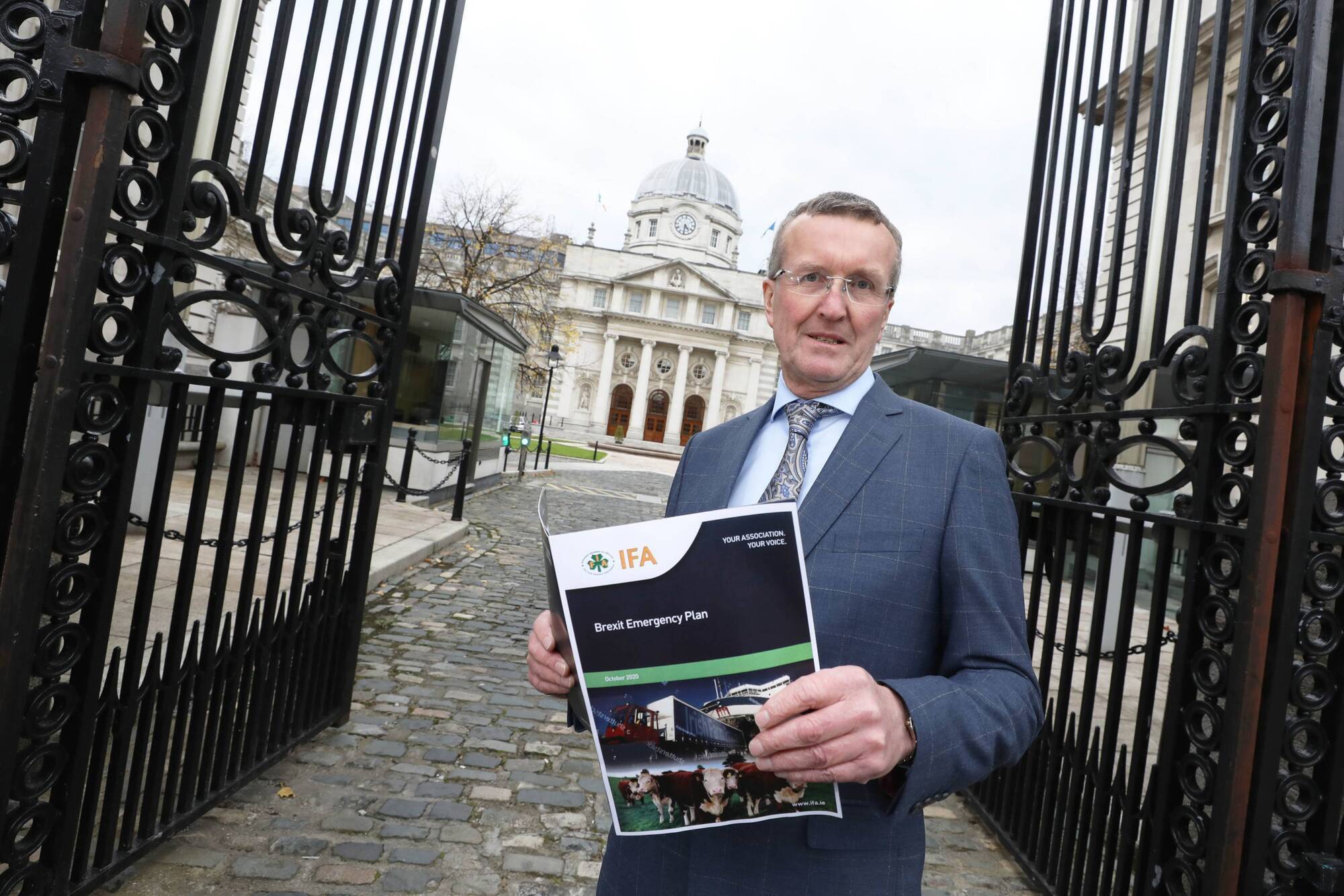
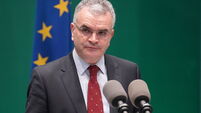
President Tim Cullinan launching IFA’s Brexit Emergency Plan, which has three steps to mitigate the damage to Irish farming from Brexit. Picture: Finbarr O’Rourke
The Irish Farmers’ Association (IFA) has launched a Brexit Emergency Policy ahead of this afternoon’s EU summit in Brussels.
The Policy comprises a three-step plan to “mitigate the damage to Irish farming from Brexit”.
IFA President Tim Cullinan said Ireland was now faced with the difficult task of “trying to keep our exports flowing into the UK without tariffs or quotas”.
“The EU Commission has to start preparing the EU market for a bad outcome,” he added.
“We need a clear plan from the EU on how they intend to support farmers in a no-deal scenario.
“With a limited deal or a no-deal, 38% or €5.5bn worth of Irish agri-food exports to the UK are at risk.
“If the UK fails to agree on a trade deal, the Brexit Readiness Action Plan estimates the cost of import tariffs will be between €1.3bn and €1.5bn.
“This would effectively start a trade war between the EU and the UK”.
Mr Cullinan went on to say that the recent decision by the UK’s House of Commons to reject amendments to set minimum food standards indicated the Government there “is planning to use access to their food market as their trump card in trade negotiations with third countries”.
“This will undermine the value of the British market for Irish produce,” the IFA president continued.
“This is an unprecedented scenario, but the most comparable situation in the EU was when Russia banned all EU exports in 2014.
“At that time, the EU put a suite of measures in place which cost €1bn, but a no-deal Brexit would have eight times that impact.
“These are the types of measures we will need but at a much larger scale.
“While the EU has created a Brexit contingency fund of €5bn, we need to see an implementation plan.”
Meanwhile, IFA’s Brexit Emergency Policy was jointly prepared by Cúl Dara consultancy and IFA and sets out three steps that the EU Commission could take to ensure that Irish farming is protected.
It looks for trade based on tariff-free and quota-free access; full recognition for the Irish protocol; regulations at borders; suspension of imports, particularly from Mercosur; suspension of trade negotiations on sensitive products and State Aid rules; support for direct shipping to the EU; and focuses on the €5bn Brexit fund - which IFA added, “must increase in all scenarios”.