Only Brexit certainty is big changes in EU-UK food and agri trade
Only Brexit certainty is big changes in EU-UK food and agri trade

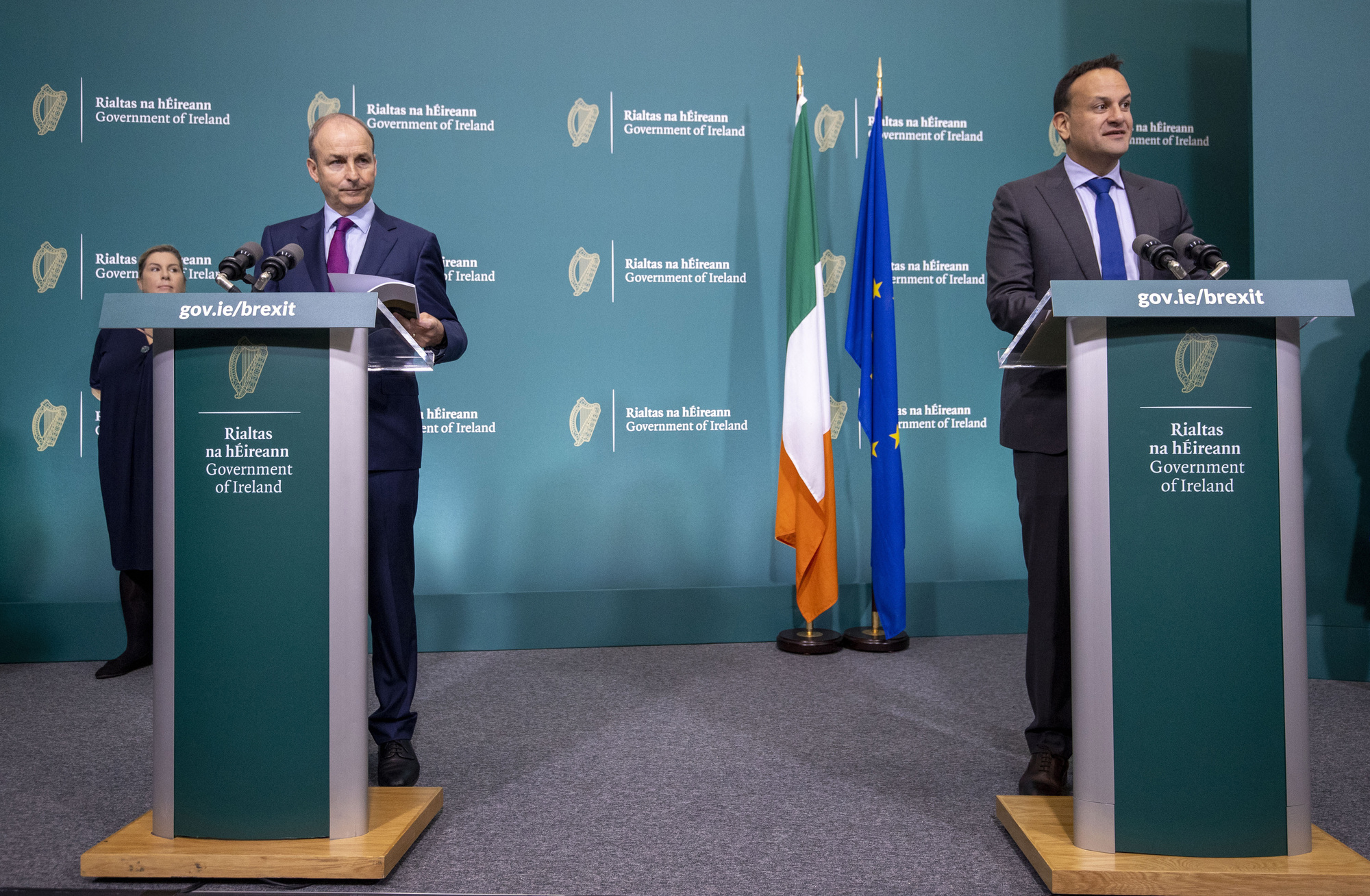
Taoiseach Micheál Martin and Tánaiste Leo Varadkar recently presenting the Government's  2020 Brexit Readiness Action Plan. Picture: Julien Behal Photography

Brexit negotiations have intensified ahead of the unofficial deadline for a Brexit trade deal to be agreed, the meeting of EU leaders on October 15 and 16.

Leaders on each side remain optimistic that a trade relationship can be agreed before the end of the year, and EU chief negotiator Michel Barnier has suggested talks would continue up to Nobember.

Negotiations continue despite disagreement between the EU and the UK over the UK Internal Market bill, which allows the UK to override part of the EU-UK Withdrawal Agreement, and to make unilateral changes in Northern Ireland protocols. The EU has launched a legal action against the UK for this “breach of the obligation of good faith”.

The UK has one month to respond. However, it will be a long and uncertain legal process, and it is likely that a political solution will be sought along the way in conjunction with a trade deal.

The controversial bill could offer a “safety net” for trade between Britain’s four nations after December, but has soured relations with Brussels. The Internal Market Bill would not have an immediate impact, it only enables the UK Parliament to make unilateral changes.

Despite the uncertainty raised by the Internal Market Bill, for the purposes of Brexit preparedness planning in Ireland, it is presumed the Withdrawal Agreement will be applied in full and, deal or no deal, there will not be any border on the island of Ireland, and goods will pass freely.

However, the only certainty for Ireland’s food and agriculture sector is that how EU food businesses trade with the UK will change significantly, deal or no deal.

That means businesses must continue to prepare for new checks and controls on trade with and through Great Britain, which will be a reality regardless of how the trade negotiations go.

The Irish Government launched a new Brexit Readiness Action Plan on September 9, outlining the steps businesses should take between now and December.

They should contact brexitregistration@agriculture.gov.ie to register with the Department of Agriculture, Food and the Marine as an importer/exporter and register on TRACES.

They should register with Revenue and obtain an EORI number.

They should familiarise themselves with the SPS controls in January (www.agriculture.gov.ie/brexit).

A number of new supports have been launched.

A Ready for Customs Grant of up to €9,000 will be available through Enterprise Ireland, per eligible employee hired, or redeployed within the business, to a dedicated customs role. 

There will be free Skillnet Ireland Clear Customs Online Training (10 hours over five weeks) with level-6 accreditation.

There’s a Local Enterprise Office ‘Prepare Your Business for Customs’ half-day online webinar on October 23.

A Bord Bia Customs Readiness Practical Training Programme of seven hours over three weeks takes place on October 8.

There's a Revenue two-tay teminar on trading agri-food goods  on October 5 and  6, with technical information on sanitary and phytosanitary  checks and requirements. 

More in this section

Farming

Newsletter

Keep up-to-date with all the latest developments in Farming with our weekly newsletter.

Cookie Policy Privacy Policy Brand Safety FAQ Help Contact Us Terms and Conditions

© Examiner Echo Group Limited