‘Agri-bashers’ one of the targets as farmers strike back
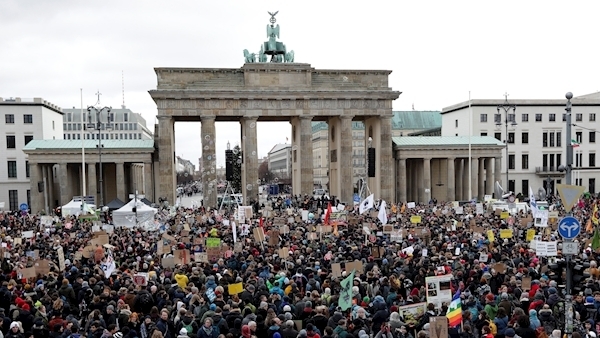
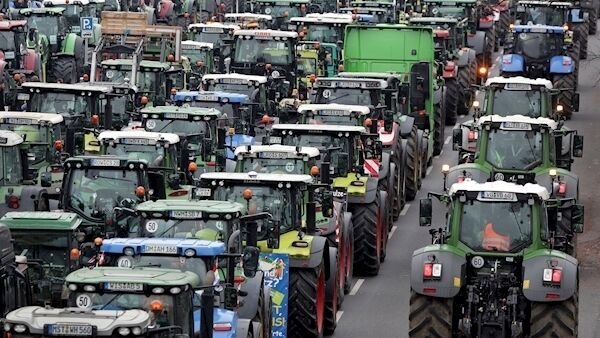
Last week, more than 10,000 farmers with 5,000 tractors made their way from across Germany to Berlin’s Brandenburg Gate for a protest rally.
Who would have thought that farmers, on which the EU spends almost €60bn per year in the Common Agricultural Policy (CAP), would take to the streets in such numbers?
It took only about 100 tractors driven by protesting farmers to snarl up the traffic in Dublin.
If enough farmers take to the roads of Europe in their tractors, the continent could grind to a halt.
That has happened already in the Netherlands.
On Tuesday, October 1, more than 2,000 farmers took to the Dutch highways on their tractors, in a slow procession toward the country’s capital, The Hague.
Some drove their tractors along the North Sea beaches that lead to the city.
The Dutch motorists association ANWB said the tractors, along with bad weather and accidents, made that Tuesday the busiest ever morning on the nation’s roads, resulting in more than 1,000km of traffic jams.
Also last week, disgruntled French farmers were in Paris, attempting to use 1,000 tractors to block off access to the city.
It used to be only the French farmers who mounted disruptive protests, but it’s happening everywhere now.
Earlier in the autumn, Ireland had the beef factory protests.
Farmers from Germany and France parked their tractors at the European Parliament in Strasbourg, there have been protests in more than 17 German cities, and thousands of farmers in France protested in each region and department.
These protests will continue.
Next Tuesday, representatives of the European livestock sector will unite for a “flash action” at the EU institutions in Brussels.
The protesting farmers have had various grievances, including free trade agreements they say put them at a disadvantage; regulations which hinder their performance (including glyphosate bans planned in the next few years); and the low cattle prices in Ireland.
In the background are always the ups and downs of food markets; setbacks such as the Russian embargo, Brexit, and the Airbus tariffs on European food exports to the US; and CAP red tape.
There are dramatically reduced numbers of young farmers entering the sector in the EU to meet such challenges.
Perhaps the one grievance that unites farmers across the EU is what they condemn as “agri-bashing”, being blamed for climate ills, or perceived public hostility toward farmers, particularly from those who criticise their use of pesticides and treatment of animals.
Farmers feel they are the easy target, instead of the use of fossil fuels which accounts for almost 37 gigatons of the total 49 anthropogenic (human-caused) gigatons of greenhouse gases (GHG) per year.
Many “agri-bashers” state that food production globally causes one quarter of all green house gas, but they seem to make no allowance for agriculture and forestry globally soaking up as much carbon equivalent as they emit.
Methane from livestock is seen as the arch-enemy, but new World Meterological Organization data shows methane in the US was plateauing between 1999 and 2006 as expected, mostly because methane only stays in the atmosphere about 12 years.
However, methane started rising again after 2006, and the suspected cause is large-scale fracking extraction by the fossil fuel industry.
Agri-bashers do not seem to take such facts into account.
As a result, there is a risk that farmers will rebel, and their contributions to the environment could be lost.
To continue applying green practices, farmers deserve some sort of public recognition. Better understanding is needed of farmers’ decisions to adopt sustainable practices.
Those decisions are mostly based on the financial benefits, costs and risks of introducing environmentally friendly practices, but public recognition plays a role too.