What will groups like JBS get from EU trade deal?
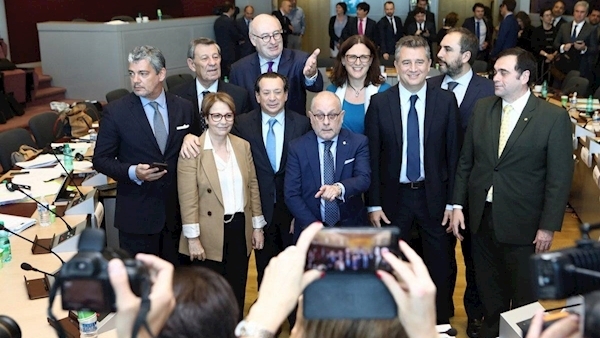
The Mercosur trade agreement with the EU has helped to boost the market capitalisation of the world’s largest meat processing company to nearly €16 billion.
JBS SA is a Brazilian producer of beef, chicken and pork, and sells by-products from the processing of these meats.
In the week of the announcement of political agreement on the Mercosur trade deal, the JBS SA share price rose to a new high of 24.29 Brazilian reales.
What companies like JBS could get out of a trade agreement with the EU is one of the questions answered in the texts of the agreement which the European Commission published last week, as part of its transparency policy.
It will become easier for Mercosur to export to the EU, as far as they respect the EU high standards. The deal will also help integrate Mercosur industries into the EU’s highly innovative value chains. This in turn will help them become more competitive. Mercosur countries want to rely less on exports of commodities, and to diversify their economies, by producing higher value goods and services. The agreement will help them do so.
The trade deal will give more opportunities for Mercosur citizens to be able to provide their services in the EU, including on a temporary basis through their physical presence in EU countries, including through business contracts or as independent professionals.
With the agreement, governments in Mercosur are committing to make it easier and simpler to do business in their countries by improving the business climate. They will do so via more predictable and transparent procedures and regulations and by providing enhanced access to their market. This will help them attract more investment from Europe, as well as the rest of the world. Both the EU and Mercosur want to:
- shape global trade rules in line with their standards and shared values of democracy and rule of law,
- and send a powerful signal to the world that two of its biggest economies reject protectionism.
- Get rid of tariffs; High Mercosur tariffs make European products in Mercosur more expensive. Mercosur imposes high tariffs on imports of European products such as cars, machinery, information and communications technology equipment, textiles, chocolate, spirits, and wine. By removing these tariffs, the trade deal with Mercosur will make it easier for European firms to export to Mercosur countries.
- Promote trade in other ways: The agreement aims to boost EU exports to Mercosur with provisions on non-tariff barriers to trade in goods; eliminating discriminatory tax treatment on imported goods; trade in services and establishment in services and manufacturing; government procurement; smaller and medium sized enterprises; improving access to raw materials essential to the EU economy, by lowering or removing export taxes and eliminating export restrictions and export monopolies.
- Show the world that the EU and Mercosur reject protectionism: At a time when protectionist pressures are growing, a trade agreement between the EU and Mercosur sends a clear signal to the world that two of its largest economies reject protectionism, and are open for business and for trade on the basis of fair rules and high standards.
- Pursue a value-based trade agenda; Under the agreement, the EU and Mercosur agree to protect labour rights; protect the environment, including fighting climate change and deforestation; promote corporate social responsibility; and cooperate on animal welfare standards, biotechnology, food safety, and fighting antimicrobial resistance.
The EU wants Mercosur to abolish import tariffs on European goods. It also wants Mercosur to remove obstacles to EU exports, such as unnecessarily restrictive rules and regulations that differ from international standards; non-automatic import licences; burdensome conformity assessment procedures.
Making it easier to export to Mercosur should benefit EU firms making and selling agri-food products, machinery, pharmaceuticals, cars, textiles, and clothing.
The agreement will make it easier for EU firms to sell their services to Mercosur, through local establishment and on a cross-border basis.
A wide range of services and manufacturing sectors should benefit, including business services, financial services, telecommunications, maritime transport, postal and courier services.
The agreement will reduce and eliminate discrimination and expand opportunities for EU and Mercosur service providers and investors.
The agreement will not:
- prevent the EU or Mercosur from continuing to regulate their services markets in a non-discriminatory manner
- liberalise public services like public healthcare or state-funded education.
For both foreign and domestic services suppliers, the agreement will not affect the capacity of regulators to develop and impose non-discriminatory rules and standards for protecting health, safety and the environment, as well as consumers, and for ensuring high quality services and services providers guaranteeing labour rights and working condition.