Resurgent Greens flexing their muscle in European Parliament
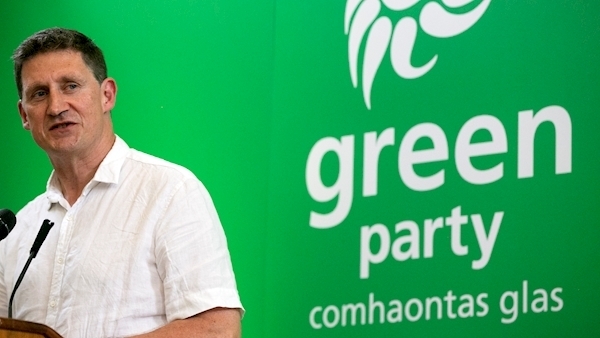
The European Greens last week announced a plan to step up EU’s climate ambition, by raising the EU 2030 climate target to at least 60% greenhouse gas emissions reduction, and implementing a Green New Deal to become a net-zero emission and 100% renewables-based economy well before 2050.
They also decided not to support the candidacy of Ursula von der Leyen for President of the EU Commission, despite her nomination by EU leaders.
Green MEPs said she has no concrete proposals on the rule of law or on climate, and they joined left-wingers opposing her in this week’s Parliament vote on her candidacy.
The Greens are flexing their muscles, after their big gains in the European Parliament elections, delivering their best ever results.
The European Green Party gained an additional 25 seats and jumped from the sixth to fourth ranking in terms of seats in the Parliament.
That leaves the political grouping of the Greens with the European Free Alliance of regionalist political parties (which want independence or devolution for their region) in an influential position in the Parliament.
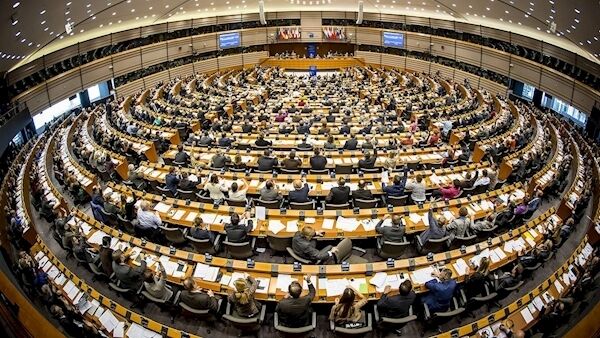
The centre left and centre right groupings which traditionally had held a majority lost support in the election, and they will need to rely on a third party for approval of any legislation. That third party is likely to be the centre grouping, Renew Europe, which also made significant electoral gains. Also known as the Liberals, or ALDE, Renew Europe includes Fianna Fail.
With at least three groups required to form a majority, the smaller parties get a bigger say, which shifts the political power of the 751 members away from the centre (705 members after Brexit). That trend will be even more pronounced after Brexit, when the departure of 46 British MEPs will significantly further reduce seats for Renew Europe and for the Far-Right group.
The uneasy triumvirate of centre left, centre right, and centrist, could be strained when some of the major issues come before it for the Parliament’s blessing, as part of the EU’s course for most legislation to become law — proposals by the European Commission, followed by approval by the Council of the European Union and the European Parliament.
Perhaps the biggest issue on the way is the EU-Mercosur political agreement in principle on a free trade deal, although it will be about two years before it reaches the Parliament.
It’s not even known for sure yet if each member state would have to approve it. So, as things stand, the Parliament is where it is most likely to run into severe headwinds.
With many believing it damages Europe’s credibility as a leader on climate change, and with the Greens, Socialists, and Democrats all pushing for Europe to use its leverage as the world’s biggest trade bloc to enforce global environmental and labour standards, they will take a huge amount of convincing to approve a Mercosur deal.
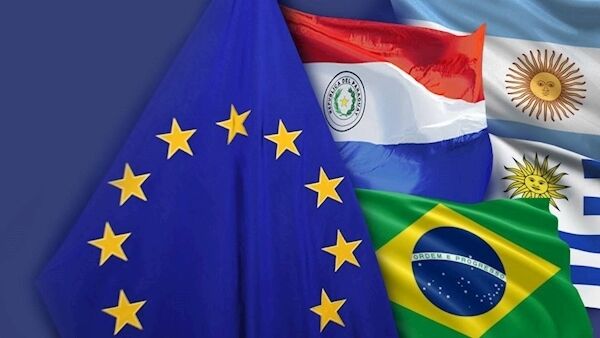
Intense scrutiny of the Mercosur deal by Parliamentarians is under way already, as they prepare to play their role in the EU submitting its long-term emissions strategy in 2020, as required by the Paris Agreement. The existing EU promise to slash emissions by at least 40% by 2030 isn’t enough to meet the Paris Agreement’s goal of limiting global warming, which is why the Greens and other environmental campaigners want to up the ambition.
Alongside the EU’s long-term emissions strategy, the focus of Parliamentarians will be on the reform of the Common Agricultural Policy.
A possible development to watch for in this area is the Green MEPs looking for the Parliament’s environmental committee to share oversight on the CAP, along with the agricultural committee.
That could be a game changer, bearing in mind that the outgoing environment committee had voted for reduced subsidies going to “intensive” farming, by which they meant the EU’s agricultural support could only go to farmers with less than 0.14 hectares per sheep and 1.43 hectares per dairy cow.
It was noticeable that the EU lobbyists for farmers and agricultural co-ops, Copa and Cogeca, recently said the agricultural committee should remain the leading committee for EU agricultural and rural development policies, and that is should retain its strategic responsibility.
Copa and Cogeca’s request that the role and responsibilities of this committee should be strengthened is probably a bridge too far, when the Greens are looking for the environmental committee to have a stronger role.
The Greens are likely to use their influence to push for a cap on big farm payments, and for redistribution of payments to smaller farmers, with strict implementation of agro-environmental schemes.
They will aim to reduce use of pesticides in the EU, with glyphosate a long-distance target when its EU licence expires in December, 2022.
The 48 who will shape EU farm policy over the next five years
He preceded Phil Hogan as the EU’s Commissioner for Agriculture, and Dacian Ciolos from Romania now returns in a lower profile position of influence in European agriculture, as a member of the European Parliament’s Agriculture Committee.
It may be as the leader of Renew Europe, now the third-largest political force in the Parliament, that he will exert most influence.
Either way, he is seen as a staunch defender of the EU’s Common Agricultural Policy, so his presence will be welcomed by farmers, on the leading committee for EU agricultural and rural development policies.
He will be one of the more familiar faces on a committee in which 26 of the 48 members were elected to the European Parliament for the first time in 2019.
These are the people who will play a large role in shaping EU agricultural policy over the next five years.
Only 15 of the 48 were members of the last Agri-Committee. Among the familiar names from the last Committee is Mairead McGuinness of Fine Gael, recently re-elected as First Vice-President of the European Parliament.
Also there is Paolo de Castro, who chaired the last Agri-Committee.
It’s a microcosm of the full Parliament’s new 2019 balance of power, with the centre left (12 members) and centre right (10) groupings now needing a third party, Renew Europe (7) to join them for a majority. The Greens/EFA have five members.
These are all ‘pro-Europe’ parties, increasing from 67% of the previous Agri-Committee to 71% of this one. They used their muscle last week to get “one of their own” into the committee chairmanship. The far-right Identity and Democracy group’s nominee, French MEP Maxette Pirbakas, was blocked by the four pro-EU parties. They instead elected Norbert Lins, a German MEP from the conservative European People’s Party.
Pirbakas was also rejected for two vice-chair positions.
The UK Brexit Party is not represented on the Committee.
Ireland, with three members, is disproportionately over-represented.
Seven members have an agricultural degree qualification. Ten (21%) are farmers, including three organic farmers. Adding in those married to a farmer brings McGuiness onto the farmer list.
Along with Ciolos, who was once the Romanian Minister for Agriculture, as well as an EU Commissioner for Agriculture and Rural Development, Clara Aguilera was Regional Minister for Agriculture in Spain, Álvaro Amaro a former Secretary of State for Agriculture in Portugal, Paolo De Castro a former Minister for Agriculture in Italy, Martin Hlavácek a former Deputy Minister of Agriculture and Fisheries in the Czech Republic, Krzysztof Jurgiel and Jaroslaw Kalinowski former Ministers for Agriculture in Poland, and Bert-Jan Ruissen the former European Policy Officer at the Dutch Ministry of Agriculture, Nature and Food Quality.
So at least 21 members (44% of the Committee) are either farmers or have represented farming interests in their professional careers.
The Committee includes five journalists and a number of people who have held ministerial office apart from agriculture in their countries