Straw is the new gold. Hay cannot replace it in dry cow diets

It has been a really difficult year for all Irish dairy producers.
A late spring turnout was followed by the snow, a brief period of growth, and then the worst drought in over 40 years.
For an industry that prides itself on being a grass-based system, 2018 could hardly be more difficult.
As we enter August with total grass growth for the year well behind targets and previous years’ performance, where do we go from here?
Most have eaten a sizeable hole into their first cut silage, and bale reserves are long used up.
Second cuts have been salvaged with tiny yields in the hope of getting a bulky third cut if conditions allow.
Soil temperatures are high, and there is likely to be plenty of nitrogen in the ground from earlier applications, so once the moisture gets to work, we should have good growth.
It might be like 2006, when the period from mid-August into September brought a second peak of grass growth after the April May peak.
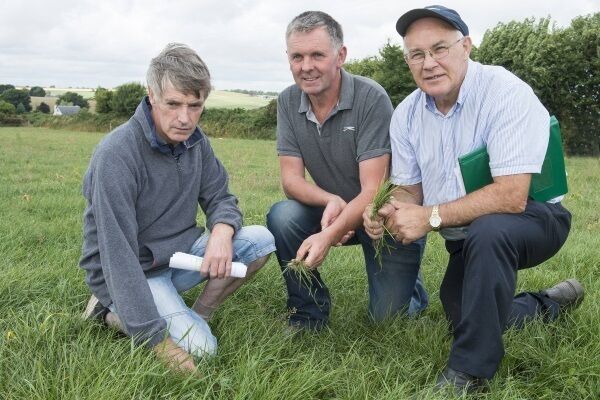
There has, in my opinion, has been a lot of rubbish spoken on social media and beyond about the current feed deficit being caused by stocking rate.
I don’t care who you are, and how high or low you are stocked, we have all been hit hard by this summer’s drought.
Good grassland management is good grassland management regardless of the year and the conditions that it throws at us.
Prior to the drought and in its early stages, the good grassland managers continued to take out surplus grass, to build back up reserves, but more importantly to ensure that cows were not being offered inappropriate grass quality for optimum performance.
Here’s hoping that we may never see a year like 2018 again. However, we need to learn lessons from it.
Advice from on high over recent years has spoken of having large reserves of fodder at the end of a winter as being a bad use of cash, a waste of money etc…
That old chestnut needs to be put to bed, fodder in the pit or yard is like cash in the bank in my view.
Be it grass silage, maize silage, wholecrop, straw, hay or haylage, any of them in stock as a reserve provides great security in years like this.
Remember the most fundamental principle of ruminant nutrition, ruminants must ruminate, and to do so, we must supply them with physical fibre.
Hulls, pulp and palm kernel can only do so much to bridge the gap!
However, it is possible to feed stock, both milking and dry, on low volumes of forage, if managed correctly, and the appropriate facilities are available.
One thing that is becoming obvious on Irish dairy farms is that few have sufficient feed space for all of their stock, and water access is also questionable.

Another aspect of 2018, which in all likelihood will become the new norm, is the scarcity of straw.
For many reasons, this will be an issue going forward.
The tillage acreage is back on previous years, due to poor profit margins in recent years, pressure for rented land from expanding dairy units.
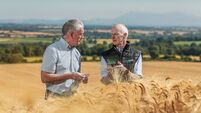
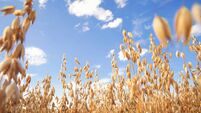
This spring, poor conditions prevented and delayed grain crop planting, and this was the straw (pardon the pun) that broke the camel’s back this year, because it also caused many spring crops to grow to less than half their normal height.
This year, the grain is almost becoming the by-product of the cereal crop, such is the strong demand for straw for both bedding and feeding.
Essentially, straw will be unavailable or priced out of their budget for many this year, and alternatives will need to be looked at.
Some straw will be necessary for herds that have used it as an integral part of their dry cow feeding strategy, to enhance intakes after calving, and to prevent metabolic issues around calving associated with grass silage-based diets.
There has been a lot of hay saved this year, and it has been landing in yards that haven’t fed it for many a year.
Hay can be used to replace a proportion of silage in diets, along with all or most of the straw in milkers’ and youngstocks’ diets.
Remember, however that too much hay in high performing animals will slow down digestion, and may reduce animal performance.
Hay will not perform the same function as straw in dry cow diets.
For many, the vast majority of straw secured this year will be required for feeding to stretch silage stocks.
This will result in a deficit of straw for bedding in calving boxes and in calf sheds next spring.
What alternative options you have will all depend on your set up and may include, miscanthus bedding, woodchip/sawdust, and peat bedding. Which of these you look at will depend on how you can store and handle them and, obviously, how they are priced.
When grass supply eventually returns to near normal, we must make sure that we utilise every last blade of it efficiently.
Usually when the grass plant is stressed, its first reaction when conditions improve is to go into survival mode.
For perennial ryegrass, this means throwing up a seed head. This is a survival mechanism in the plant, and is a similar reaction whether the crop is flooded, suffering drought, or has experienced abnormal cold for a period of time.
This grass will have little feed value, but must be fed.
How you will manage this will help determine your grass yield for the rest of the year.
Some are suggesting that they plan to make silage from a proportion of their grazing platform once growth has recovered. Their point is that when growth does recover, every paddock on the platform will be starting from the same base of little or close to zero covers, and they can’t all be grazed the one day.
Taking out paddocks over a week or two will allow you to create a wedge and set the farm up for the summer and autumn.
As mentioned, many plan to make silage from some of the grazing block.
Most have yet to make a second cut, and assessment of this standing crop (if it hasn’t been grazed or zero grazed) should be carried out ASAP, in order to make a decision about what to do.
Is the grass likely to head out and not bulk any more, or will it continue to grow into a good volume crop in the coming days or weeks?
If the crop is stressed and going to stem or heading out, the best thing to do is harvest it straight away and put a plan in place to make a good third cut or as some are calling it, Cut 2.5!
It is also worth approaching local tillage operators to see if they would be interested in a short-term agreement to grow Westerwolds ryegrass this autumn on their land to bulk up your silage reserves.
High yields in two cuts can be achieved in October and March or April, as the Westerwolds will grow once the soil temperature exceeds five degrees. It is worth asking the question.
The drought has had a hugely negative effect on milk solids.
Most are reporting a significant drop-off in both percentages and kgs of butter fat and protein production, year to date.
This is in most cases due to the deficit of quality grass available to cows.
I have regularly tested grazing swards around the country with my NIR4 on farm visits this summer, and some obvious patterns are emerging.
Due to poor growth conditions recently, grass is stressed and is not testing as normal. On average, grass dry matter over the last month to six weeks has been 22-27%.
Normally it would be 13-18%. This dry grass has increased cows, demand for water, another challenge.
Grass proteins lately have been 17-21%, this would normally be 23-27% depending on nitrogen application and sward age. Protein in a cow’s diet drives intake, and low protein in the grass depresses overall intakes. Energy has also diminished, as the sunshine and lack of moisture shrivel the grass.