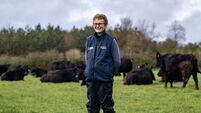
Feed meal when grass becomes insufficient
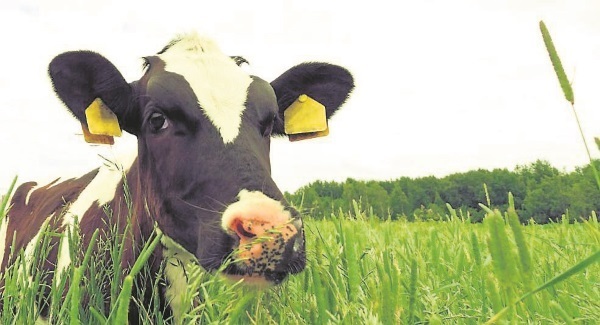
One of the main tasks in summer is to maintain grass quality and get any paddocks that were under-grazed or damaged back into good grazing shape.

Feed meal when grass becomes insufficient

One of the main tasks in summer is to maintain grass quality and get any paddocks that were under-grazed or damaged back into good grazing shape, writes Joe Sheehy.

This was a very difficult task this year, because of huge variations in growth periods.

Despite difficulties, farmers must adhere, as far as is possible, to the principles of good grassland management for the remainder of the year.

This includes providing as much high quality grass as possible for the mid-season grazing season when most of the milk is produced.

Co-op deliveries indicate that there is generally deterioration in grass quality from mid-June, with milk yields per cow and milk solids often taking a hit in mid summer.

Drought

Unfortunately this year, the lack of rain in June is causing severe drought-like conditions in many areas of the country, particularly in dry soils.

Grass growth has been cut to half in some areas.

Managing correctly in these conditions is hugely important for the remainder of the year, and for the supply of adequate winter feed.

The effects are more extreme on farms where very little ground was closed up for early silage, because they have very little silage saved, and the grazing area has been reduced.

We don’t have much experience of managing drought-like conditions in this country.

However we have very well proven methods of minimising the damage and cost of such conditions.

The first important step is to measure the amount of grass and silage on the farm.

While grass is scarce, rotations should be maintained at about 20 days, and about one unit of N applied after each grazing.

Make sure soils have adequate P, K and sulphur, because maximum growth will be required when the dry weather ends.

Supplements should be introduced as soon as cows can not get sufficient feed from grass, and milk yields are dropping.

If milk yields are allowed to drop, they will not satisfactorily recover when conditions improve, and that would be a severe loss. Milk yield drop should not be allowed to drop by more than 2.5% per week.

In most situations, the best supplements are concentrates. Depending on grass supply, it will pay to feed up to 6 kg of concentrates.

If this is not sufficient to supply adequate feed per cow, silage bales could be introduced, or some areas closed for silage could be grazed.

Grazing areas closed for silage is much cheaper than feeding silage which has already cost money to save.

Of course, this is eating into winter feed supplies which are already scarce on many farm; that problem has to be confronted as soon as possible.

Most farmers had the opportunity to graze out pastures well in May.

As a result, pastures generally contain good quality grass, especially where adequate bales were taken off to maintain quality.

The burst of growth in late May and early June enabled many farmers to take out more bales than usual for silage, and these are very welcome.

Most of these paddocks are now available for grazing.

Pastures that were not adequately grazed and not taken out for silage are now being well grazed, but the quality might not be great.

When the drought ends, it will take time before grass growth will take off.

But when it takes off, it should be of very high quality, and supplements should then be reduced gradually.

Adequate fertiliser has to be applied, and “adequate” depends on what ground has received already.

Based on soil tests, high-N compounds containing N, P, K, and sulphur will be required on most farms.

Adequate N, based on stocking rates, will be required sooner rather than later to avail of good growing conditions.

Overstocked

Many farmers are unnecessarily overstocked for their type of land, and for the amount of grass they grow on their farms due to their grass type and deficiencies of lime and fertiliser. Only 12% of land has the optimum levels of lime, P and K necessary for high stocking rates and high production per cow.

Milk production with very high stocking rates, very large herds, minimum winter feed, poor accommodation, and minimum meals will have to change. A buffer of 20% extra winter feed and adequate concentrates to meet the requirements of cows and appropriate stocking rates are needed.

Unfortunately, it has taken a few bad years and a few disasters to change the minds of some farmers operating such systems.

x

More in this section

Farming

Newsletter

Keep up-to-date with all the latest developments in Farming with our weekly newsletter.

Cookie Policy Privacy Policy Brand Safety FAQ Help Contact Us Terms and Conditions

© Examiner Echo Group Limited