‘Prize bulls fit for slaughter, not for breeding’
Male fertility in the cattle herd has been ignored, warns Doreen Corridan of the Munster Cattle Breeding Group.
She has found that 102 bulls out of 2,758 failed to leave any progeny, in her examination of bulls born in 2013, which were sold into herds which are in the Beef Data & Genomics Programme (BDGP).
In May, there were 66 bulls still alive, born in 2013, without any recorded progeny. Ms Corridan said the industry needs a cultural change, to encourage herdowners to purchase bulls in advance of the breeding season, and raise the age at first service.
Herdowners must also rely more on the bull genetic index.
Young bulls must be given time to develop mating ability, and herdowners must keep enough bull power for the correct ratio of males to females.
Stock bulls need to be monitored better for the quality of their progeny and fertility.
In her article for the new Teagasc publication, Examination of Bulls for Breeding Soundness: An Illustrated Guide, Ms Corridan said pedigree bulls are purchased in Ireland from 12 to 18 months of age.
They are mostly bought privately on the farm from the breeder, but 10-15% are sold at sales. In general, prices range from €2,000 to €5,000, with a small number of exceptional bulls selling for more than €10,000.
“Usually, it is the first prize winners or the champions at the pre-sale show that command the higher prices.Often, these bulls have been shown throughout the summer at shows as calves from six months of age onwards.
“As pedigree breeding is not a very profitable enterprise, breeders focus on achieving success at the pre-sale shows to maximise their sale price.
“These shows are judged purely on visual looks, and the prize winners will have gained in excess of 2kg perday from birth, and need to exhibit extreme muscling and a 4-5 fat score for success. Many purchasers apply the same criteria when purchasing on farms.
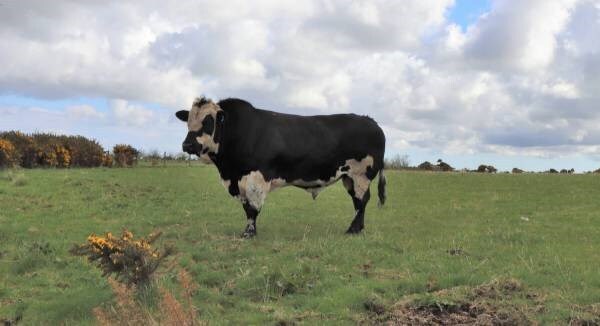
“Many of these prize-winning bulls are more fit for slaughter than fit for service.”
Ms Corridan said profit margins for pedigree breeders are similar to other beef systems in Ireland, ranging from under €150 to over €250 per hectare, not including the single farm payment or a labour charge.
Why bulls in Irish herds often lose 50-100kg in 30-60 days
Many bulls fatigue quickly and lose weight rapidly, often 50-100kg in 30-60 days, and this has a direct adverse effect on fertility, said Doreen Corridan of the Munster Cattle Breeding Group in her article entitled Overview of Pedigree Bull Production - Is it conducive to good fertility?, in the new Teagasc publication, Examination of Bulls for Breeding Soundness An Illustrated Guide.
She said the bulls lose weight rapidly in situations where purchasers buy their bulls literally the week they need them to breed cows.
“Often, these bulls go from receiving more than 10kg of concentrates per day in a confined pen without any exercise to being let run at pasture with breeding females and without supplementary concentrates.”
She warned that many of the prize-winning bulls in shows are more fit for slaughter than fit for service, whereas to ensure optimum development and to maximise fertility, bulls need to grow naturally, at 1-1.5kg of weight gain per day.
“The level of feeding required from an early age to compete at the pre-sale shows at 12–15 months has a negative impact on the musculo-skeletal system, hoof quality, liver and testicular function.”
Ms Corridan said cow fertility has increased dramatically, due to progeny test programmes, genomics, and Ireland’s genetic database, but bulls are being ignored.
The results are clear in her investigation of bulls sold into BDGP herds, in which progeny ancestry and performance are recorded, bulls are genotyped (to confirm ancestry), and the herd-owners record their reasons for culling or selling stock bulls.
These BDGP records reveal that by last May, 23% of the bulls born in 2013 had been culled.
The main reasons for culling were injury (23.2%), followed by feet/legs/lameness (21.9%), and infertility (7.2%).
Even though the number of bulls being fertility tested each year has increased substantially, and most breed society sales now have a requirement for bulls to have passed a pre-sale fertility test, BDGP records still show 7.2% culled for infertility.
One of the problems, she said, is that, “Purchasers are reluctant to purchase their bulls 2-3 months in advance, to allow time for acclimatisation to their new home, time to reduce the level of concentrates to a predominantly forage diet, time for vaccination pre-service, and time for the bull to be trained to serve.”
In addition, they rarely have adequate bull power available, with the result of having too high a ratio of females to bulls.
Ms Corridan said most bull injuries can be avoided by not allowing bulls run with females until they are confident at mating; having the appropriate ratios of females to the bull, and taking cognisance of the bull’s age; care in avoiding fat bulls that fatigue easily; and not over working young bulls.
Issues with feet and legs can be greatly reduced by growing bulls naturally and avoiding over-feeding at an early age, managing nutritional transitions, avoiding excessive weight loss, and not over working young bulls.
Her investigation revealed docility was given as a reason for 8.5% of culling.
She said docility can be increased easily by genetic programmes.
However, due to the small herd size and the level of handling in pedigree herds, it can be difficult to get an accurate assessment of the genetic merit of a bull for docility.
Lack of confidence in handling of mature bulls also allows bulls to get rewarded for poor behaviour, continued poor behaviour leads to issues in handling them, resulting in herdowners culling bulls for perceived docility issues, when it was poor stockmanship that was the main issue.
“In Ireland, especially in seasonal calving dairy herds, herdowners prefer to purchase a young bull each year, often at 12-15 months, and sell them at the end of the season, as opposed to keeping a mature bull.
“Often the reasons given are the hassle of having bulls on a dairy farm, the lack of appropriate handling facilities for the winter, and the fear of aggression from mature bulls.
“There is a distinct lack of confidence in handling mature bulls in Ireland, consequently there is an over-reliance on young bulls.”
Stock bulls are rarely monitored for quality of their progeny,-and sub fertile bulls often go unnoticed.
“The value of a mature bull that is delivering superior progeny and a high six-week in-calf rate is not highlighted.”