James Healy: My plan to maximise the huge potential of Macra
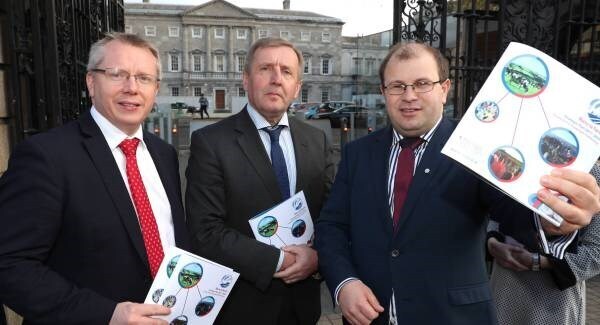
A year into his tenure as Macra president, talks to James Healy about his highlights and successes.
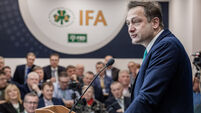
James Healy was elected as Macra na Feirmeâs 36th national president just over a year ago.
A founding member of the busy and successful Donoughmore club in Co Cork, Healy got 91 votes out of a total valid poll of 151 in the presidential election.
Busy would be the first word. It is certainly all go, whether itâs political lobbying on behalf of young farmers, or whether itâs attending club and country events around the country.
I am definitely away from home a lot, but thatâs good, itâs a great sign of the organisation, and it shows that there are good levels of activities, and thereâs lots happening.
I think itâs positive that the position demands that much of my time, and obviously itâs a great honour to have the opportunity to live through this experience, and itâs one that I am thoroughly enjoying.

I think the last 12 months have probably been spent looking more inward than outward, and that is obviously something that will to change in the second year [of my presidency].
This year, we have concentrated a lot on the organisation, and how we can do more and how we can improve, and that started with launching the strategic plan in December.
That is a major highlight, because it sets out a road map for the organisation for the next seven to eight years.
I think thatâs extremely important, as we make decisions going forward, it should guide our decisions, guide what activities we promote, and it should guide the work of our sub-committees and decision making at all levels of the organisation, so that we are maximising the potential of the organisation.
Outside of that, we have made some governance changes that stemmed from a requirement to maintain compliance with all of the newer legislation that has come about in the last couple of years.
We made a point of putting a focus on that over the last 12 months, and I am quite proud to say that while we havenât finished, because that governance process is something that will never finish, I think we have certainly reached the beginning of the end.
We have made the changes at a national organisation level, and in the coming years, will be about taking best practice down the line to club and country level.

If you take CAP, Macra was the first organisation in Europe with a CAP policy.
We actually gave it a slight reinvigoration only a couple of weeks ago, at the Macra AGM in Bantry.
We have been lobbying hard for the last 12 months on the basis of that policy. We believe that it provides a road map, particularly for young farmers, if the steps in it can provide real generational renewal.
We have seen that while the average age of farmers in Ireland has moved down slightly, it is still very high, and that is something that we want to incentivise.
The young farmer-top has been extremely successful, in combination with the Land Mobility Service where you are giving young farmers the opportunity to work in partnership with older farmers.
We are not looking to put the older farmers aside, we want them to work in partnership with the younger farmer, so that the younger farmer brings their enthusiasm to the operation, while learning from the experience of the older farmer, and the farm benefits from having two people to work it.
If you take Brexit, obviously thatâs a situation thatâs very fluid.
I think we have been very strong in our stance.
What we really need to avoid is a hard border on the island of Ireland.
Whatever measures it takes to arrive at that, I think, will sort a lot of the customs and other exercise [issues]. With the British government not really being fully decided on what they want themselves, until they do, it is very hard to say where things are going.
But I think we as an organisation, similar to everybody else in the country, are very strong in the belief that we donât need a hard border on this island.
I think if we can find a resolution to that problem, a lot of the other problems may very quickly sort themselves out.
The idea of the European Union completing a trade deal with the Mercosur countries and allowing more South American beef into Europe, while Brexit is still hanging over us, is negligent at best, and absolutely catastrophic in reality.
How they can sign a trade deal while Brexit is hanging in the air, and one of the largest European markets for beef is pulling out, then adding more beef to the European sector, it seems crazy to us in Macra.
Last year, given our funding model, lots of positives went in our favour, obviously milk price was good, and we get a share of the milk levy, but we also ran a very extensive fundraiser in the middle of the year in Croke Park, and that was a fantastic success.
It was off the back of members and supporters of the organisation, and I think that played a huge part in us having that surplus at the end of the year.
We recently had another fundraiser, our Macra Lip Sync Battles, and I suppose we will continue to monitor the financial situation.
The same as any household, we need to cut our cloth to measure, itâs about consistent analysis of our financial position, and ensure we are budgeting as best we can to match our income and expenditure.
Well, just to clarify, I never said we wonât support it, I said we had some concerns.
We are in favour of supports for the suckler cow sector, thatâs the most important thing.
We absolutely believe that it is a sector that needs to be supported, but I think the scheme that was being suggested didnât seem to be putting any steps in place that would require improvements in the herd, whether itâs [improvements in] calving interval or conversion rate.
We saw that the Beef Data and Genomics Programme was already doing that.
We would have no problem if there was to be a scheme put in place that supports the suckler sector but still puts requirements on those farmers to improve their herd.
The last thing we want is people getting a payment per cow and they having cows for the sake of having cows.
By ensuring that you are improving the herd and improving the key performance indices of the farm, you are making the farm even more profitable in itself, outside of the payments, so I think if the scheme they are suggesting could be adapted to take that requirement for improvement into place, absolutely we would whole heartedly support that as wellâ.
The simple answer is that we spoke to our members as part of a beef consultation we had during the winter of 2017.
It boiled down to while they obviously see that it is an added cost, they also see in the long term there must be benefits from it.
I think, whether thatâs on-farm benefits or benefits more externally in gaining access to new markets, Macra members believed that in the long term, the compulsory EID tagging would pay off.
âObviously, in return for taking that step and having that cost placed upon them, whether itâs the meat factories or the retailers, they need to return to the farmer, because it is a significant added cost for the farmer, but our members told us that they believe that in the long term, they will see the benefits of it, and thatâs why they would be in favour of itâ.