Does bull need a Zimmer frame?
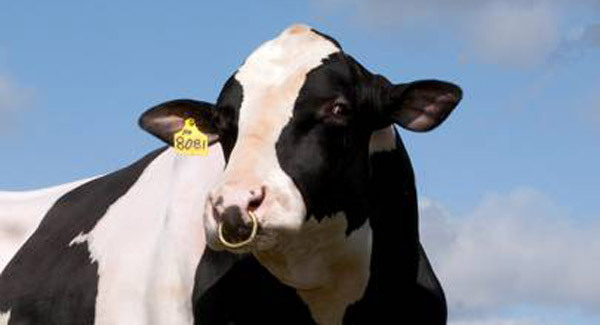
Last week I talked about having your bull examined by a qualified vet and gave some of the reasons. The bull that puts nothing in calf becomes pretty obvious after a three week cycle and it also means that your planned start of calving date of February 1 now becomes at least February 22nd.
The bull that is sub-fertile is another day’s work and the attention is often deflected towards the cows and possible disease. It is estimated at least one bull in five, of a random selection of bulls, would be sub-fertile due to physical unsoundness or poor semen quality.
As I said last week, we examine the bull’s eyes and heart for irregularities that might make him unsatisfactory to use as a bull. There are a number of other criteria that we, as vets, check during our breeding soundness examination.
An evaluation of the body condition score is made. It is found that a bull with poor BCS is likely to have poor semen quality. It is common on some farms to leave the bull out over the winter or if he is housed scant regard is given to his condition.
Such bulls are likely to have a low body condition score and consequently have poor quality semen. Bulls at the other end of the scale also tend to have poor semen quality as the amount of fat in the system prevents the bull from regulating the temperature of his testicles.
Another area of vital concern is the bull’s feet and conformation. I was asked recently to look at a young bull that was lame. He was earmarked to go to an AI station.
Upon examination I saw that the bull had a fractured claw on the left hind leg. The normal treatment for this in a cow is to remove the digit. With the bull however, the hind legs support the full weight during the act of mating so removing a digit and leaving him as a bull does not make sense.
Bad conformation may not make the bull lame but it may interfere with the act of mating and more importantly it may be passed on to its offspring. Other things like puffy joints or bowed tendons can lead to the bull becoming stiff or lame as the breeding season moves on.
Examining the testicles is needed to find any abnormalities in shape or consistency.
If we find pain or abnormal heat then questions must be asked. Sometimes a bull that has been out-wintered may show a sign of frostbite on the sac and this obviously affects the working of the testicle and the quality of the sperm produced.
Examination of the penis often shows problems like warts or maybe crookedness which will interfere with the mating process preventing a satisfactory result.
Finally, before we come to take the semen sample, we examine the internal organs. Again these can show us signs of infection or deformity that might make the use of this bull unsatisfactory.
Having come to the conclusion that this bull is so far satisfactory we then take a semen sample and examine the live sample under the microscope.
Finally we make a slide, staining it with a dye, so that we can examine it later for any dead sperm, abnormal sperm or signs of inflammation or infection.
At the end of all this we issue a certificate that will stand up in a court of law in the event of any legal problems. As you can see, a lot goes into the bull breeding examination carried out by your veterinary surgeon and that is why he/she charges you a bit more than other “semen evaluators”.