Why controlling your electricity costs really is a bright idea

Kieran Coughlan
Farm Money Advice
On any dairy farm, the two biggest drivers of electricity usage are heating and cooling costs.
On most dairy farms, it is estimated that 40% of total electricity usage is for cooling.
Taking action on these two elements can literally save you thousands of euro with a really quick payback time, meaning that you can recoup your investment in a relatively short period of time, thereafter the savings are near permanent in the case of some technologies.
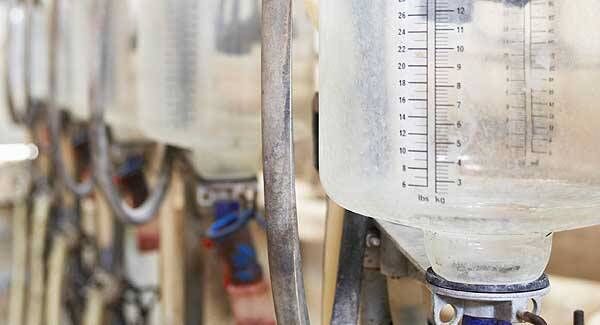
Milk production is heading for seasonal peak over the coming weeks and the lift in daytime temperatures will see cooling compressors running for longer to deal with the volumes of milk to be cooled. Some of the technological improvements that can be taken, to reduce your cooling costs are listed here are as follows:
Plate coolers act like a radiator allowing heat from milk pass through to water, while the milk and water never come into contact with each other as a result of being separated by a series of plates.
The typical cost of such units starts from about 1,500 including installation. Single stage plate coolers using standard ambient temperature tap water can reduce milk from about 33 degrees Celsius to about 26 degrees Celsius before entering the milk tank.
At a basic level, the plate cooler can effectively save you about one-quarter of your milk cooling costs.
From a sustainability perspective, the process can be made more efficient by recycling the warmed water which would otherwise be dumped from the plate cooler to service parlour wash-down pumps or indeed such water can be used for any other clean water purpose where the water is properly stored in clean potable storage facilities.
This “waste” water can be pressurised and recycled to supply water troughs. To further improve the sustainability and efficiency and to prevent excess water wastage it is possible to connect an electrical sensor to water inlet of the plate cooler which allows water to flow through the plate cooler only when the milk pump is working.
In this way water can be pumped at full pressure at the appropriate time rather than just a constant dribble, in doing so there is a matching of maximum flow of water to maximum flow of milk will improve the efficiency of the unit. Go one step further and couple a timer to the sensor to further improve performance.
The purpose of adding a timer is to allow water run for a preset period of time after milk stops flowing (such as 20 seconds), to allow the water bring down the temperature of the plate cooler before the next batch of milk is pumped to the dairy.
An upgraded plate cooler such as a two stage plate cooler or an oversized plate cooler with a larger surface area can reduce the temperature of milk entering the milk tank. Grant aid is available at 40% under TAMS II.
Secondary costs include electrical installations as described above and storage tanks/water fittings. It is also necessary to install an inline milk filter, to prevent any sediment carried in the milk from blocking the tiny core tubes of the plate cooler.
The technological improvements to milk compressors have seen the resurgence of direct expansion compressors rather than the ice-bank type tanks more common two or three decades ago. Modern Copeland Scroll direct expansion compressors can use less electricity and cooler a larger volume of milk than those of even a decade ago.
Milk tank compressors are not of themselves grant aided, but do qualify for TAMS grants where they are installed with a new milk tank. If upgrading a milk tank it is important to check with your electrician whether your electricity supply has sufficient capacity to operate the tank, especially while other equipment may be running.
Many dairy farmers were caught out by Storm Emma’s snow dump, not only dealing with frozen milking parlour’s but more often dealing with milk storage capacity issues.
As such investment in a new tank might make sense from the perspective of achieving higher efficiency and also a preventative strategy in the case of finding oneself stuck with a lot of milk!
Secondarily, certain cooling equipment approved by SEAI can qualify for 100% capital allowances in year one, giving the tax advantage in the year of outlay as opposed to a standard eight-year period.
With some milk tanks it is possible to engage in additional cooling in off peak times at a cheaper electricity rate than that available during normal working hours.
The benefits of night-time electricity are perhaps best captured using ice builders. These machines act like giant freezers building up a bulk of near frozen water which is available for instantly cooling milk either through an integrated plate cooler or an integrated milk tank.
The advantages are that the cooling of any one day’s milk is done during the previous night time where an appropriate amount of water is frozen ready for use.
A further advantage of the system is that lower electrical input to the farm can be used. In large dairy units it is not feasible to run large milk tanks on single phase electricity, or indeed the KVA supply to the farm may be a limiting factor meaning that the milk tank and milking machine may not be able to run in tandem.
Having instant cooling on hand from water stored the previous night not only cuts the electricity demand but also serves to improve milk quality. Ice builders qualify for grant aid under TAMS II.
It is expected that within the next decade smart metering will be rolled out across Ireland, and as many farmers milk their cows within peak electricity demand timeframe of 5pm to 7pm, the costs of using electricity in this time will be shockingly expensive.
With that in mind you could say that investing in ice-builders now (with the benefit of grant aid) is an investment for the future.
It’s amazing to see where milk cooling compressors are located on farms. In many cases the compressor is shoved out of the way where the farmer believes that animals and machinery are least likely to cause it damage.
While this is laudable, virtually no thought is given to the direction the compressor is facing i.e. toward or away from the prevailing wind, or the airflow available to and from the fans and the obstacles in those paths.
The cooler the air reaching the compressor, the better the efficiency of the compressor, thus such equipment should ideally be situated in the shade, not mounted on south facing wall, with clear entry and exit paths for airflow.
Where your compressor is being upgraded, perhaps you should reconsider its location.