Ireland well poised to take advantage of antibiotic curbs
Ireland may be well placed to take advantage, as restrictions on veterinary medicines in livestock farming increase, .
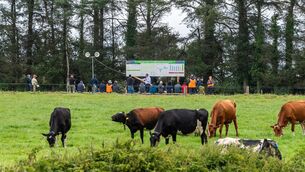
We should build on our grass-based farming, and our good progress in moving away from over-dependence on veterinary medicines, to be ready to take advantage, if meat production decreases in other countries due to new legislation on medicines.
There is a worldwide trend of reducing antibiotics in livestock farming, which will cause a temporary setback in farm performance and output.
Without the antibiotic growth promotors which are still used in many countries, mortality rates can go up, weight gains decrease, and feed conversion ratios can deteriorate as much as 3%.
Farmers responding to new controls on these medicines may have to adapt animal housing systems, in order to minimise biosecurity risks, and improve health conditions, and may have to reduce stocking densities.
As a result, production costs for feed, labour, and housing go up. The volume of production may fall, as farmers try to cope with these requirements.
Eventually, these farmers may recover to full production, but that may depend on animal health companies finding products and technologies that can replace antibiotics.
But not much progress is evident yet in that area of innovation, leaving farmers and their advisors challenged to keep productivity high, and feed costs low, with les antibiotics.

Eventually, genetics companies will develop more robust and disease-resistant breeds for higher productivity, but that also takes time.
Farmers may have to adapt by shifting their focus to disease prevention, perhaps using health monitoring technology that collects data about the animals, and allowing timely preventitive treatment or biosecurity measures to reduce the need for antibiotics no longer easily available.
It was only last January that the US banned antibiotic growth promoters, and only 38% of American poultry farmers who were surveyed believed that they can maintain production and profit levels without the promoters.
That illustrates the potential opportunity to replace lost US production, for Irish farmers and for other European farmers, who are well prepared for such eventualities, because the EU banned antibiotic growth promoters in animal nutrition in 2006.
The EU went a step further this year, with its new ‘One Health’ action plan to step up its activities to combat antimicrobial resistance (AMR), which is a serious risk to public health (in Europe, an estimated 25,000 deaths per year are attributable to antibiotic resistant infections). Ireland is better prepared for this ‘One Health’ action plan than some other member states, because we are at the lower end of the antibiotic usage league, due to our relatively low amount of intensive farming.
That is in sharp contrast to huge livestock-producing countries, such as Brazil, Russia, India, China, and South Africa, which still permit use of antibiotic growth promoters. In the BRICS countries, the use of veterinary antibiotics is expected to double from 2010 to 2030.
If they are eventually forced to cut back antibiotic usage, and suffer protein production setbacks as a result, early movers such as Ireland could be ready to step in to fill the supply gap.
It’s not just the loss of antibiotics that could hit the supply of protein from livestock, and open up new export market opportunities for Ireland. Farmers and their advisors are also warned to be prepared for possible legislation changes due to resistance developing to the cattle and sheep wormers which farmers have to administer a few times per year to their herds and flocks.
EU farmers should be given help and advice on how to cope with this trend, so that they can be prepared not only for reduced use of veterinary antibiotics, but are also equipped to deal with wormer doses not working due to increasing anthelmintic resistance.