Flying the flag for a vital service that could help save many lives
Rural Ireland is urged to get behind an air ambulance service that aims to bring those in need of vital care
Throughout Ireland, there are countless examples of families blighted by the death or disability of a loved one as a result of an accident.
Their grief and trauma are greatly added to in cases where loved ones might have survived if they received proper medical attention.
This is one of the main drivers for an emergency air ambulance service to ensure the fastest possible response to a serious accident or emergency, with the single objective of getting the patient to an
Accident and
emergency
(A&E)
department hospital on time.
Irish Community Air Ambulance (ICAA) is an extension to the Irish Community Rapid Response (ICRR) that was set up in 2008, whose volunteer first-responder doctors have helped to save the lives of many accident and emergency patients — such as West Cork Rapid Response’s Dr Jason Van der Velde, an emergency pre-hospital physician.
The invaluable work of ICRR throughout Ireland was appropriately recognised earlier this year by the Government’s provision of state funding to the amount of €446,000, which ICRR expect will double its number of on-call volunteer doctors.
The air ambulance service being launched by ICAA (a community subsidiary of ICRR), will be an invaluable extension to the existing rapid response service.
Its crucial objective is to quickly reach an accident or emergency scene, for example, within 30 minutes of call-out to anywhere in Munster. The air ambulance service based in Cork Airport, would then transfer the patient to the most appropriate A&E centre of excellence in the shortest time possible.
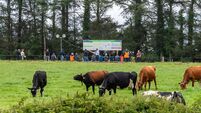
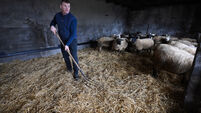
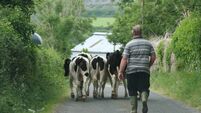
It is in rural Ireland that such a service is most valuable, not least because farming is by far the most hazardous occupational sector in Ireland, with between 30% and 50% of all workplace deaths.
Those injured in farm accidents are often at a distinct disadvantage in the race against time to get a rapid medical response.
Their farms may be located in remote areas a long distance from emergency department
A&E
hospitals, and farmers may be alone in their farm yards or in the fields when an accident occurs with life-threatening injuries.
Getting the accident victim to a hospital A&E as quickly as possible is of paramount importance.
For example, former Irish Farmers Association president John Dillon says he survived a serious farm accident only because his son was present to render assistance and to call the emergency services, which got him to hospital in time for medical staff to control severe hemorrhaging.
It happened on his farm in 2005, when his farm quad bike overturned on top of him, pinning and seriously damaging one of his legs.
In 2012, in conjunction with the Health and Safety Authority, Dillon went public to highlight the risks of farm quad bike accidents, and appealed to farmers to exercise the utmost care when using them.
There are of course countless other hazards on farms, which cause an estimated 2,500 non-fatal accidents annually in recent years.
This figure estimated from National Farm Survey results is far greater than than what is officially reported, even though there is a legal obligation to report workplace accidents.
Hence the importance in rural Ireland of an air ambulance service, in the “golden hour” after one of these thousands of accidents occurs.
Doctors and medical professionals in hospital
Accident and
emergency
hospital
departments consistently highlight the importance of the one hour period immediately after an accident or medical emergency occurs. It is well established that a patient’s chances of survival are greatest if they receive appropriate care for their injuries or medical emergency within that hour.
The ‘golden hour’ is also crucial when dealing with non-accident emergencies, such as stroke, a brain haemorrhage or serious cardiac arrest. A 2011 study in the British Medical Journal estimated that for those types of conditions, a person’s chances of survival improved by some 24% for every five-minute reduction in response time.
An air ambulance could also be crucially important for road accident victims.
The
Increasing numbers of rural dwellers
who
commute long distances to work in towns and cities, which puts them at increased risk of being involved in road accidents, especially in winter-time with ice on roads and bad driving conditions.
Diarmuid Cohalan
works as a volunteer in the €1m Irish Community Air Ambulance fundraising campaign.
He outlines why this live-saving service deserves strong support from farmers and rural dwellers