Oliver Moore: Greek co-ops offer hope in hard times
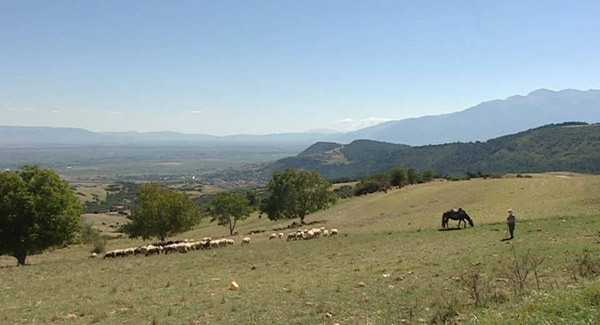
Having spent a week in rural Greece, visiting co-operatives, farms, food processing factories, and communities, the phrase necessity breeds ingenuity seems apt.
The event, organised by Forum Synergies, was the European Rural Sustainability Gathering. It was held in the Karditsa, a mountainous area five hours north of Athens.
This gathering drew 80 participants from 20 countries in and around Europe, with most being from that region: Greece itself, other Balkan and east European countries dominated. Farmers, rural development agencies, NGOs, and others who live and work in rural areas made up the attendees.
While Ireland has had a recession, Greece, it’s fair to say, saw deeper and more biting structural changes. (Greece had, while I was visiting, its fourth, highly predictable bailout last week, accompanied by mass privatisations, severe cuts to social services, tax increases, and strikes).
Responses to the dire economic situation, and the severe restrictions on what the state is even allowed to support, have forced Greek citizens to come up with a number of unique ways to develop and innovate.
Vasileios Bellis of the Development Agency of Karditsa, set out the context: “Since the economic crises, which began in 2008, there has been a severe shortage of capital. There is no foreign capital invested in Greece. Local businesses have no cash, neither do the banks.
"The state has nothing to invest either. So we’ve tried something different in Karditsa. We are collaborating more, having developed an ecosystem of collaborative institutions.”
He continues: “The only way to improve the utilisation of local resources is through ‘collective investment’ or through the social economy. In this way more people carry the risk and they are not discouraged by the crisis.
"During the crisis, social enterprises organised the main innovative and risky activities like the energy co-operative, the stevia co-operative, and the super-foods co-operative.”
While new, the ‘Ecosystem of Collaboration’ has been years in formation. The Development Agency of Karditsa was established in 1989, with an incubator to host all the innovative collective initiatives or to support the existed ones.
In 1994 the Credit co-operative of Karditsa was established, which transformed the co-operative bank of Karditsa four years later.
These elements and others such as co-operatives, not-for-profit agencies and associations, work in a harmonised way under a single umbrella to maximise internal and external supports.
This ‘ecosystem of collaboration’ is both a self-support network and a one stop shop to attract investment.
Its members have the following characteristics:
n Members share trade and resources where possible
n They are conscious that they belong to the ecosystem and know the members of it and their activities
n They develop and implement a common strategy
n Each member co-operates in preference with the other members of the ecosystem
n They establish common rules (code of conduct)
n They share services
n They develop support tools to facilitate the emergence of new collective initiatives which play a very crucial role in the economy of the prefecture.
With this approach, over €20 million was brought into the region via LEADER funding, while other sources were accessed successfully too. This has changed the region fundamentally, a huge suite of new activities, working to greater or lesser extents in harmony with each other.
Many organic farming and food initiatives have been supported, such as a 113-member co-op of farmer producers of berries, drawn from 19 regions in Greece who built a processing unit for their fruit.
This co-op has specialised in ‘superfoods’ — blueberries, goji berry, aronia, sea buckthorn.
With the EU set to adjust its Common Agricultural Policy (CAP), there are some good examples of integrated rural development emerging around Europe.
In the case of Karditsa, it is the people who came together to establish a self-support mechanism which is proving to be of benefit to the whole region.