JOHN COMER: Rural-urban imbalance is creating a very lopsided state
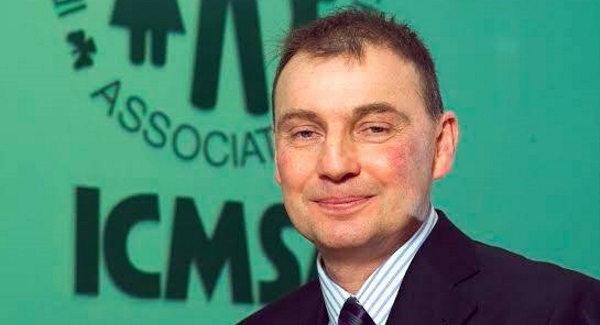
In common with other rural-based organisations, the ICMSA has repeatedly raised highlighted the seemingly inexorable withdrawal of the state and its services ‘inwards and eastwards’ — this is to say, out of rural districts and towards urban/suburban locations with a definite bias towards Dublin and its immediately surrounding counties.
The recent proposed mass closure of rural post offices is just the latest manifestation of this ruinous and shortsighted policy that judges on the most crude current cost-benefit without any idea of adding or upgrading in a way that might lead to more business and footfall. Where the State leads, commercial concerns inevitably follow and so we see Ulster Bank ‘reviewing’ its national network in a way that will see its rural branch network decimated.
All of this is increasing the challenges around just living in rural districts — still less attracting business and making development possible.
As far as ICMSA farmer members are concerned, we have probably reached the most astonishing stage imaginable when we learn that the Department of Agriculture, Food, and the Marine’s already skeletal Regional Veterinary Laboratory network is now contemplating closure of at least one of the facilities which are located in Kilkenny, Sligo, and Limerick/Clare.
That the department could seriously consider the closure of one of the last six facilities left serving as the frontline in the defence of the reputation and credibility of our nation’s €11bn agri-food sector tells you all that you might need to know about the state’s astonishingly lopsided approach to national development.
In a sensible world, the state would be rolling-out services to the sector that is our single biggest indigenous economic engine, the state would be reaching out to the farmers and primary producers that it knows are the commercial backbone of vast numbers of rural districts that would otherwise have no economic activity. Instead, it continuously makes it harder for the people who are supposed to be availing of the services to actually access them.
Instead of reaching out to rural Ireland, it is withdrawing inwards and eastwards.
It is possibly an exaggeration to talk in terms of second- class citizens at this stage, but the recent ‘deal’ patched up after years of chaos around water charges is very instructive and, as far as farmers are concerned, quite demoralising.
It’s worth remembering that at the very start of this chaotic and bed-tempered debate around paying for water, the only people specifically paying for their water — whether through group schemes or sinking their own wells — were rural communities and particularly farmers.
And, as of today, five acrimonious years later, after unparalleled confusion and backtracking and huge wastage of public money, the only people definitely paying for their own water usage — whether through group schemes or through sinking their own wells — are rural communities and, specifically, farmers.
We were the only ones paying then and we’re the only ones paying now.
It was never a problem as long as it was only us paying for water. However, the moment the urban and suburban communities were asked to pay it became a national crisis with mass-movements all stressing that the provision of water was ‘a right’. No-one had mentioned that in the decades when the rural communities and farmers had paid for their water usage.
The questionable record of the Government’s original ‘Decentralisation’ policy has meant the state has an excuse to ignore the continuing lopsided development of our nation. It is time to look again at a policy where the Government itself commits to all areas of our state and ceases to lead the retreat backwards into the urban districts providing an excuse for the banks and other companies to follow suit.
Lopsided development is giving us a lopsided State.
The ICMSA will continue to resist the emergence of a divided society where our farmer-members and rural communities suffer a one-sided access to services.