Technology: Intercropping set for key role in future of farming
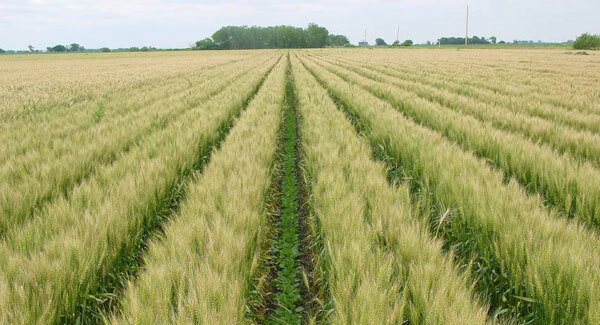
Intercropping will be an important part of the sustainable agriculture of the future.
Already, it is known that, under favourable conditions, a smart combination of crops such as six rows of wheat alternating with two rows of maize provides higher yields, requiring less use of artificial fertilisers and pesticides than the same crops in monoculture.

These are the findings of doctoral researcher Fang Gou of the Centre for Crop Systems Analysis at Wageningen University & Research in the Netherlands.
Over the centuries, farmers in the western world have changed from a mixture of crops to monoculture, facilitated by mechanisation, fertilisers, and pesticides.
“We are now reaching the limits of this approach,” says Wijnand Sukkel, a sustainable agriculture scientist based in Wageningen.
“A monoculture enables the rapid spread of pests and diseases. Moreover, heavy machinery destroys the structure of the soil.”
He is conducting experiments in the Netherlands with strips of different crop combinations, planted in varying densities.
But low labour costs are crucial, and this won’t take over from monoculture until robots that look after and harvest crops strip by strip can replace the machinery used now.
“Diseases and pests spread explosively in a monoculture, as there is such an abundance of host plants in the field,” says Sukkel.
“If this uniformity is somehow interrupted, the epidemic slows down. We have seen this with rust in wheat as well as the potato blight.
“Spiders and beetles play an important role in the control of aphids, but their range is limited. And if you simultaneously harvest and then plough entire hectares, you lose the whole ecosystem.
“In an intercropping system, useful animals can seek refuge in the plants of the other crop while one crop is being harvested, and can then migrate into strips with green manure, so they always have access to shelter.
“Intercropping makes plants more resilient. For organic farmers, who have a much lower capacity to suppress diseases and pests, this need is particularly pressing.
“Incidentally, grass and clover are already grown and harvested together for cattle feed. If crops must be harvested separately, things become more difficult.”
Wageningen University & Research’s Wopke van der Werf explained why yields can be better with intercropping.
“In an intercropping of wheat and maize, it is mainly the wheat yield which rises significantly. If you sow spring wheat in March and maize in May, especially the border rows of wheat can develop exuberantly while the maize plants are still small.
“Wheat plants also develop a larger root system, which picks up more water and nutrients from the ground. And while maize plants are initially in the shadow of the wheat, once that has been harvested, they catch up, both above and underground, especially in a sunny autumn.
“Intercropping systems utilise the growing season better, leading to improved sustainability of agriculture.”