Karen Walsh: We lack clear laws on land use and paths for country walks
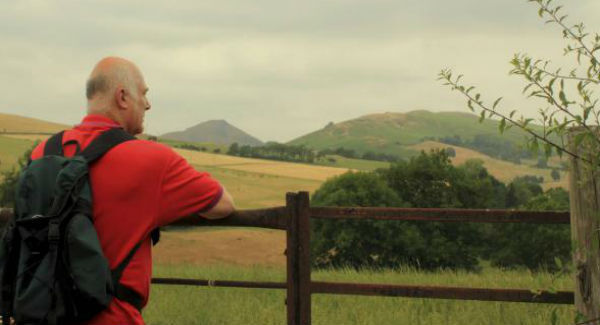
Research has shown there is a clear connection between spending time outdoors and a reduction in stress.
Fresh air and increased oxygen help to release the feelgood brain chemical, serotonin, meaning your outdoor exercise sessions not only help keep you fit and healthy, they also put you in a fantastic mood.
As people become increasingly conscious of healthy living, more and more people have been rambling across our beautiful countryside on a regular basis, and shunning the gym sessions.
As a direct consequence, many farmers are fearful of personal-injury claims being made against them, arising from accidents that occur on their lands, and of risks of increased insurance premiums after such claims.
There is considerable conflict between hillwalkers and the farming community.
The rights of walkers and ramblers are codified in the Occupier’s Liability Act 1995.
A farmer occupier owes a restricted duty of care to recreational users, by ensuring not to injure them intentionally or act with reckless disregard for them.
The act provides that where a structure on land, or a premises, has been used mostly by recreational users, the occupier must take reasonable care to maintain the structure in a safe condition.
What is reckless disregard, and who decides this question? Ultimately, if a claim is made and is not settled, a court decides.
Often, a claim is made, and the insurance company will decide to settle the matter, to avoid incurring further legal costs, so the position is very unsatisfactory for the farmer.
In one corner, you have hill- walkers who believe they should have permitted access to the countryside for recreational walking and hiking.
The difficulty is that access to the countryside is hampered by the lack of a clear legislative framework on the ownership of the land, occupation and exploitation of the land, and paths upon which such activities are based.
In this jurisdiction, the right of walkers to explore the natural countryside is very much dependent on the permissive ways granted by owner/ occupier farmers to the public to walk on pathways, to cross their land.
It is clearly the case that farmers do not feel completely protected by the occupier’s liability legislation in this jurisdiction, and the courts have accepted that legislative intervention will be required by the government of the day, to properly facilitate ramblers within the scope of private property rights in the Irish Constitution.
Our neighbours in England and Wales have made significant inroads in developing statutory right of access to the countryside.
This first type of legislative intervention was seen in the form of the National Parks and Access to the Countryside Act 1949, as amended.
The legislation permitted local authorities to increase levels of access to the countryside by means of compulsory purchase orders and through agreements with landowners.
The real breakthrough was seen in the introduction of the Countryside and Rights of Way Act 2000. The act permitted the right to roam, with some qualification.
The act says that a person may access land provided that he or she does so without breaking or damaging any wall, fence, hedge, stile or gate upon the land.
The 2000 act goes further, and protects the property interests of landowners to some degree, by requiring walkers not to intentionally or recklessly interfere with the wildlife or plant life, feed any livestock, engage in hunting or fishing, engage in any activity of an organised commercial or sporting purpose, or obstruct any person engaged in a lawful activity on the access land or adjoining land, without lawful excuse.
The 2000 act makes provision for the lambing and calving seasons, and stipulates that if a walker has a dog in his company, that pet must be on a short lead.
As regards the exposure in relation to accidents and injury, the 2000 act gives important direction in relation to this element, for landowners.
If a landowner permits a statutory right of access in England and Wales, the liability of the owner is reduced in relation to those exercising a right of access to the same level as owed to trespassers.
The legislative intervention in New Zealand allows for unimpeded access to walking tracks throughout the countryside of New Zealand, which balances the needs of hillwalkers and the concerns of farmers.
The landowner is reassured that the walkers are confined to official walkways, and consequently would not interfere with the agricultural business carried out on the property, and the obligation to insure, maintain and contest personal injury claims associated with the use of the paths would rest with the local authority.
The State acknowledges that man, in virtue of his rational being, has the natural right, antecedent to positive law, to the private ownership of external goods.
Property rights of individuals are protected under the Constitution.
However, recent court cases have demonstrated that there is a need to balance the rights of landowners against the rights of hillwalkers.