Turning point Farmers’ Rights Campaign to be recalled at 2pm in Bantry today
It was then that prices for farm products started to improve, in the run-up to joining the European Economic Community in 1973.
Farmers left behind the days when 40% of them earned about £5 a week, and the Government repeatedly refused to negotiate meaningfully with the National Farmers Association.
That was the situation in 1966 which drove NFA President Rickard Deasy to decide on direct action, modelled on the civil rights protests in the US by African-Americans fighting against discrimination.
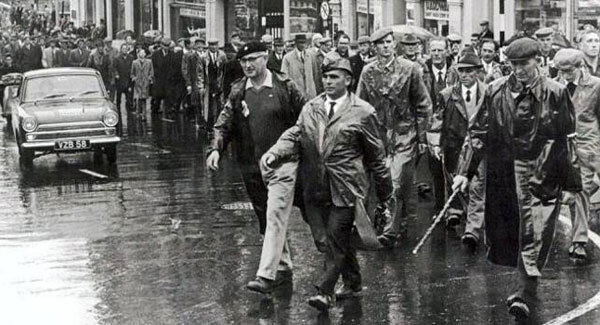
On October 7, 1966, Deasy led the Farmers’ Rights Campaign march on Dublin, which started in Bantry.
TJ Maher and local man Sean O’Brien of Bantry were also at the head of the march setting out on the 217-mile route to Dublin, to focus attention on an 11-point Declaration of Farmers’ Rights.
Marchers joined up along the way, and on October 19, a silent parade of 30,000 farmers reached the Dublin city centre.
But Agriculture Minister Charles Haughey refused to receive a deputation, and nine farmers began a 20 day sit-down protest at Government Buildings.
It was an unprecedented demand for a better life for farm families.
Even though it took years for a payoff in terms of better prices, the march had a binding effect to unite farmers, and gain the respect of other sections of the community.
After hours of talks, the NFA came to an agreement with Taoiseach Sean Lemass.
However, farmers were not easily forgiven for what was interpreted in Government Buildings as a challenge to the legitimate, elected Government’s freedom to decide policy without pressure from any section of society.
It wasn’t until January, 1967, when Taoiseach Jack Lynch had a meeting with the new NFA President, TJ Maher, to restore farmer-Government relations, that things began to change.