Oliver Moore: Family’s role in rise of organic whiskey
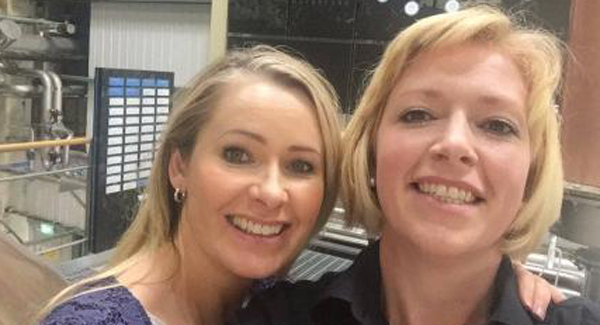
As a child, she did “all the glamorous jobs like picking stones at home on the farm”.
That farm is now one of 46 supplying malting barley to the distillery. Her father, David Power, was the first to deliver his malting barley crop this year. On September 1, Waterford Distillery began the production process for their organic whiskey.
We shut down the plant in August and cleaned it completely. This prepared the way for the organic malting barley for September 1st. We invited the Organic Trust (Certification body) down for the day too.
So far we’ve taken in malting barley from 19 different farms, all with their own soil types, and they all taste completely different. The lighter soils can produce a floral, elegant taste, whereas heavy peaty soil produces a more robust taste.
The organic we’ve sampled so far really stands out on its own. It’s very smooth, oily and complex, so it’s very obvious that the fertiliser and so on are affecting the flavour of other whiskey. There is much more flavour going on with the organic, different levels of flavour altogether.
You first pick up cloves, there’s more texture behind them, a lot of sweetness, honey, a little touch of lemon, a huge amount of flavour compared to the other farms so far. There is a much bigger mouthfeel with it — the levels of protein are more apt in organic.
For malting barley more protein equals less starch, and starch goes into sugar then into alcohol. So you need some, but below 9%.
One I’ve visited is John Mallick’s farm in Wicklow. It’s stunning, the fields are lush — I couldn’t believe how gorgeous it was. I didn’t expect barley to be as high, the grain was lovely and plump, there were no visible weeds and the grain was of a really good quality.
The organic farmers know what to do to get it right, they are very careful about what they do, even down to where and when they drive their tractors, to avoid compaction. The yield was about 1.5 tonnes per acre — conventional is twice that.
Mark (Reynier, CEO) has experience in organic, especially from the wine industry. He thinks organic is superior, with more depth and more quality. He’s also previously produced organic whisky in Scotland. Ideally, he’d work with biodynamic growers if possible.
With organic volumes, we can’t yet do one batch per farm. We got 170 tonnes from the six organic farms this time around; we need 100 for a single farm whiskey.
I expected a lot of variability in terms of size, proteins, structure, viscosity and so on — but we’ve have no problems so far in processing the organic barley. It’s yielding very well.
The starch granules in the barley are probably quite big and easy to convert to sugar — we don’t add enzymes in the mash, or any sugars, in any of our whiskeys.
Waterford Distillery’s organic whiskey will take at least five years to start to come onto the market. But will it be whisky or whiskey? The choice to keep or drop that fifth alphabet letter will probably be Mark Reynier’s — and he’s a Scot.