With just four years left, Ireland needs community ownership to avoid €500m fine for missing green energy targets
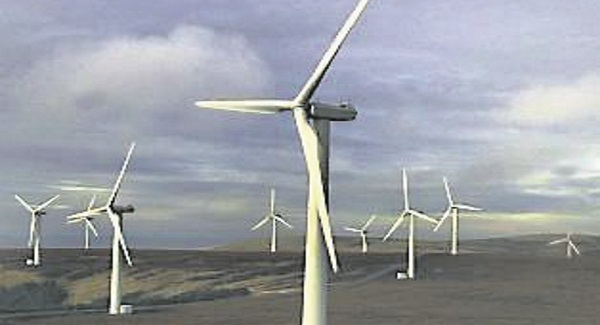
Almost 50% of the country’s mandatory targets set by the EU remain to be delivered.
There are only four years left to meet our obligations.
The Sustainable Energy Association of Ireland (SEAI) estimates we could fall short of the 16% goal by 2%.
This could result in fines of €500m.
There is significant potential to be unlocked from the farming sector.
In the past, inadequate supports have held back the contribution that farmers and the wider rural community could make.
Overcoming the disillusionment that exists will be important to realise the true value of our land base.
Farmers across the country have had approaches from solar development companies in recent months.
Various offers containing a combination of exclusivity agreements, grid connection contracts and option arrangements have been put on the table.
This is despite that fact that a tariff for solar energy production is not in place, nor is there clarity on the eligibility of lands for Basic Payment.
Our advice and direction to landowners is to consider any approaches with caution.
While solar energy production is well developed in other countries, it is very much in its infancy here.
Farmers have to consider a number of issues before committing their land to any contract that is binding for a long-term project.
IFA continues to lobby for a realistic tariff, community ownership of renewable projects and confirmation by the Department of Agriculture of the eligibility of lands for Basic Payment.
Failure to set appropriate feed-in tariffs and structures will undermine our chances of harvesting energy from this source.
We see a tariff of 17c/kWh, guaranteed for 20 years and linked to CPI, as essential to securing farmer participation.
This level will provide certainty to the landowner and allow a cold appraisal of the offer.
There is a strong case for lands are used for solar energy production to be eligible for Basic Payment.
Up to 90% of the lands under solar can be grazed and similarly 90% of the sward growth takes place, making the lands suitable for farming.
The Programme for Government must include a clear commitment to legislate for set-back distances of wind turbines from sensitive properties, such as family homes and schools.
No applications should be accepted by any planning authorities unless they clearly state that communities in the vicinity of a proposed project have been consulted and engaged with.
This community involvement must happen before the planning application is lodged.
These same communities must be at the centre of future renewable energy developments. This means that to be eligible for state financial support, all large-scale energy development companies must offer at least 25% of each project for community ownership, once built out.
Also, each year at least 1% of the turnover from these projects must be invested back into local communities to support rural regeneration and employment.
Opposition to renewables is based on a number of factors: inadequate consultation, inappropriate scale of the developments — notably wind farms — imposed on rural areas, and a lack of community participation in projects. If Ireland is serious about delivering on its renewable commitments, the future must look very different from the present.
If Government is serious about community participation in renewable energy production, it must put in place the following measures for community projects: a 2c/kWh tariff premium, grid exemption and a community quota — whereby at least 25% of any new renewable scheme is ring fenced for community projects that have at least 25% community ownership.
The delivery of these policy measures can make a significant difference to rural communities. They can also contribute to the delivery of Ireland’s EU renewables and climate obligations.