Stephen Cadogan: Restoring funding for farming and food sector key for Michael Creed
He will chair a dedicated cabinet committee on regional and rural affairs, to provide for effective monitoring of delivery and clearer co-ordination across all policy areas that affect rural Ireland.
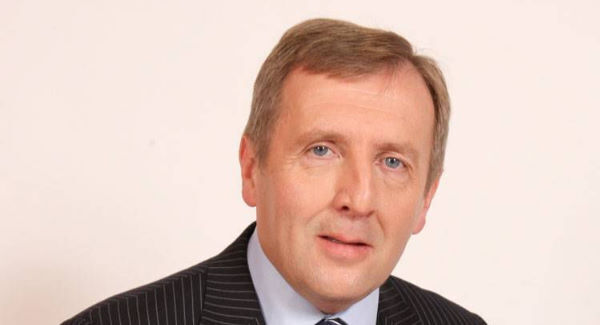
Agriculture, Food and the Marine gets back its own exclusive minister in the form of Michael Creed.
The Government’s action plan for rural development will also be implemented through a new Department of Regional Development, Rural Affairs, Arts and the Gaeltacht, headed up by Heather Humphreys.
Her department retains all of the functions of the former Department of Arts, Heritage and the Gaeltacht, but is assigned responsibility for rolling out rural broadband, developing the post office network, the LEADER programme, an expanded town and village renewal scheme, the Tidy Towns scheme, the Western Development Commission, implementation of the CEDRA report, the dormant accounts fund, and social enterprise.
Confirming “the very strong emphasis on rural areas in the programme for government”, new Social Protection Minister Leo Varadkar noted that much can be done to develop the rural social schemes in particular.
The Government’s rural commitment augurs well for Mr Creed’s prospects of unlocking scarce national resources for agriculture.
Restoring some exchequer funding for the farming and food sector may be an important objective for him, because extra money from Brussels may not be available.
In mid-March, the European Commission announced more help for the EU’s dairy, pigment, fruit and vegetable sectors.
But the support package, including intervention, allowing producers to freeze milk production, relaxing EU limits on state subsidies, and effectively suspending EU rules on fair competition, involves little or no new EU money, with more than €1bn having already been injected in an effort to plug the hole left by Russia banning Western food imports.
More financial help will have to be found somewhere, with the EU under severe pressure to help farmers in every member state.
The crisis fund made up from deductions from annual payments to farmers may have to be tapped.
In these difficult times, Mr Creed is lucky to have a former colleague in the agriculture commissioner’s seat in Brussels.
And the commissioner, Phil Hogan, has shown himself to be particularly sympathetic to the cause of Irish farmers, emphasising again and again the significant competitiveness deficit in this country, due to higher interest rates.
Working with the commissioner to draw down European Investment Bank funds for the agri-food sector looks like a readymade opportunity for the new minister.
The Commissioner is also onside in efforts to reduce EU import tariffs on fertilisers.
Progress here could save farmers as much as 14% on fertiliser purchases.
The Commissioner and minister will also have ongoing good news to announce on simplifying the Common Agriculture Policy, before they get down to bigger issues in the mid-term review of the CAP.
Farmers will want to see a considerable increase from the national exchequer going to agriculture in the next Budget, as a sign of faith in agriculture’s huge rural role.
Some of that money should go to measures to ease the volatility of dairy farmers incomes, which could be modelled on systems already in place in other countries.
An issue Mr Creed is already familiar with is the impact of land designations which have made farming profoundly difficult in many areas, rendering land essentially worthless.
The farmers who cannot drain, till, build, plant or cut on this land will be glad to see Mr Creed, a TD for one of the worst affected areas, becoming the minister for agriculture.
Nor will his constituents waste time letting him know how disappointing the TAMS targeted agricultural modernisation scheme has been, with some farmers waiting for approvals nine months after the scheme opened.