Advice from Teagasc: Look after male half of the herd
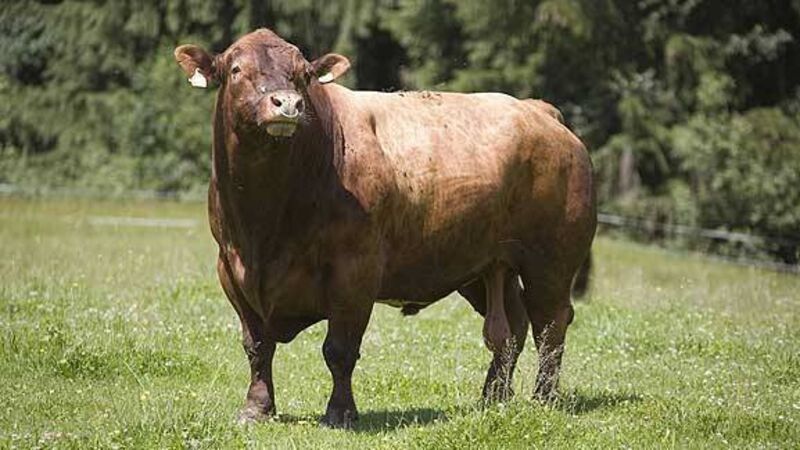
The bull provides half the pool of genetic traits making up the herd. He is essential for making the other half of the herd productive, that is, the cows and heifers, by making them pregnant.
Your bull needs to score a “bullseye” with the female breeding stock in the herd.
Don’t take any half chance with your breeding stock bull. Your bull needs to be fit for the fray, in a good suitable body score condition for the forthcoming breeding season.
Ensure your stock bull is on a high plain of nutrition, in perfect health, with a high viable sperm count.
Standing Power
Can he stand up to the job? Hooves and legs are vital.
Prior to the breeding season, observe stock bulls as they graze in the field. Is the bull tender on any of his hooves or dragging a leg?
Has the bull any difficulty in getting up or lying down?
If there is a lameness problem with your stock bull, then he will definitely not stand up to his task.
Call for veterinary assistance for prompt treatment if there is a lameness problem. You could end up with half a herd, due to a bad bull lameness problem.
Remember, 5% of all stock bulls suffer from arthritis.
Shooting Blanks
Is your bull shooting blanks? Hopefully not.
The ability of a bull to get the cows and heifers in your herd to conceive a calf is the best indicator of his fertility.
Don’t assume the stock bull will have the same breeding performance as last year. Up to 4% of Irish stock bulls are infertile or sub-infertile.
Any raised temperature due to illness in the run-up to the breeding season can lower the bull’s sperm count.
When the breeding season starts, keep tabs on early calvers, the first to return to heat. Carry a pocket notebook to record the return of these early calving cows to heat.
They will be the first female breeding stock serviced by your stock bull. A high number of repeat heats in these early calvers may indicate an infertile or sub-fertile bull. Lameness, joint or hoof problems will also influence bull performance.
Careful observation of the stock bull in the weeks and months before the breeding season is a hugely important part of breeding management on suckler farms.
Have a back-up plan if you think that your bull is underperforming. However, buying a stock bull at short notice can be a very risky business.
Buy only from a reliable, reputable source, and ensure you get plenty of background breeding information and past health records
Lazy Bulls
Some breeds of bulls may appear to be “lazy” in their breeding habits.
A perfect example is Limousin bulls versus Belgian Blue bulls. If a Limousin bull is in a field with two cows in heat at the same time, he will breed them one after another without a break.
However, if a Belgian Blue bull is present, he will mount and breed one cow first, then lie down for a rest before attempting to service the other cow. Leave him alone, he doesn’t need a helping hand.