News Q&A: EU fertiliser import duty costs its farmers €920m
A complete removal of all import duties on fertiliser in the EU would create more than 17,245 jobs, according to the Washington-based International Food Policy Research Institute (IFPRI), in its report commissioned by IFA.
There would also be a big gain in financial terms, because losses for the fertiliser industry (€123 million) and a €315m reduction in EU public revenues, if duties were removed, would be exceeded by €920m of gains for the agricultural sector, resulting in a beneficial net gain for the EU of €481m.
The International Food Policy Research Institute (IFPRI), which provides research-based policy solutions to sustainably reduce poverty and end hunger and malnutrition in developing countries.
It is a research centre of the CGIAR Consortium, a worldwide partnership engaged in agricultural research for development.
IFA wants to drive down excessive input costs on Irish farms, including an annual spend of over €500m on fertiliser.
The combination of rising input costs, particularly for fertiliser, allied with falling commodity prices has decimated family farm incomes, says IFA.
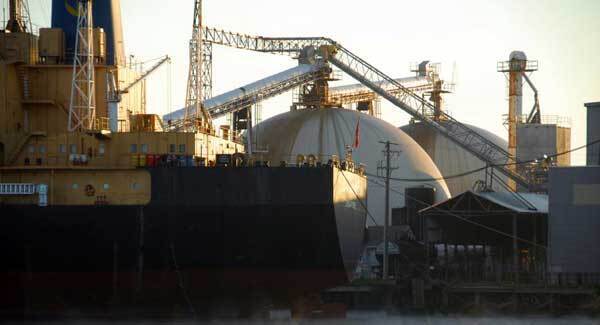
According to IFPRI, lack of competitiveness and the large needs of agriculture led Europe to become a net fertiliser importer.
European imports of ammonium, urea, and NPK fertilisers are taxed with a Most Favoured Nation tariff of 6.5%.
The EU also has implemented anti-dumping duties targeting Russian companies, ranging from €32.83 to €47.07 per tonne for ammonium nitrate.
This trade policy must be put in the context of fertiliser price increases, in Ireland’s case nearly twice the rate of other input prices from 2005 to 2014.
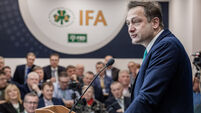
IFA National Chairman Jer Bergin said IFA expects an urgent investigation by the EU Commission on foot of the strong evidence put forward by the IFPRI report.
In the first instance, he called on the Commission to cut input costs to farmers by abolishing duties and border taxes that only serve to protect European fertiliser producers at the expense of farmers.
The report also finds that, “price fixing and cartels might be operating in the highly-concentrated markets such as Western Europe”, and calls for further examination of pricing behaviour and potential market power exertion in the industry’.
An IFA delegation led by Jer Bergin has met EU Commissioner for Agriculture Phil Hogan to present the report to him.
Copa and Cogeca, representing farmers and agricultural co-ops across the EU, has supported the IFA call for the market situation to be addressed.
While prices in Europe increased by 123% between 1970 and 2002, fertiliser prices in Brazil decreased by 65%.
IFA Inputs Project Team Leader James McCarthy said anti-dumping duties and customs tariffs on imported fertiliser distort the EU market by preventing real competition
IFPRI said the fertiliser market in the EU is relatively concentrated and consequently, fertiliser prices are relatively high.
“This may be, at least partly, the result of a protectionist trade policy which benefits the European fertiliser sector to the detriment of the agricultural sector,” according to IFPRI.
“Consequently, the liberalisation of this sector appears to be a beneficial reform for the European economy,” according to the Washington-based research organisation.