188 submissions to Minister Humphreys show burning and hedge cutting are hot topics
It’s not surprising that moves to relax cutting, grubbing, burning or destruction of vegetation have generated much debate.
In a public consultation on such moves, Minister for Arts, Heritage and the Gaeltacht Heather Humphreys received 188 submissions from various representative and government bodies, elected representatives and members of the public.
Stakeholder groups, such as Birdwatch Ireland, An Taisce, the IFA, the ICMSA and government departments and local authorities were among those to respond.
Some 102 submissions were received from members of the public, 44 from representative bodies, 29 from other government departments and local authorities, eight from elected representatives and five from businesses and consultancies.
So far, it has been illegal to burn vegetation from March 1 to August 31.
Fire can enable rapid and cost-effective management of unwanted vegetation.
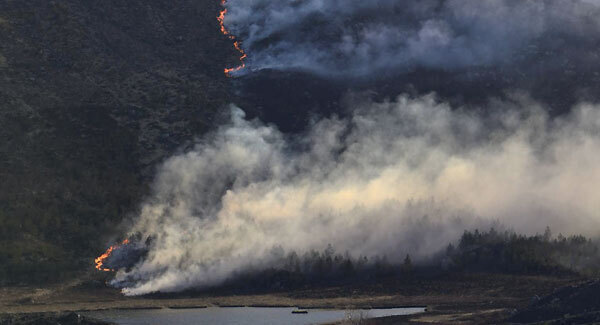
But uncontrolled burning leads to destruction of fragile habitats and can place lives and property at risk.
If land is left unfit for grazing and cultivation after burning, it is likely to be deemed ineligible for EU payments.
The preferred method of control for upland vegetation is grazing at a sustainable stocking rate which does not result in overgrazing or undergrazing.
But controlled burning during the burning season may be warranted if vegetation becomes too strong and mechanical cutting is not an option.
As for hedgerows, they are nearly as important for farmers as the fields they enclose.
Farmers in the REPS scheme have planted 5,000km of new, native Irish hedgerows on 15,000 farmers, and rejuvenated a further 2,800km of existing hedgerows — Ireland’s largest hedgerow planting in 200 years.
Farmers in the GLAS scheme have committed to plant 1,300km of new hedgerows, and the scheme also subsidises farmers to rejuvenate hedgerows by coppicing.
Meanwhile, farmers who disturb birds, their nests, or eggs deliberately disturbed at any time but particularly during the nesting season, whether by burning or cutting vegetation, are in breach of cross compliance rules, and will have their EU payments reduced if this is detected during an inspection.
The chances of getting away with this are reduced by initiatives like, for example, the Irish Environmental Network’s advice to the public to report such activity to the Garda station and National Parks & Wildlife Service, preferably with photographic or video evidence.
Up to now, both hedgerow trimming or vegetation burning can only be done between September 1 and March 1.
For all farmers (whether in agri-environmental schemes or not), all hedges are classified as landscape features, and are thus protected under cross compliance regulations.
If a farmer removes a length of hedge, he or she must plant the same length of hedge along a different farm boundary.
The new hedge must be planted in advance of removal of any existing hedge.
A penalty will be imposed on the basic payment, ANC payment, and agri-environmental payments of any farmer who removes a hedgerow without having planted the same length of hedge in advance of removing the existing hedge.
The penalty will depend on the length of hedge removed but varies from 1% if less than 20m to 5% if more than 100 metres.
If hedgerows or field boundaries of more than 500m are to be removed, the farmer must apply to the Department of Agriculture for approval before work starts.
A permit is needed in advance for burning hedge trimmings; no accelerants can be used.
Burning requires written approval from the county council and notification to the local fire brigade before and after burning.