Carbon rules may limit co-ops’ ability to reach growth ambitions
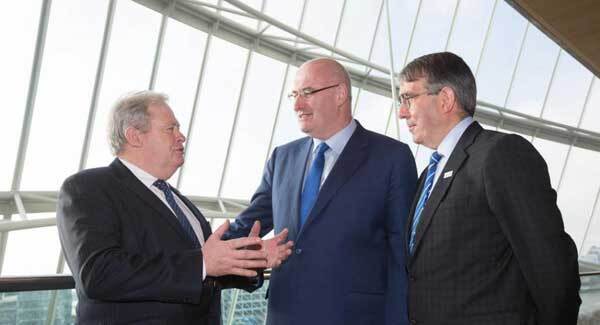
Irish Co-operative Organisation Society (ICOS) president Martin Keane was speaking at its 39th annual national conference in the Convention Centre Dublin, attended by EU Agriculture Commissioner Phil Hogan and Agriculture Minister Simon Coveney.
Mr Keane said the end of milk quotas earlier this year allowed Irish dairy farmers to take ownership of their own future for the first time in a generation.
However, this is rapidly being framed by public policy in relation to climate change and agriculture at a national, EU, and international level.
“Ireland is required to reduce its non-Emission Trading Scheme emissions by 20% by 2020,” said Mr Keane.
“This target includes agriculture and unfortunately, as a country, we are likely to fall short in the achievement of this target.
“In addition to climate change, global food security is a pressing concern, with the global population likely to reach over 9.7bn by 2050.”
Mr Keane said the Irish agrifood industry can play a leading role in meeting these challenges, as it supplies the most carbon-efficient food in the world to more than 35m consumers globally.
“As we enter into the final weeks of negotiations before the start of the UN meeting on Climate Change in Paris, the challenge is blunt,” said Mr Keane.
“We need to produce enough food to feed a growing global population in a manner that doesn’t damage the environment. This is the essence of sustainable intensification, a key component of the Food Wise 2025 Strategy.”
Mr Keane said the European Council conclusions of October 2014 need to be fully reflected in future EU policy on climate change post-2020.
Describing market volatility as the key ongoing challenge facing dairy co-ops and their members, Mr Keane welcomed the European Commission’s €500m aid package as an “important initiative”.
“The resultant fund of €13.7m for Ireland, while modest, will provide much needed liquidity to hard pressed farmers,” said Mr Keane. “It is essential the minister matches this amount with co-funding in a timely manner.
“However, it represents only about 3% of the revenue loss suffered by farmers this year, and in total will be less than a quarter of the support afforded to farmers by their co-ops. ICOS estimates that the level of co-op support for dairy farmers this year may total €100m.”
Mr Keane said farmers face significant cashflow difficulties next spring.
Milk prices will be more aligned to the base price with lower volumes and constituents and markets may have only partially recovered.
Mr Hogan told delegates that finding new and better ways to allow farmers and agribusinesses to invest for the future is crucial. A memorandum of understanding was signed between the European Investment Bank and DG AGRI in July 2014.
“The opportunity and importance to make progress on such a tool has been one of the themes of our engagement with the European Investment Bank,” he said.
“We are still a long way off, and of course the EIB needs to do its own assessments diligently, but I believe that some modification or variation of the following characteristics could ultimately prove to be workable.”
Mr Hogan listed those characteristics as loan terms of up to 15 years; very low interest rates; monthly milk cheque as security and loan repayments that can flex up and down to reflect milk price movements.
“I want to leverage the bank for the benefit of farmers and industry,” he said.
“This is the biggest private bank in the world, owned by the 28 EU nember states and it has a key role to play.
“A ‘coalition of the willing’ now needs to fully throw its weight behind the proposal, applying pressure on the EIB to deliver for the agri-food sector, Europe’s biggest employer.”