Oliver Moore: Organic, for whom the bell St Tola’s
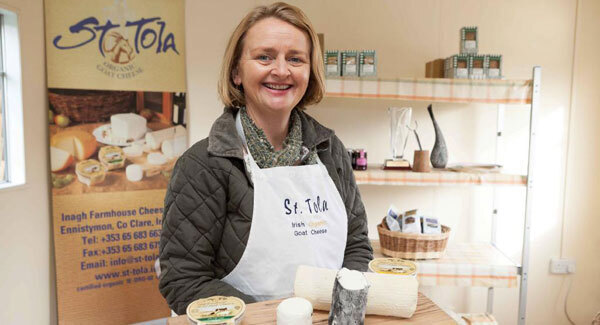
So I rang proprietor Siobhan Garvey for a chat.
We’d a big problem with rushes, especially after those two terrible summers.
The cost of buying in organic feed, because of where we farm — in Inagh, west Clare — was prohibitive. It’s three times the price of conventional.
And with the economy we couldn’t put up prices. To stay organic I would have had to let staff go and just do farmers markets. My heart is in organic but the land is peaty and boggy.
No not at all. We still use homeopathic medicines, have the same density of animals — but the grain we buy in is GMO free only now, not certified organic.
We have always been artisan anyway, and the new Taste Council definitions are helpful.
We produce 20 tonnnes per year, 90% of the milk is from our own herd, the rest from a farmer in Portumna.
Yes that was the first coup. The definitions are good, I’m on the Taste Council and while enforcement officers don’t exist like in organic, to be fair, McDonalds pulled back quickly.
Yes we would have. We also applied for a derogation during the fodder shortage and again we didn’t get it.
It was also an animal welfare issue. Things change over time, land changes, there has to be more flexibility in the organic rules.
Now, you have to have rules but sometimes there are external factors you can’t control. We couldn’t make good quality hay in those bad summers — we need hay for milk taste quality — but after those bad summers we couldn’t make it.
It was so scarce, and the economy was down, we had no price increase in seven years. If prices went up because of fodder, we wouldn’t be in the marketplace.
The main customers I spoke with — not the biggest, the most important ones — they said it was always about the farm, the methods the people.
This problem will happen more and more with climate change too — neither derogations came through and that was impossible, I found it very difficult as organic farming is what I really want to do. But we didn’t just go into commodity farming.
No, not at all. Litter is cleared out 3-4 times per year, so we spread the dung which is a natural fertilizer. We got better fodder in May this year.
For us the biggest cost is the fodder, then grain, then wages. Conventional grain is not going up as fast, costwise, as organic.
The climate and location make it very difficult to think about going back, in west Clare especially.
But that’s part of the beauty of the cheese — where it comes from. Organic, it’s where my heart is, but it would still be very difficult.
Honesty is the best policy, we’ve seen that with food scares — it comes back to haunt you if you aren’t honest.
I was straight up with my customers, it’s the only way to be.