Kieran Coughlan: Dairy farmers left exposed by income averaging for tax
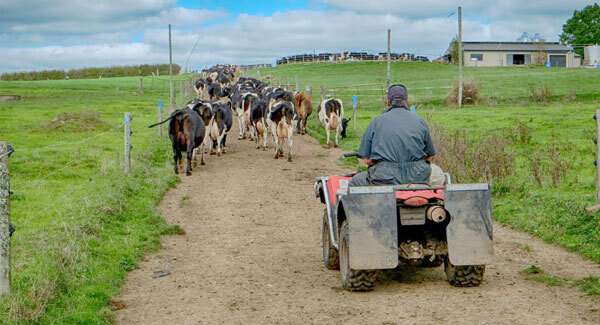
Milk prices are below 30 cent per litre across the board, leaving farmers under severe pressure; this is especially the case for those who have invested heavily in expansion.
Volatility of farm incomes has increased substantially over recent years.
This is perhaps most profound in the dairy sector.
At farm gate, milk prices have varied from 22 cent in 2009 to 39 cent, and back to a current price of around 28 cent — all within the space of six years.
Unfortunately, the effect of the variance in farmers’ sales is amplified, when it comes to farm profit.
For instance, milk prices dropped 30% between 2008 and 2009, yet farm profitability (excluding single payments) dropped by a huge 88%.
Taking average dairy farm profitability from National Farm Survey data, the average dairy farm incomes have been as follows: in 2014, €68,887; in 2013, €62,994; and in 2012, €49,290.
Some farmers have the option of having their incomes taxed under the averaging basis.
Taking the above figures, had a farmer earned these profits over the years 2012 to 2014, and elected to be taxed on the averaging basis, he or she would pay tax on an average profit of €60,390 for the year 2014.
Outside of averaging, the farmer would be taxed on the full profits of €68,887 earned in 2014.
In contrast with this is the expected outlook for dairy farmers for 2015, with Teagasc predicting income will amount to €35,000 to €40,000 this year.
For farmers who have not paid sufficient preliminary tax, the likely tax bills arising from 2014 can pose a serious financial drain at the worst possible time, especially for those farmers who find themselves over-stretched with borrowings or expansion costs.
For farmers who are in income averaging, the prospect of reduced milk prices in 2015, expected to continue into 2016, provides a bleak picture, as hefty tax bills will continue over coming years as a result of the partial inclusion of 2013 and 2014 profits in the tax calculations for year 2015 and 2016.
This problem is exacerbated by recent changes to our tax code, which is extending the averaging period to four and five years by 2016.
Assuming the following income projections, it’s apparent the tax outcomes resulting from averaging will cause future cash flow difficulties into 2016 and 2017.
Notably, the total tax payable in respect of year 2015 will be €9,272 higher than would otherwise be the case, had the farmer not opted for averaging, and the tax payable in respect of 2015 will swallow up more than 50% of farm income.
The key point here is that averaging can result in even more cash-flow pressure, as income falls.
It’s a case of ‘damned if you do, and damned if you don’t’, when it comes to staying in or opting out of averaging.
Opting out of averaging isn’t a simple matter, as to do so can result in a claw-back, with the potential for the two previous years’ profits being rounded up to the last year’s averaged profits.
Based on the National Farm Survey data, a farmer earning the national average farm profits for each year 2011 to 2014, and choosing to opt out of averaging for year 2013, would face a clawback resulting in an extra €28,805 of profits which could be taxable at up to 52% tax, depending on that farmer’s effective tax rate.
As always, each individual should examine their own situation and obtain advice specific to their circumstances.
Let’s hope Budget 2016 will bring some effective measures to help farmers deal with income volatility.