IFDL reject GLAS solution to hen harrier problems
They are very concerned and annoyed that the designation restricts their farming, and causes them major financial loss.
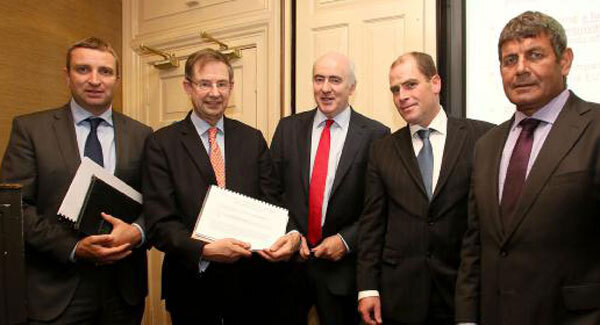
Liam O’Keeffe, Chairman of the Irish Farmers with Designated Land (IFDL) group, recently addressed members of the Oireachtas Agriculture Committee on the difficulties for the affected landowners.
The designation was set up by the government under the EU Birds Directive, which protects all naturally occurring wild birds in the EU.
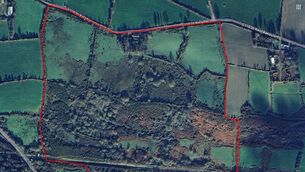
In November 2007, the National Parks and Wildlife Service designated 167,111 hectares of land under this directive in mainly upland regions of Kerry, Cork, Limerick, Tipperary, Clare, Galway, Laois, Offaly and Monaghan. This affects about 3,860 landowners.
GLAS was introduced in April, 2015, with a maximum payment of €370 per hectare, paid up to 18.92ha, made up of €5,000 basic GLAS payment, and a hen harrier top-up of up to €2,000.
This effectively means that the only extra payment available to a landowner for hen harrier land is €2,000 added to the basic GLAS, and to achieve this, a landowner would need to own 18.92 hectares.
And afforestation and wind turbine planning permissions are not allowed, which decimates the value of the land. It is very clear that the current compensation scheme is patently unfair and totally at variance with the land designation principles enshrined in EU legislation.
We have two issues here, proper compensation for farming in a restricted way because of the designation placed on the land, and the devaluation of the lands because landowners cannot get permission for afforestation or wind turbines.
There is now a general blanket ban on planting trees for forestry in the hen harrier (SPA) region.
These are upland areas, and forestry is often the only viable farming activity.
Land for forestry sells for €4,000-4,500 per acre. We have many clear examples from both auctioneers and landowners where prospective buyers indicated that it was too risky to purchase lands designated for hen harrier (SPA)
Where this type of land comes up for sale, generally bids will not be received.
This bars landowners from selling poorer land in order to buy better land and develop their farm; to raise collateral for development, or whatever reason they may want to borrow; to help adult children buy a site, build a house, or set up a business; to move to a retirement home; or to finance medical treatment.
Forestry and wind turbine developments should be generally permitted, as promised in 2008 when lands were designated; equivalent parcels of land can be designated from clear-fell state-owned Coillte lands, or from within the same farm, if all the landowner’s land is not designated. Otherwise, compensate landowners for not being able to plant land or develop wind farms.
You also suggest that a tax credit be attached to lands. Can you explain how this would work, and how it is used in the US and Canada, for example.
A tax credit would ensure that hen harrier designated land which is put up for sale would make a price similar to land for forestry.
In the US, a state tax credit scheme for conservation land was first put in place in the 1980s in North Carolina, and afterwards in several states. Basically, as we understand, it gives tax credits to landowners to deal with the devaluation of land.
A carbon credit on designated land could have a similar effect to the tax credit.
Over €13m of compensation was paid to landowners from the 2008-2013 Hen Harrier Farm Plan Scheme. You want the scheme re-instated with amendments. What are the amendments?
IFDL proposes the €370/ha GLAS Plus payment for up to 18.9ha, plus hen harrier compensation of €370/ha for lands in excess of 18.9 ha, and an additional é150/ha top-up front loaded for up to 13.5ha (this ensures that landowners with less than 13.5 ha receive a payment in access of the GLAS payment which is available to all qualifying applicants, whether in designated areas or not).
Compensation must be guaranteed for the full designation period, for every designated hectare.