Genomics on way for beef
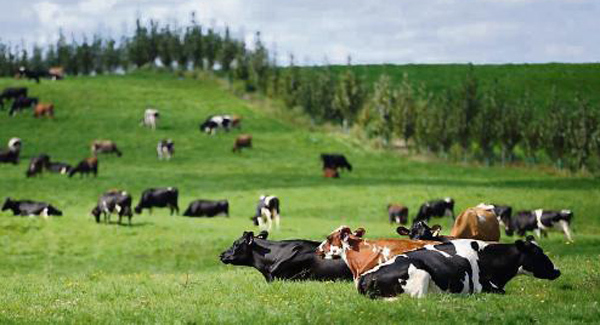
Within a few years, every single calf born in Ireland will be genotyped at tagging, suggested Dr Donagh Berry of Teagasc Moorepark.
Genomics on way for beef

He was spaking at the recent conference in Tullamore on Advances in Knowledge and Technologies for Agriculture, organised by Teagasc, UCD and the Agricultural Science Association.

He said the resulting genomic evaluations will be available for use in breeding programmes — and can be used to “manage” the animal right through to the end purchaser (abattoirs, victuallers, exporters, farmers), and to help determine the sale price.

He said the cost of genomic evaluations has already fallen from its recent level of €30, and will continue to fall.

The technology could transform Irish farming for the better, bearing in mind Dr Berry’s estimate that it has already generated over €16m of profit for Irish dairy farmers, by doubling genetic gain since the introduction of genomic selection in dairy cattle.

Genomic selection is the process of supplementing pedigree information with DNA information, and it has been implemented for Irish Holstein Friesian cattle since 2009. Retrospective analysis reveals that genomic predictions are up to 54% more accurate than traditional pedigree-based evaluations.

In 2014, 59% of dairy semen used here was from genomically tested sires. Currently, over 12,000 Holstein-Friesian bulls are genomically evaluated annually; previously, fewer than 70 bulls were tested annually.

Genomic evaluations for beef cattle will be launched in autumn 2015, and research on genomic evaluations in sheep has just begun.

Genomic evaluations are particularly useful in beef for low heritability traits. For example, the reliability of fertility in beef cattle is expected to increase from an average of 23% to 43%.This will give breeders and farmers greater confidence in the published genetic evaluations.

Milk yield in beef can also be better predicted, with increased genomic evaluations.

Genomics can also be used for meat traceability, parentage validation and assignment, precision mating, and to gain a better understanding of the underlying biology of traits, enabling better management.

The precision of genomic evaluations has improved, and will continue to improve.

Genomics is the study of all the molecular information contained in the DNA of biological cells and tissues.

To a greater or lesser extent, the majority of agriculturally relevant traits are under genetic control. In combination with management therefore, DNA variations in animal genomes contribute to differences in performance.

More in this section

Farming

Newsletter

Keep up-to-date with all the latest developments in Farming with our weekly newsletter.

Cookie Policy Privacy Policy Brand Safety FAQ Help Contact Us Terms and Conditions

© Examiner Echo Group Limited