GLAS: earn up to €1,200/ha on field margins
GLAS is not a whole-farm scheme like REPS.
GLAS: earn up to €1,200/ha on field margins

Instead, farmers must choose options, as is the case in AEOS.

In order to apply, a GLAS plan must be drawn up by an approved GLAS adviser.

There is no guarantee of entry.

If accepted into GLAS, a nutrient management plan, including soil sampling, must be prepared before the end of the first calendar year of the scheme.

Also, farmers must attend training before the end of the second year.

Environment

If a farm does not have a priority environmental asset (PEA), in order to improve the chances of successful entry into GLAS, Teagasc advises farmers to choose one of the two relevant priority actions.

For grassland farmers, this involves either wild bird cover or low emission slurry spreading.

Tillage farmers may choose either 10 ha of catch crops or 10 ha of minimum tillage.

Priority actions for grassland

* Growing wild bird cover involves sowing at least 1 ha of a crop such as a mix of oats and linseed each year, and leaving it un-harvested, to provide food and cover for birds during the winter months.

Payment is €900 per ha per year, and farmers may grow up to 3 ha in one or several areas of at least 25ha.

* Low emission slurry spreading involves spreading all of the slurry applied on the farm (home produced and imported) using a trailing shoe, band spreader or injection.

These improve the recycling of organic fertiliser and help to reduce nitrous oxide emissions, ammonia emissions and odours.

Payment of €1.20 per cubic metre is made in arrears each year, based on the farmer’s annual declaration to the Department of Agriculture (DAFM), supported by evidence such as a calculation of slurry produced and imported, and/or a receipt from a contractor.

Priority actions for tillage

* Catch crops absorb nutrients and prevent leaching in the autumn and winter.

Crops containing an integral mix of two prescribed species must be sown by September 15 each year, using light cultivation techniques – ploughing is not permitted.

They can be grazed or removed by cultivation after December 1.

Catch crops may be rotated — to be notified to the DAFM on the annual BPS application form.

Payment is €155 per ha per year, and farmers are eligible for payment on up to 32ha.

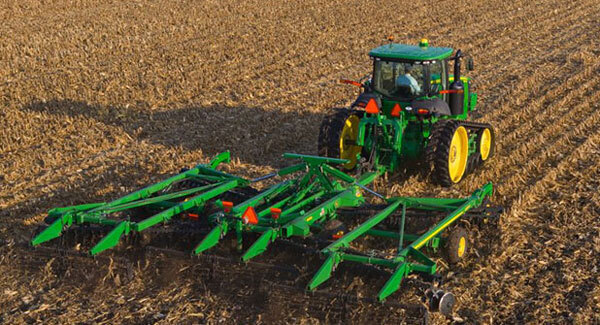
* Minimum tillage involves sowing crops without inverting the soil; soil cannot be ploughed.

The action must be undertaken on the same parcels for the duration of GLAS.

This must be carried out on the next crop establishment following approval into GLAS.

Payment is €40 per ha per year, with no limit on the area eligible (125ha@€40=€5,000).

The highest paying GLAS actions (€1,200 per ha) are available on the least productive part of the fields — the margins next to field boundaries and watercourses.

Arable margins are available to tillage farmers, while grassland farmers can avail of the riparian arable action if they have a watercourse.

Both are flexible, in that farmers can choose them in some or all fields, and can choose different widths in different locations.

* Arable margins: a choice of 3-metre, 4m or 6m wide margins is available.

A grass seed mix containing cocksfoot or timothy must be sown at the start.

Where a margin is established along a watercourse, an additional 2m unsown (with an arable crop) must be in place between the watercourse and the arable grass margin.

The margin must be mulched, mown or grazed at least once per year, but not between March 1 and August 15.

Off-takes can be removed.

* Riparian margins: A choice of 3m, 6m, 10m, or 30m wide margins is available in grassland parcels.

The margin must be fenced, and must be stockproof and fit for purpose.

It must consist of permanent stakes and wire appropriate for the livestock type.

If the watercourse is in a designated special area of conservation (SAC), and fencing is not allowed by the National Parks and Wildlife Service, this action cannot be selected.

The margin must be mulched or mown at least once per year, but not between March 1 and August 15.

Off—takes are allowed.

Hedging actions relate to every farm.

While coppicing or laying are not eligible on external farm boundaries under GLAS, new hedgerows can be planted on external boundaries provided the farmer has control of both sides.

All newly planted, coppiced or laid hedgerows must be fenced, whether in a grass or tillage field.

The fence must be stock-proof and fit for purpose.

Planting new hedgerows

This GLAS action specifies six plants per metre in a double row of white thorn and/or blackthorn and/or holly.

Grass and other competing vegetation must be controlled.

While GLAS does not insist on the use of plastic, Teagasc strongly recommends this method of weed control.

Place a strip of used silage plastic 1.2m (4‘) wide over the stumps of whitethorn plants that have been pruned back to 100mm (4‘‘) immediately after planting.

Ensure that the plastic is held in place using gravel or tuck the edges of the plastic into the ground with a spade.

Coppicing

GLAS specifies cutting less than 15cms from ground level.

Where a circular saw is used, stumps may need to be re-cut with a chainsaw to achieve the clean, sloping cut necessary.

GLAS also specifies that gaps must be in-filled, if present.

The key to successful coppicing is the choice of suitable hedgerows.

Teagasc recommends choosing hedges containing predominantly whitethorn shrubs with one stem/metre, so no in-filling is required.

Laying

This is similar to coppicing, except the stems are partially cut through near to the ground and bent over or laid to form a living barrier, which continues to grow while new growth comes from the cut stump.

Laying cannot be carried out using heavy machinery.

x

More in this section

Farming

Newsletter

Keep up-to-date with all the latest developments in Farming with our weekly newsletter.

Cookie Policy Privacy Policy Brand Safety FAQ Help Contact Us Terms and Conditions

© Examiner Echo Group Limited