Stephen Cadogan: Ineligibility follows forced destocking on the uplands
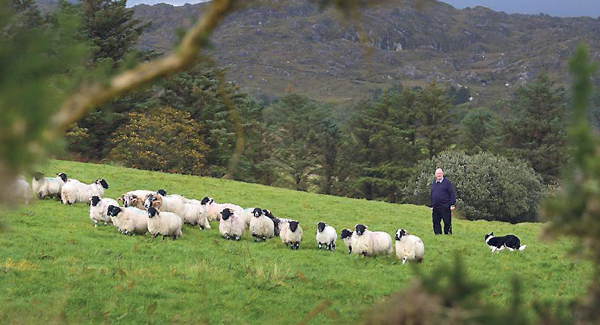
Commonage framework plans tied them to reduced stocking rates in subsequent schemes such as REPS and AEOS, and obliged them to remove cattle from commonages from November to May.
Twenty year later, destocking is one of the reasons why landowners get notifications stating, “Where commonage may seem to be eligible, but not the subject of a farming activity, it will be deemed ineligible for payment. This means that [the] area eligible for payment (known as the reference area) of any such commonage will be reduced to take account of the level of inactivity, for the purpose of drawing down payment.”
In other words, no more of the EU payments which keep farmers in place in disadvantaged areas, for the acres left “unfarmed” (as interpreted by officials) since destocking of hill farms in the late 1990s.
A review in 2013 resulted in some 33,000 parcels becoming the subject of over-claim notifications, deemed ineligible for payment, from the Department.
Some of the farmers were able to offset the over-claim by having some excess land, through “stacking”. Some farmers accepted the notification of loss of EU payments — but 10,000 appeals were lodged against notifications.
Some of the appeals come from farmers who were advised by experienced Teagasc experts when declaring lands eligible in their applications for EU payments.
But what farmers call the eye in the sky (the satellite photography of farms, or what the Department calls ortho-imagery) didn’t agree with Teagasc assessments... and when an inspector visits in response to an appeal, he or she is quite likely to give a view on land eligibility which differs from the other two.
Farmers say that EU auditors also gave different assessment of the percentage eligibility of land compared with the Department’s view, in some cases. This is not very surprising, say farmers, because it is a very subjective process to assess how much of an area of rough grazing, marginal land, or land with trees or bushes, is grazed or not. In other words, eligible for EU payments or not, because the hectares declared must have agricultural activity.
Maybe this week’s 29-page Land Eligibility booklet clarification of the rules will help.
However, it doesn’t mention the purple moor grass, which turns white and dies away during the winter, before rejuvenating when the growing season returns, and it becomes a good source of protein, palatable to cattle, sheep and horses from late May, and into October, when sheep and cattle naturally migrate from molinia areas, leaving no livestock visible to an inspector to confirm farming activity.
Farmers say that’s one of the reasons lands are deemed ineligible, if inspected in the late autumn or winter.
Like the destocking in the late 1990s, doubts over land eligibility have added hugely to the difficulties of farming disadvantaged upland areas, ever since 2013, when new maps seemed to make it possible overnight for the Department to point out parcels of land that were not eligible. The eligibility rules may not have changed, but enforcement did. Could that happen again, without warning?
At least this week’s booklet spells out rules applicable where areas become ineligible due to SPA or SAC designation, and the farming restrictions which accompany designations. Hopefully farmers can pass the four tests for these areas to continue to be eligible for payment.
Land eligibility comes to a point now, because farmers say they no longer have the luxury of stacking all of their EU payment entitlements on what portion of the lands are deemed eligible.
Therefore, many of them believe the only way they can avoid payment penalties is to aggressively reduce the eligible area they declare (which they compare to an employee volunteering to do without pay). They have to literally refuse the EU money which enables them to survive on their hill farms.
Farmers on some of the best land in the 28 EU member states protest that they cannot cope with the new CAP greening requirement, which requires arable farmers to devote at least 5% of their land to “ecological focus area”, or wildlife habitat. But Irish farmers on the uplands are unique in being penalised severely for having more than 3% ecological focus areas.