Pick your options very carefully in GLAS

GLAS is quite similar to the existing AEOS scheme.
It is essentially a list of biodiversity options that the farmer can choose from.
This gives flexibility to the applicants, as they do not have to choose any option which will interfere with their current farming system.
The advice I have been giving to farmers is to pick your options very carefully at the start, because you are committed to completing these over the next five years.
All actions have to be carried out after approval; no work should be carried out before this.
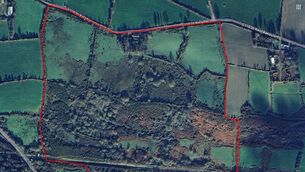
All options chosen have to be declared on the map by your planner, and once the plan has been submitted, options cannot be changed or moved to a different location or land parcel on the farm.
If you are choosing an option, make sure you are 100% happy with it.
For example, there is no point in planting a hedgerow if it is going to be in your way, or if you currently have sufficient existing hedgerow and small fields; planting a new hedgerow does nothing to enhance the farm.
Farmers should be only choosing this option in order to stock-proof a poor boundary, or to improve shelter along an existing passage, or for shelter by dividing a big field.
Any farmer carrying out options on rented ground should ensure they firstly have a lease in place, and secondly, that it is for at least six years.
The end date for GLAS will be December 31, 2020.
I have been assessing farmers for suitability to enter the GLAS scheme, and a common theme has emerged.
Dry stock farmers, not intensively stocked, seem to be the most eager to enter. These farmers seem to be choosing low input permanent pasture and traditional hay meadow, which would qualify them for payments of €314 per hectare, and €315/ha, respectively.
The maximum area for these options is a combined 10 hectares, and the farmer is off to a great start already, if he can afford to designate the maximum area for this option (worth €3,140).
Planting new hedgerow is also quite a popular option, with a potential payment of €1,000 per annum, for the five years for planting 200m of hedgerow in the first spring of acceptance (2016) into the scheme.
A top-up of €285 can be received for hanging 15 bat and bird boxes at various locations around the farm.
Tillage farmers are another group that this scheme may suit.
If they plant three hectares of wild bird cover, which is essentially a nesting area for ground nesting birds and a food source over the winter period for farmland birds, they could receive €2,700 annually.
This could be topped up to the €5,000 limit by completing 8.4 ha of green cover establishment, which is paid at €155.
Some tillage farmers may be choosing this option anyway, to meet their greening requirements.
Intensive dairy farmers spreading their slurry with a trailing shoe, band spreading or injection systems could receive €1.20 per cubic metre of slurry. If they are in a vulnerable water area, and they fence the watercourse 1.5 metres from the bank, they will receive €1.50 per linear metre off fencing.
By also protecting historical features such as ring-forts or standing stones, they will receive €146 per feature.
This could also be topped up by planting a hedgerow, or putting up bird and bat boxes.
Most of the farmers with commonage or Special Protection Areas (SPAs) for birds, or Special Areas of Conservation (SACs), will be paid €5,000 per annum, and some may be paid up to €7,000 per annum.
The payments, depending on which kind of SPA they have, vary from €205 to €375/ha, and the farmers will have to follow a management plan. The birds include the breeding wader, chough, corncrake, geese and swan, hen harrier and twite.
The SAC payment is €79/ha.
The payment for commonages is €120/ha, on the Single Payment application form net area.
Minimum and maximum number of livestock will have to be grazed on the commonage each year by the applicant if they are to secure payment. Shareholders will have to work together and this may require some flexibility and willingness to change from current grazing systems, if they are to maximise payments.
Farmers should also be aware that only one GLAS advisor is allowed to prepare and submit a commonage management plan for each commonage.
If farmers on the commonage cannot agree on the planner, the Department of Agriculture will provide one. I would urge individual shareholders of commonages to meet between themselves over the next few weeks if possible to plan how their commonages can be managed, to facilitate entry to GLAS.