Denise Hall: One woman's remarkable story of breast cancer survival
Since the first Kinsale Walk in 2012, the organisers of Kinsale’s Pink Ribbon Walk have raised over €290,000 to support the fight against cancer and have transformed the iconic town into a pink paradise, with over 200 volunteers ensuring that the event will be another huge success.
Denise Hall: One woman's remarkable story of breast cancer survival

This year’s walk takes place on March 1, and it will start at 12 o’clock, part of a tradition that has its roots in 1982 and a brave woman called Susan Komen.

Susan was an American beauty queen from a small town in Illinois, diagnosed with breast cancer in the mid-1970s, at the age of 33. Susan and her family didn’t know much about the disease or how to fight it.


By the time Susan reached the experts, her cancer had spread to other organs. She fought valiantly for three years but finally lost her battle.

Susan’s sister Nancy had promised to do whatever she could to help end breast cancer. She turned this pledge into a billion-dollar global breast cancer movement “Susan G Komen for the Cure”. From its inception; the Komen movement used the colour pink in its logo and other promotions.

In 1991, participants and breast cancer survivors participating in the Komen New York City Race for the Cure, all received pink ribbons.

But things really took off when Self magazine editor Alexandra Penney and Estee Lauder cosmetics came up with the idea to distribute these awareness ribbons across the US as a part of the magazine’s second annual breast cancer awareness campaign.

Today, the Pink Ribbon Walk Ireland is a national voluntary movement with a big dream – a world without breast cancer.

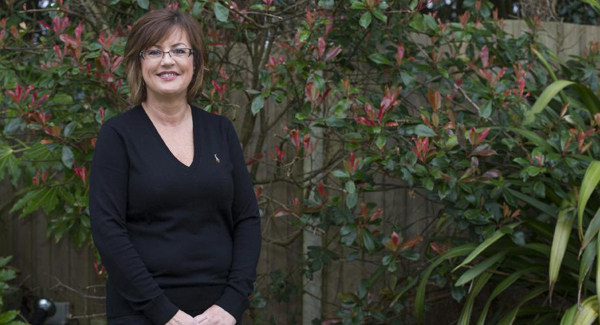
Karen O’Leary is a breast cancer survivor who lives in Kinsale, Co Cork, and has participated in the walks. She told me about her own remarkable journey.

Karen, when were you first diagnosed?

It was in 2011. My husband Eugene and I were in Dublin to see our son off who was going to the US.

My husband noticed a lump and asked me about it. And just at that moment, I had a strong flashback from two months earlier when I’d noticed a lump but the next day there was no sign of it.

So I somehow managed to put it off my mind and I never thought of it again until that day. My blood ran cold and I had a sick sense that this was serious. But I waved Eugene off and told him that we’d go shopping in Kildare, as we’d planned. But on the way there I called my doctor and arranged to see her.

She examined me and told me that in 90% of the time it was nothing. But I knew.

What happened next?

I went to the Breast Clinic and had a mammogram, was called back for a second look and then I had a biopsy. My surgeon was brilliant. My mother was in shock; I don’t think she took it in. I had to go back for surgery again a week later as they had found it in the nodes.

My sister came with me and that was really important. You need someone with you to do the listening. My family and friends were great, coming to the door with food, flowers. You can feel terrible, exhausted, emotional after the chemo.

How was it after this difficult time?

You know the thing is, after you’ve been through something like this, every ache and pain is a cause for concern. And I had a pain in my back. So I went back to the doctor and it turned out that I had a growth on my ovary.

I had my ovaries removed and luckily, that growth turned out to be benign. Before the operation, I asked my surgeon if she could give me a tummy tuck while she was at it. I wanted to lighten the mood but I didn’t get the tuck.

I know that you must have been going through so much at the time, and your husband’s health wasn’t good either. But for many women, although they have more serious things to worry about, loosing their hair is traumatic. How was this process for you?

Well, I had just got my hair to the length and colour that I wanted but when it started to fall out, I decided to have it all off. It wasn’t easy. The night it happened we had champagne. But I wouldn’t look at first.

Then when I did, I really didn’t think it looked too bad. But I didn’t like the wigs I tried at first so one day I decided to go into town with my bald head. I went off and had my eyebrows tattooed. That worked really well. Then my daughter who was nineteen found a lump in her breast. She saw the same surgeon I had and thank God it turned out that it was benign.

Research is such an important part of this battle isn’t it?

Yes it is. For instance, there’s a new approach known as Breast Direct. Now I ask myself what kind of person would I be, what would I be like if I hadn’t been through this? Your head is never the same. But I’ve met some incredible people and there are things I don’t worry about as much as I used to do. I’m back at work as a legal secretary three days a week.

What has been the most difficult things about other people’s reactions?

Sometimes when I meet a woman friend in the town they ask how I am and then their eyes stray down to my chest. Once I walked out of the store crying, which came as a surprise.

And people saying that they know of someone in the same position and that they’d tried some diet or the other and they were cured. So why didn’t I try it. But that’s not necessarily going to be right for me is it?

This is my battle. Two weeks ago, I learned that I wouldn’t have to see my doctor again for another year, which is great. And I’ve been a part of the Cork Dragons for some time, which has been just fabulous, very important for me.

We went to Florida together as a part of Team Ireland. I’ve found the Pink Ribbon Walk very touching and emotional. I had my first bout of chemo the day before the first Kinsale Pink Ribbon Walk so it’s always been very special to me.

More in this section

Farming

Newsletter

Stay ahead of the season. Sign up for insights, expert advice and stories shaping Irish agriculture.

Cookie Policy Privacy Policy Brand Safety FAQ Help Contact Us Terms and Conditions

© Examiner Echo Group Limited