Joe Sheehy: Why cows need concentrates for at least six weeks
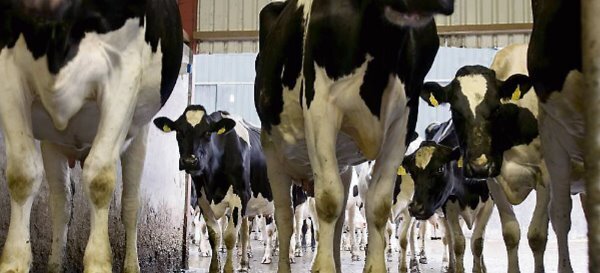
After calving, milk yield increases much more rapidly than intake capacity, resulting in a long period of under-feeding.
Peak milk yield is reached about six weeks after calving, while peak appetite is not reached for about 12 weeks.
Even on good quality grass, a cow’s intake is only 10kg/day in the first week after calving, and it increases by 1kg/week for the following six or seven weeks.
Cows should therefore get some concentrates for at least the first six weeks of lactation.
If the herd is over quota, a 12% protein ration with minerals should be fed.
Low intake after calving may not be too serious in low-yielding cows, but it can have a very serious effect on cows bred for higher yields, especially if forage quality is only average or poor.
Excessive weight loss between calving and breeding has been shown to be the major cause of infertility, in the Moorepark farm trials.
Cows losing less than 0.4 of a condition score between calving and first service have more than double the conception rate as those losing 0.5 of a condition score, or over.
Feeding 2-3 kg of a suitable concentrates to cows for two or three weeks before calving can generally be recommended. Some compounders have specific, properly balanced nuts, including pre-calving minerals and yeast, for this purpose.
This concentrate helps to maintain intake in the run up to calving, and conditions the rumen to allow much quicker introduction of concentrates after calving. It also minimises health problems around and after calving.
Trials have shown that this concentrate does not increase calving problems, with Friesian-Holstein type calves, provided cows don’t get too fat.
It may be somewhat different with first calvers, if they get too fat.
The objective of Dairygold Co-op’s SleepEasi dry cow programme, which is familiar to many farmers, is to have cows calving in ideal condition and properly prepared for the following season. It has been shown to significantly reduce losses from metabolic diseases after calving.
There are also some successful, more automated systems, such as the Alltech/Dairymaster system.
It is widely accepted now that treatment of cows during the dry period and especially in the run up to calving is vital to success for the remainder of the season.
If under quota, while indoors on 70 DMD silage, there will be an economic response to feeding 7-8 kg of 18-20% protein ration (24% with maize) per cow per day, peaking at 28litres/6 gallons. Add or subract 1kg for each five DMD points above or below 70.
With a few hours of grazing and silage ad lib, feed about 6 kg.
When cows are out by day and on silage by night, concentrates can be reduced to 4-5 kgs, depending on grass quality. When they are outdoor fully, feed about 3 kg of concentrates. If on quota, the above levels of concentrates can be altered slightly to meet requirements.
Farmers over quota can feed a low protein ration which reduces milk production and helps maintain condition. Because these cows will be producing less milk, the concentrate feeding levels recommended above can be reduced by about 2 kg/cow/day. Farmers in this situation should not take chances with under-feeding cows; that will have serious long term effects.
Once-a-day milking until the end of March may suit a minority of farmers who are over quota. In this situation, concentrates could be reduced by a further 1 kg/cow/day, due to the reduction in milk production by about 25%.