Industry built on great tradition
Production is concentrated in counties Wexford, Carlow, Wicklow, Tipperary and Cork where soils and climate combine to produce high yields. About eight million trees of all ages are currently growing on about 1,500 hectares. There are about 10 significant producers and 70 to 80 smaller growers. The farm gate value of current domestic and export sales is estimated at €10 million, plus retail values of €25m.
Some 300,00 Irish families put up a real Christmas tree in their homes each year. It is a tradition that goes back thousands of years. And there are indications that more people are returning to the practice.
Ireland’s temperate climate and soils are perfectly suited to the production of top quality Christmas trees. Our favourable mild winters and cool summers, together with high levels of rainfall and free draining soils, enables growers to produce some of the finest trees in Europe.
Christmas tree growing is an all year-round operation, involving specialist attention from the initial site preparation to the ongoing maintenance of the crop.
The annual maintenance programme involves a broad range of husbandry activities from weed control, crop fertilisation, tree training and harvesting. It takes seven to ten years to produce a two metre tall tree.
Wicklow grower Christy Kavanagh is the Christmas Tree Grower Supreme Champion 2014. It is his fifth time winning the title in the national competition.
An experienced and avid grower, he is enthusiastic about the benefits that real Christmas Trees bring to the celebrations, noting that the Nordmann Fir is the most popular type of tree, accounting for 75% of trees sold in Ireland.
This year, the Irish Christmas Tree Growers Association has launched a new initiative, ‘Love a Real Tree’, to highlight the benefits of a real tree compared with an artificial one.
It points out that real Irish Christmas trees are environmentally friendly while the land used for growing them can be replanted or returned to traditional agriculture.
Christy Kavanagh said the look, the scent and the very feel of a real tree are all part of the Christmas tradition, but growing the perfect tree takes more than planting and hoping for the best.
“When you buy a real Christmas tree, carefully grown and cultured locally, there is that extra special knowledge that you are supporting nature and the environment,” he said.
The Irish Christmas Tree Growers Association represents the major body of producers and suppliers of top grade Christmas Trees in Ireland, with over 100 members nationwide.
It points out that locally grown Christmas trees are fresh due to the reduced travel stress, have a tremendous variety and come in a large range of different size trees available to meet particular needs.
Once cared for properly, non-shedding trees, such as the Normann Fir, Noble Fir and Lodgepole Pine, will not lose their needles.
“Your real Christmas tree is a natural resource and therefore can be recycled. This is in contrast to artificial trees, which are usually made of metal and plastic materials and use oils and minerals in their manufacture. An artificial tree may last up to six years in your home but takes centuries to break down in landfill sites.
“The forest environment is protected by the fact that Christmas trees are continually being planted to replace those trees being harvested. As well as adding to the beauty of our landscape, growing Christmas trees produces large amounts of oxygen and removes the harmful carbon dioxide or greenhouse gas from the atmosphere. Real trees also provide natural habitats for forest animals and birds,” it says.
The growers are also advising people not to buy their Christmas tree until they are ready to set it up. In many countries, such as France, the tree is not set up until Christmas Eve and is taken down after January 6.
After bringing the tree home, people should keep it in a cool place like an unheated garage, porch or patio until they are ready to bring it indoors. It should then be set up in a cool area and as far away as possible from sources of heat, including fireplaces, radiators and vents. This will prolong the life of the tree for the holiday season.
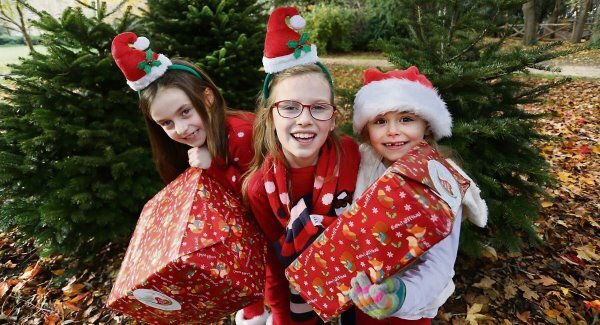
Children especially enjoy being involved in choosing the family Christmas tree and often insist on having a small tree which they like to decorate in their own particular way.
The Irish Christmas Tree Growers Association recently donated 500 four foot Irish grown trees to the Jack and Jill Foundation for use by the charity, founded by Jonathan Irwin and his wife Senator Mary Ann O’Brien.
Jack and Jill provides home nursing care services for 300 children with severe disabilities as a result of brain damage. It requires €2.7m per annum to operate the service. But with less than 20% coming from the State, it depends on public generosity and fundraisers like the Christmas Tree Growers Association.
www.lovearealtree.ie
www.jackandjill.ie