How taxman can help the homeless
At the reception, there was tangible positivity, as auctioneers swapped stories of the deals closed over the past 12 months.
A mix of urban, suburban and rural auctioneers all reported buoyancy across the spectrum of property, be it agricultural, residential or commercial. Even though many of us thought it extinct, gazumping is back with a bang, particularly for family size properties in sought-after areas of Dublin.
Speaking to one auctioneer operating in the Dublin commuter belt, it was interesting to note the problem now facing auctioneers is a lack of property to sell.
In the heart of Dublin, the lack of tower cranes on the skyline suggests little activity on the supply side.
This unsatisfied demand experienced by auctioneers is fuelling significant and worrisome increases in the cost of house purchases, and increases in rents.
Recent data suggests Dublin rents have been rising at an annual rate of about 15%, and have recovered to not far off their peak levels. Outside of Dublin, rents are also soaring ahead of inflation and general economic growth, at near 7%, year on year.
One of the main factors is lack of supply, with a drop of more than 40% in the quantity of properties put up for rent in equivalent nine-month periods spanning 2011 to 2014.
A survey by daft.ie noted Dublin’s population is growing by about 10,000 households per year, this undoubtedly also fuels price increases, where supply is constrained.
Back at the IPAV dinner, the nominated charity to benefit from this year’s event was the Fr Peter McVerry Trust, better known as being one of the leading non-governmental-agencies working to reduce homelessness in Dublin.
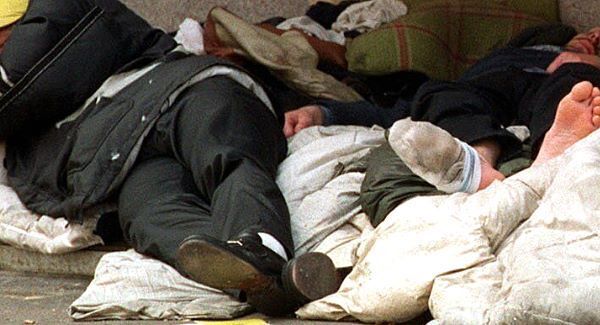
Fr McVerry captivated the room as he spoke about the recent death of Jonathan Corrie and the plight of homelessness in Dublin. The official figures, he outlined, suggest 168 persons are homeless in Dublin; however, these figures represent only the most visible side of homelessness, those actually sleeping on the street.
The figure masks the true reality of the thousands who no longer have a roof over their head.
The McVerry Trust has helped more than 3,000 people in 2013 alone, not to mention the many other charities working in the sector.
The audience heard how the homelessness crisis is growing, and the once typical reasons for homelessness, drug or alcohol abuse or mental health issues, are now outweighed by a new reason, economic homelessness, individuals no longer able to afford to house themselves.
The auctioneers experiencing property shortages, the data from daft.ie confirming double digit rent and property price growth, and the lack of housing in Ireland, are manifested in the economic homelessness detected by leading community workers.
Tax policy often lags economic reality and it is ironic that the 80% tax on windfall gains on the disposal of development land is still in place until January 1, 2015.
On a positive note, the recent announcement of plans to build or refurbish 35,000 housing units by 2020 will go a small way towards meeting supply.
Statistics from the Department of the Environment show significantly deficient house completions over recent years. Average house completions in the 1990s ran at 30,000 per annum; in the period 2000 to 2008, average house completions ran at nearly 70,000 per annum, yet the total completions for 2012 and 2013 were at less than 10,000 units per annum.
A significant shift in tax policy can stimulate the supply side for housing. This worked incredibly well in delivering housing units previously; albeit that many of these units were delivered in locations not fit for purpose, due to poor planning.
Tax changes which may benefit could include the application of higher rates of local property tax to private holiday homes, the granting of full tax deductibility for conversion of vacant commercial property to residential units; granting of property reliefs for construction or refurbishment of vacant residential units; application of rates to non-developed land; and exemption from stamp duty for persons choosing to downsize.
Apart from tax, there is a host of other supports needed, particularly in the area of property development lending, to make any meaningful impact on the property supply side.