Bright future for milk producers as April sees quotas abolished
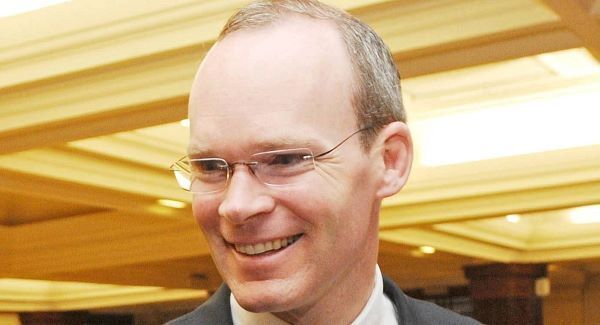
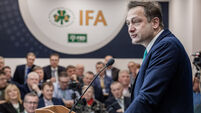
The speaker was a very enthusiastic Agriculture Minister Simon Coveney who opened the National Dairy Conference which was co-hosted by the Department of Agriculture, Food and Marine along with Teagasc.
Fresh from his successes in China, Mr Coveney spoke with enthusiasm about smart, green, growth.
The conference was streamed live on the internet, and the Irish agri-business diaspora from as far away as New Zealand mentioned on Twitter that they were tuned in to the discussion.
This conference in the Red Cow Moran Hotel, Dublin attracted a full house of most of the leading players in Ireland’s dairy sector, for a multi-tiered discussion.
Among the speakers addressing worrying issues such as price volatility were the Rabobank dairy analyst Kevin Bellamy; Hermanus Versteijlen, from the EU Commission; Frans Keurentjes, from Friesland Campina, the major Dutch Co-op; Tom Hayes, CEO of Corporate Banking, Bank of Ireland; Eddie Downey, IFA; John Comer, ICMSA; Sean Molloy, Glanbia; Francis Reid, Fonterra Europe; and Laurence Shalloo, Teagasc.
The conference was also addressed by: Tom Moran, Department of Agriculture, Food and Marine ; Donal Dennehy, Danone Ireland; Michael Hanley, Lakeland Dairies; Kevin Lane, Irish Dairy Board; Stan McCarthy, Kerry Group; and Jim Bergin, Glanbia.
Mr Coveney said; “The shackles come off next April, and following that, we will have an exciting mix of opportunity and challenge for all stakeholders, farmers and rural Ireland, processors and manufacturers, agri-business and exporters. It is timely that we take stock of where we stand in terms of our preparedness for this new era”.
Bord Bia chief executive Aidan Cotter, in an excellent presentation, said: “The growth in the global demand for food, combined with shifting dietary habits towards more protein-based foods and dairy products is driven by a world population growing at 75 million people a year and double that number joining the middle classes”.
To put this in context, the growth in world demand every year is equivalent to the total annual production from New Zealand.
This means that over the next 10 years, a market three times the size of the EU, in buying power terms, is being created, principally in Asia, but also Africa. With 40% of its exports already destined for international markets, our dairy industry is well positioned to benefit from the sustained growth in demand.
China is now a major importer of liquid milk, but their consumption is still only one third of the world average. China is the second largest market in the world for dairy products, mainly infant formula, where Ireland has a good track record.
One of the industry speakers was Donal Dennehy, the industrial director for Danone in Ireland. Their two plants in Wexford and Macroom export over €0.5bn of infant formula to Europe, Russia, north Africa and Asia.
Danone has invested over €200m in Ireland over the last three years. Mr Dennehy said that they have been pushing Irish milk processors to keep raising quality standards, and this starts on the farm.
Origin Green was a great initiative, and is very important, he said. Jim Bergin from Glanbia said that its new plant in Bellview which will process 800 million litres of milk would manufacture all of it to infant formula standards.
During the conference, reference was made to milk quality problems in China and New Zealand which had devastating financial consequences for Fonterra, and issues of scale as regards the size of dairy farms also cropped up (70 cows here versus 470 in New Zealand).
Michael Hanley from Lakeland Dairies said he visited a plant in New Zealand which could dry 27 tonnes per hour. However, he said, they had no flexibility.
As regards milk production, he said, “family farms in Ireland are highly efficient”.
Jim Bergin from Glanbia and Stan McCarthy from Kerry Group said as regards scale, what was most important was the investment in research and development — and they had the necessary scale for this.
Mr McCarthy said you need a long-term presence in the market to understand import legislation, labelling, local politics, and the different agencies involved. He said the Chinese market is quite complex. Quality standards keep rising, and how you respond to any problems is possibly even more important.
The conference was told that New Zealand and Australia had signed free trade agreements with China which gave them an advantage, while the EU had been very slow to do likewise.
With milk prices falling, and expected to fall further in 2015, there was an interesting discussion on farmer options.
For example, 50% of Glanbia milk suppliers have signed up to fixed-price contracts for four years, for 30% of their milk supply, and apparently most have renewed their contracts. This compares very favourably with New Zealand, where only 2% of milk suppliers to Fonterra are on fixed- price contracts.
Professor Gerry Boyle of Teagasc said its most recent survey indicated that about 60% of dairy farmers are planning to expand production after abolition of quotas. A small number of drystock and tillage farmers — fewer than 1,000 — are also likely to convert to dairy, and a smaller number again are likely to re-enter milk production. These plans imply a growth in milk production up to 2017 of about 18%, which is in line with Food Harvest 2020 targets.
Mr Boyle went on to say our grass-based milk production model is competitive and sustainable.
The top third of dairy farms earned a profit of nearly €2,500 per hectare last year. This is about four times that achieved by the bottom third, so there is room for improvement on many farms. Incidentally, profit per hectare rather than cents per litre is the new benchmark for assessing profitable milk production. He said the best farmers are more likely to be in discussion groups and milk recording.
There are almost 18,000 milk suppliers, the average dairy farm size is 54 hectares, and the average age of our milk producers is 52. The top 6,000 milk producers account for 60% of milk supplied, and they are the ones most likely to increase herd size and yield per cow after 2015.
On the processing side, six companies handle 82% of Irish milk.