ICMSA members are ‘battening down hatches’
Many over-quota farmers will receive no milk cheque until next summer, and those cheques will be well behind those received this year.
The co-ops group, ICOS, said a feared 10c milk price cut, compared to 2014, would take €600m out of farmers’ cash flow. It also pointed out that many dairy farmers used the strong cash flow in the past year to fund expansion, and will therefore have a large tax bill to pay next autumn.
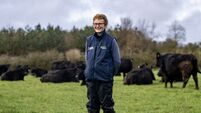
Ahead of tomorrow’s AGM, ICMSA deputy president and dairy committee chairman Pat McCormack confirms his members are ‘battening down the hatches’.
Price will dominate the AGM, but is it futile to expect better prices?
My response to that would be to remind everyone that the very definition of futility is to expect milk producers to keep producing better and better milk for smaller and smaller margins. To me, that’s the very meaning of futility.
Our product is now setting the global standard for quality and sustainability, and the Bord Bia quality scheme measures this. Our dairy farmers are considered global leaders in terms of technical expertise and innovation.
Why is it ‘futile’ to expect a fair return on the expertise, investment and capital involved in producing our milk?
Next year looks challenging for a whole variety of reasons, and ICMSA isn’t unrealistic — we pride ourselves on a rational and measured approach — but the idea that we just swallow massive income losses and work for nothing like we did in 2009, while everyone else shrugs their shoulders and carries on making their margins from our milk, is just not on.
In those circumstances, all the aspirations and targets of Food Harvest 2020 are what becomes futile.
ICOS warns of “an impending cash flow crisis of enormous proportions” How aware of the threat are ICMSA members?
We’re very well aware of the threat.
I flagged precisely this threat, and have used the analogy of a hand in each pocket; one being falling prices, and the other being the record superlevy that we’re now almost certain to incur.
Based on the latest production figures, we’re estimating a total of somewhere around €113,000,000, which would work out at an average of €6,650 per supplier.
But then you must realise that around half the state’s 17,000 milk suppliers are still on or under quota, and you realise 8,500 suppliers are going to be paying an average of around €13,000-€14,000, with some really frightening extremes in there as well. Rabobank is estimating a soft market till Q2 or Q3, and this superlevy is just going to cripple farms in terms of cash-flow.
Add to that the tax due on 2014, and you’re looking at a very serious situation that is not being given the political attention it requires.
Obviously, our members are ‘battening down the hatches’ in anticipation of the problems.Not the least of farmers’ problems, however, is that whether our milk prices go up or down, our input costs only ever go one way, and that’s upwards.
Every single input cost has risen inexorably, year on year, and despite our protests, the Competition Commission can’t seem to work up any enthusiasm to investigate, though they seemed happy to intervene on behalf of the meat factories in the recent dispute, a move our president, John Comer, rightly described as “brass-necked”.
They probably have a degree of a buffer from the worst ravages, but it will certainly spancel the kind of expansion that Food Harvest set out, and for which our processors have already invested. Dairy expansion can’t work on the basis that I borrow more, invest more, and work harder, for the same money. It wouldn’t for anyone, why should farmers be different?
Should farmers be prepared to go it alone without political support for measures to alleviate dairy market and over-quota difficulties, rather than depend on help that may not come?
I sympathise with the thrust of the question, but actually the system is so loaded against the primary producers that it’s not possible to re-balance without meaningful political support.
A perfect example is the retail chain, which study after study has demonstrated to be completely destructive of the margins and viability of family farms and primary producers, and still here we are — years later — with no significant intervention by the Commission to tackle this endemic, long-term, disastrous trend.
It’s not possible for individual member states to go at this, we so badly need a political decision that says that food production in the EU must be de-industrialised and rescued from the clutches of half a dozen retail corporations that have come to ‘own’ the supply and sale of Europe’s food. ICMSA would love to be able to change that on our own, but it’s beyond the power of farmers, and we need the political decision that comes from the political will. And as of now, both of those are missing.