Farm energy costs dealt a healthy blow
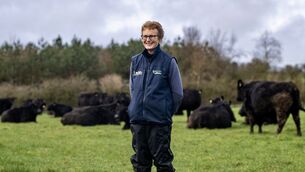
So says Caitriona Diviney, Chief Operations Officer of the Irish Wind Energy Association (IWEA).
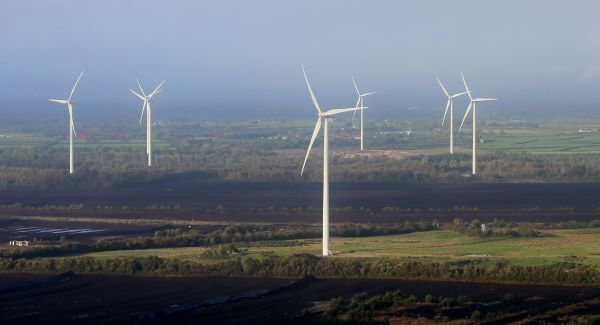
“When compared to neighbouring countries, such as the UK, the significant potential for wind microgeneration in Ireland still remains untapped.
“Locally-generated electricity can be another guaranteed Irish farm product, and can give farmers more control over their own electricity production.”
She called for new schemes to be put in place giving farmers greater opportunity to invest in this technology.
“Some farmers are already availing of microgeneration, but there is considerable investment required to develop the technology, and currently the payback period would be expected to be more than ten years — which is more than an average farmer can afford.
For those willing to try microgeneration, IWEA has launched a step-by-step guide, which is available on their www.iwea.com website.
Typical microgeneration technologies include wind turbines, solar photovoltaic, hydro power and combined heat and power, with equipment ratings below 11kW.
With energy costs accounting for one of the main outgoings, wind microgeneration could give Irish farmers more control over their power consumption on energy-intensive farms, giving them the option to earn additional income by contributing any surplus electricity generated to the national grid.
On Irish dairy farms, research from Teagasc has shown electricity usage contributes, on average, €0.05 per litre to milk production costs.
We see wind microgeneration as a feasible option, but there are a number of factors in terms of planning, researching, consultation, siting and installation which need to be carefully considered.
This is why the Irish Wind Energy Association have put together our step-by-step guide to help interested farmers through the process.
Some farmers are already availing of microgeneration, and it is recognised as a long term investment.
The payback period varies, and appropriate siting is crucial.
Under current circumstances, economic payback for a micro-scale wind turbine, according to the Sustainable Energy Authority of Ireland (SEAI), may not be achieved for at least ten years.
Because of the timeframe the IWEA is calling for new incentive schemes, akin to those in other countries, which could support small generators of renewable energy; reduce the payback period; and by doing so, make this a more attractive option, not only for farmers but for suitable small businesses and some residential homes.
Seven steps are usually required such as doing your own research at home, to assessing your energy usage to see what scale of turbine is most suitable, assessing your site’s wind energy resource, getting quotations from certified suppliers, informing and speaking with planning authorities, getting approval from ESB Networks, and making sure your equipment is up to the network standards, using a registered electrical contractor to install, and finally organising, the potential sale of surplus electricity through a metered export.
In conclusion, Irish Wind Energy Association are clear that greater wind microgeneration can lead to more sustainable livelihoods on Irish farms and play a vital role in the solution to reduce the overall carbon emissions of the industry.
The wind in Ireland is a true natural resource and one which we can as a society take advantage of.
n
Caitriona Diviney