Silage mineral analysis may be the best money you will spend
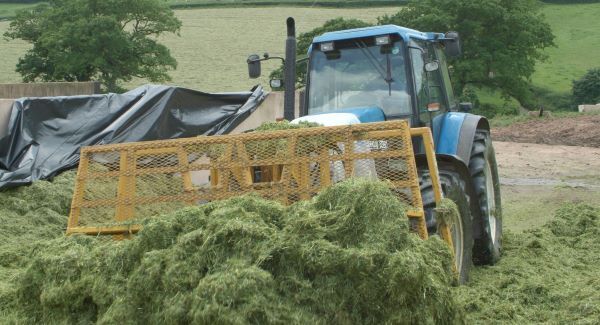
Many farmers will test silage for dry matter, protein, energy, pH etc, and will seek advice on how best they can balance it for their stock.
Incidentally, many are convinced that their results are wrong, and that their silage is much better.
Unfortunately, those who went for a second opinion and tested twice have got a second nasty surprise.
The vast majority of farmers will be dealing with wet, poorly preserved silage this winter.
On the other hand, amazingly, many milk and beef producers still don’t test their silage to establish its nutrient value. A more scientific approach needs to be taken on farm, to ensure better nutrition for stock, and to prevent unnecessary costs through possible over or under feeding of particular nutrients.
Testing for minerals in your silage is also a good idea, in order to establish deficiencies and begin the balancing process for particular animal groups.
Many farmers will cross reference these results with milk or blood analysis and get minerals formulated to match.
This mineral data helps to identify deficiencies on your farm, and will help you to design supplementation which may also include what your soil requires.
Silage and grazed grass make up the predominant feed source on almost all Irish farms.
If we know what level of minerals and vitamins an animal requires based on, breed, age, weight, sex and productivity etc, then we can formulate nutrient programmes to supply them with any elements deficient in the base forages on your farm.
This year, with the wet, high pH silages, there is also an issue with mineral contents and mineral availability. Many antagonists such as aluminium, iron and lead are high in samples again this year. These will lock up other elements, making them less available to animals to absorb efficiently.
Most farmers have a perception as to what particular mineral symptoms look like, and have tried many things in the quest for a solution.
It has been well established that particular areas of the country have particular mineral deficiencies.
The science is now there to establish the real on-farm issues.
Minerals are classified into major elements and trace elements, depending upon their concentration in the animal, or amount required by the diet. Some essential mineral elements are of more nutritional importance than others.
The following are the essential elements nutritionally important in cattle.
Major elements: Calcium, Phosphorous, Potassium, Sodium, Chlorine, Sulphur and Manganese:
Trace elements: Iron, Zinc, Copper, Molybdenum, Selenium, Iodine, Manganese and Cobalt.
Vitamins: A, D2, D3, E, K, B1, B2, B6, B12 & C.
Each element has a specific function or multiple functions, and either an excess or deficiency of one or more element will impair functions such as digestion, immune response, thrive etc.
Many of the elements listed may interact with other elements to perform important functions. The interaction of minerals with each other is an important factor in animal nutrition, and an imbalance of mineral elements, as distinct from a simple deficiency, is important in the diagnosis of certain nutritional disorders of livestock.
There is a perception out there that finishing cattle require no minerals, which is totally inaccurate.
For instance, Copper is a natural growth promoter, Calcium and Phosphorous make up the animal’s bone structure and are essential for saliva production.
Zinc helps to prevent lameness in intensively fed animals, and Vitamin E helps an animal’s immune response.
One way that farmers might achieve better animal performance, less animal losses and fewer vet calls may be to hone in on mineral supplementation. This may be of considerable use in particular during the dry period on both dairy and suckler units.
A silage mineral analysis may be the best money you will spend this year.
Feeding a cheap general purpose mineral might be a total waste of time, if it doesn’t balance your forage sources. Establishing the correct mineral premix for your stock is essential to optimise performance and minimise animal losses.
Try to buy a mineral based on what it will deliver to your stock, rather than trying to save money by buying any old mineral so your conscience doesn’t get the better of you.
Now is a good time to begin planning for winter mineral supplementation before housing has commenced.