The legacy of Nano Nagle is venerable
Honora “Nano” Nagle — Nano, as she was universally known, spent many dangerous years traversing Cork City’s dank passageways in her relentless quest for education for the poorest children and to bring comfort to the city’s destitute.
When Nano first began her groundbreaking work in the poorest quarters of 18th cantury Cork City, rampant crime, poverty and open sewers were her daily realities. But Nano could have chosen a very different life.
Born in 1718, the eldest daughter of Ann and Garrett Nagle she had four younger sisters and two brothers.
The Nagle family home was in Ballygriffin, near the small village of Killavullen.
The family were wealthy and owned substantial amounts of land.
The children enjoyed a privileged upbringing for Catholics of that time who were subject to the draconian Penal Laws.
The parliamentarian and orator Edmund Burke, who was a relative of Nagle described those laws as creating “a miserable populace, without property, without estimation and without education”.
Catholics who dared to teach were subjected to heavy fines and imprisonment, and were not allowed to educate their children abroad.
Nano attended a hedge school where both teachers and pupils were in constant fear of detection.
A bright, intelligent girl with a great desire for learning, Nano was sent abroad to continue her education.
She travelled to Paris with her beloved sister Ann. The two young girls were instantly plunged into a glamorous world of balls, parties and theatre outings as they mingled with the well-connected friends and associates of the Nagle family.
But when Nano was in a coach on her way home after a party she saw something that was to have a profound effect on the rest of her life. A group of poor, emaciated people were huddled together against the cold in the doorway of a church, waiting for the doors to open for Mass. She was shaken by the dramatic contrast between her wealth and privilege and their stark misery.
Then Ann said that she often visited those in need, and Nano began to accompany her. These visits shocked and radicalised Nano who was horrified by the misery and poverty she encountered.
When Nano’s beloved father died in 1746, the sisters returned to Dublin to be with their grief-stricken mother. She was searching for a roll of silk that she had put in the linen press when Ann told her that she had given it to a poor family who had sold it for food.
Ann died two years after their father. Nano returned to France where she entered a convent, feeling unable to make any impact on the poverty and oppression in Ireland. But she failed to find the peace of mind she was seeking.
She returned home unsure of what she would do next and encountering more than a little disapproval from within her own circles for leaving the convent.
Cork City became her home again and before long, Nano had gathered together some of the poorest children in the city and, despite the dangers involved, started her first school, a mud cabin in Cove Lane.
More schools followed. However her family reacted with horror, afraid for her and themselves.
Nano rose at four am, taught all day and at night, visited the sick, elderly and neglected, and became painfully aware of the prostitution that was endemic in the city. It was during these night-time forays that she became known as ‘the lady with the lantern’.
Nano promptly channelled money left to her in her Uncle Joseph’s will into her schools and welfare work.
But she was fast coming to the point where she realised she needed the help of like-minded and dedicated people. On Christmas Eve, 1775, Nano and three colleagues dedicated themselves to the glory of God and the Presentation Sisters of the Blessed Virgin Mary were born.
Nano Nagle died of TB in 1784 at the age of 66. She was a trailblazer, a woman of extraordinary courage, who has been described as the most influential educator in three generations, and a model for many other Irish religious congregations.
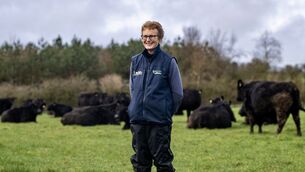
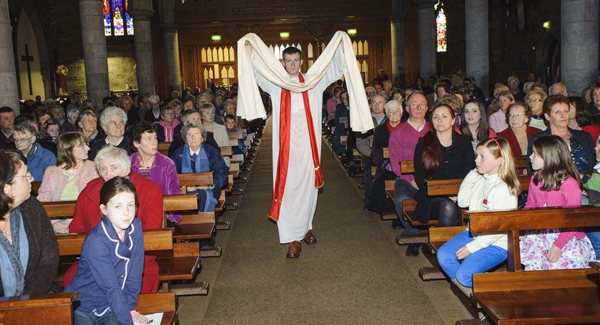
Sister Mary T O’Brien PBVM told me of the recent mass in St Patrick’s church Bandon to celebrate her elevation by Pope Francis of Nano Nagle to the status of venerable, and of her own long dedication to the Presentation Sisters.
Oh yes, she is a fantastic role model and she was an extraordinary woman, a woman for all times. She is a woman whose life went from riches to rags. And her faith was so important to her. Imagine that when she walked from Cove Lane and passed over the bridge, she would see skeletons hanging, skulls, all sorts of terrible things, a warning of what could happen to you if you opened schools. You know, she was 57 when she founded the order, a time when most people would be thinking of retiring.
Yes, and I love it. If I lived three life-times, I couldn’t get done all that I want to. I’d get up in the middle of the night to do it. There’s a hunger out there for the Scriptures. I travel to the US to lecture and run workshops. Today, a lot of our work is in other countries.
Yes it does. The age profile is now about 70 or 80. I think that will change though as we became more adept at working with social media and better at communicating Nano’s message, which is a message for all times. I was born in Glengarriff and I went to the Presentation School in Bandon but I didn’t know that much about Nano when I joined the order. But the more I studied her, the more I appreciated her deep faith and belief and the value of education as liberation from poverty.
Definitely. And now that Pope Francis has declared her venerable the process of sainthood is ongoing.Many Cork people have a great devotion to Nano. Nano’s story is an upside down fairy story. You know, she was rich and beautiful and she had an uncle in the King’s Court in France. It is said that she could have married the King’s son. But compassion overtook everyone of Nano’s plans.