Ukraine agri has potential despite conflict
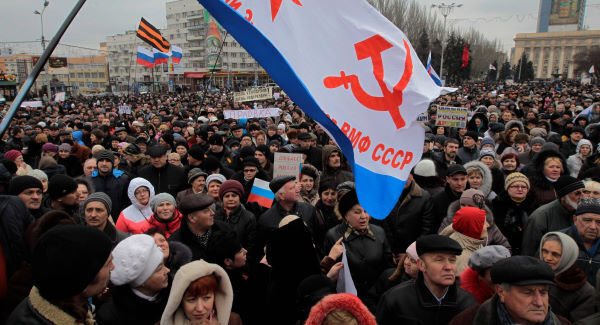
The signing of an Association Agreement with the EU in June signals renewed Ukrainian intent to adopt European standards and rule of law. The EU has declared an €11bn aid package for Ukraine. Irish companies should look at the strategic importance of these developments, especially within the food and agriculture sector.
Amidst the on-going turmoil in Ukraine, the potential of the Ukrainian economy and her people is sometimes overlooked. With a population of 46m, Ukraine covers an area larger than France. Ukraine has 32m hectares of arable land, which is equivalent to a third of the EU’s total arable acreage. The country is placed in the top 10 globally for third-level education attainment, ranks fourth for the number of certified IT professionals, and fifth for steel exports. Four out of five Ukrainian school children are taught English as a second language.
Following the collapse of the Soviet Union, the Ukrainian agriculture sector lost 10 to 15 years of development and investment. Leading agricultural economies have always put human capital to the forefront of their agri-food development. Consequently, Ukrainian agribusinesses see the enhancement of knowledge transfer, partnership, and joint ventures as key initial benefits of greater European co-operation.
It would appear that Irish-based Origin Enterprises also recognise this potential. In January they acquired Agroscope, a Ukrainian agriculture consulting and services provider.
Similarly, international dairy companies such as Muller, Arla, Valio, Danone, and Friesland Campina have reaped the economic rewards of establishing an early presence in emerging markets across central eastern Europe and Balkan countries.
Ukraine lies within the strategically important central and Eastern Europe region.
The demand for products and services will grow across this region. Moldova and Georgia also signed EU Association Agreements in June. Croatia is now a member of the EU, and other Balkan countries have desires to move in that direction. Nearby Turkey is also experiencing strong growth, and is favourably disposed to foreign investment and expertise.
Minister for Agriculture Simon Coveney has launched Sustainable Food Systems Ireland to take advantage of these opportunities. This new organisation, which reports to the Department of Agriculture, will enable Ireland to become a leading exporter of services and expertise to countries seeking to augment their food and agricultural systems.
Sustainable Food Systems Ireland can help promote Ireland as a global agri-food service provider. Moreover, it can also act as a conduit to strengthen international trade.
Irish companies and policy makers need to take a closer look at the market potential of Ukraine, and other emerging regions. In such transition economies, improving management skills, knowledge transfer, and international partnerships will act as a catalyst for their modernisation, fuel economic growth, and help increase trade. Ireland has much to offer in this space. After all, we pretty much invented the model.
* Tom O’Callaghan is an independent agri-business consultant, now establishing a business in Ukraine. He is a former chief executive of the Irish Co-operative Organisation Society.