Maeve’s orchard is an organic triumph
According to figures supplied by the Organic certification bodies, there are just 41 hectares of organic fruit growing in Ireland.
Maeve’s orchard is an organic triumph

This is a staggeringly small amount, compared to other organic farming and growing sectors.

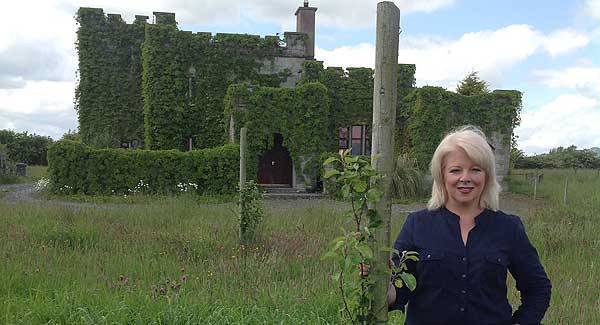
It’s also staggeringly small compared to consumption of organic fruit in Ireland. Indeed a tiny handful of growers, such as Rod and Julie Colder-Potts’ Highbank apple farm in Kilkenny, actually make up a significant percentage of this figure. As well as being one of the driving forces in what has been termed the ‘counter revolution’ – the move to set up community co-op shops in small rural towns around Ireland — Maeve O Hair is also a newcomer to organic fruit in Ireland. I visited her smallholding in mid Tipperary.

Oliver Moore: Tell me about this place Maeve.

Maeve O heir: We’re in Loughmore, and I’ve 20 acres here, it’s all certified organic. Eight is in forestry, and I take hay off the land, for local organic farmers, every year. Then there are the 206 old Irish apple trees.

OM: These days it’s unusual to have apples yet alone organic apples. Why did you plant the orchard?

MOH: I’ve always loved the idea, I really wanted to promote old Irish apples, there was a time many people had them in their back yards. A lot were knocked down through the years. So it’s a way to promote them. I’ve a small, stockless holding here and I’m very busy with the Loughmore cafe and tearooms. But I wanted to do something productive with the land, rather than growing something that wouldn’t yield anything. I’d read about AEOS and joined in 2010. One of the options for a grant was under the orchards programme. I’d already been thinking about apples anyway, so this was a great bonus. I also went for the wild bird habitat option, on 2.5 acres, near the woods.

OM: How was the process of establishing the orchard?

MOH: I put the orchard in myself. I bought the trees from Future Forests near Bantry. I initially tried the Irish Seed Savers but they didn’t have the exact ones I’d wanted. There were a few other orchards going up as part of AEOS so lots of the old varieties were in demand. The rootstock is MM106. It’s considered a hardy stock, for hardier windier areas. The trees are grafted on, and will grow to about 17 to 18 feet. We’ll have the first fruits in two years or so. It’s very windy here, which helps with reducing disease susceptibility. All the trees survived the awful storms which is fantastic. They were well staked, with 8 foot stakes, and expandable ties. The storms destroying a shed but not the trees.

OM: What varieties did you go for?

MOH: There are eight here in total. I was interested in sourcing trees which were originally from this area, but that was difficult as there was a lot of demand at the time. So for example I couldn’t get the Lady Finger of Offaly. What I do have is Kilkenny Pearmain, Loughtree of Wexford, Dick Davis, Scarlet Crofton, Kerry Pippins, Gibbons Russet, Ballyvaughan, and Ard Cairn Russet.

OM: So you’ve a mixture of eaters, cookers and cider apples?

MOH: Yes, I want to keep my options open. With the Loughmore cafe and tearooms, there’s an outlet – and community owned shops will, I think, become more prominent in the years ahead. Some of the varieties I have here can be both for cider and eating. I love the idea of making my own cider. When I was in the UK recently, with the Plunket Foundation, looking at the co-op shops over there, there were so many local juices and ciders available. We don’t have that tradition here. Hopefully it will start to come soon.

More in this section

Farming

Newsletter

Keep up-to-date with all the latest developments in Farming with our weekly newsletter.

Cookie Policy Privacy Policy Brand Safety FAQ Help Contact Us Terms and Conditions

© Examiner Echo Group Limited