Kiwi dairy insights at top Waterford farm
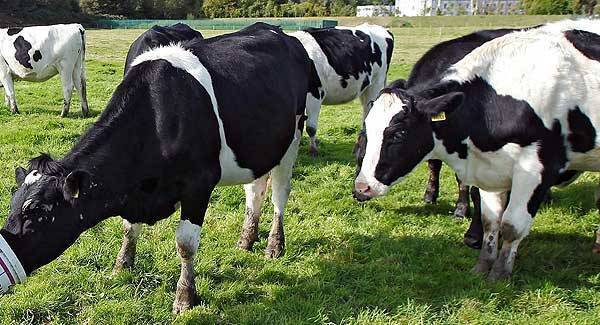
Pat and Pauline Ryan, in partnership with John Condon, milk the 350 predominantly KiwiCross cows.
Pat started in a partnership in 2006 with John Condon from Tallow, whereby both milk quotas were milked on Pat’s farm, and young stock are reared on John’s farm. John sold his stock in the spring of 2006 and bought a proportion of Pat’s herd.
The heifer calves leave to go to John’s farm at two weeks old and return about a month before calving.
The farm is described as a medium-cost, medium to high output system. It produces 1,300 kg of milk solids (MS) per ha on the home block, and 1150 kg of MS per hectare when the support block is included, from what is a younger than optimum aged herd.
Pat says, “It is in our DNA to like good dairy stock that look well, even at the expense of a small amount of profit. Ten years ago we had the top EBI herd in the country with a predominantly Holstein-NZ Friesian herd.”
They are still in the top 10 EBI herds in the country, with an EBI of 209 (76 for milk and 95 for fertility) but are 12-14 EBI points below the top herds.
“Our aim is to have a herd of cows with an average mature weight of 500kg with the capacity to produce 1kg of MS per kg of live weight, stocked at 3.25 cows per hectare on the milking block, getting 600 kg of supplement per head.”
“This cow will milk 5,500 litres at 4.9% fat and 3.9% protein.
“She will need to peak at 25 litres per day and have a good lactation curve. This herd would have an average empty rate of 5% after a 13-week breeding season.”
Pat’s plan is to use KiwiCross bulls on his crossbred cows to maintain hybrid vigour at 45%, and continuously drive genetic gain. Pat used a mixture of genomic and proven bulls this year, such as PSQ, HOW, KZA, OKA, YMD, ZSP.
Traits of Pat’s ideal cow include weight of about 500 kg; good body capacity; good fertility characteristics; good functional type traits such as udder, legs and feet, chest and rump width; ability to graze grass 300 days a year; and good temperament characteristics.
Last year, cows produced 5,000 litres at 4.7% fat and 3.8% protein, or 430 kg of MS/cow from grazed grass, 500kg of meal, and 400kg (dry matter) of beet.
Milk solids per cow as a percentage of live weight is 83%. Pat has a target to produce 1kg of MS/kg of live weight.
The herd’s six-week in-calf rate for 2013 was 74%; achieving the industry target of 78% is the aim for 2014. This will give extra days in milk worth over €4,500 to the business, at a conservative milk price.
The empty rate for 2013 was 5%; it is targeted to improve this by at least 1%.
To assist in driving this improvement on the three milking platforms and for young stock rearing, the farm has taken the six-week challenge with LIC Dairy Consultant Linda O’Neill.
The farm is part of the Captal Farm partnership which includes two other milking platforms and heifer rearing farms.
Excellent fertility performance at the Cappagh, Dungarvan farm over the last number of years has generated large numbers of surplus stock that were used to establish other farm partnerships, and grow the business to where it is today.
At the time of the May 2 open day, the herd was averaging 24 litres at 4.6% fat and 3.7% protein, giving 2.04kg of milk solids per cow. Cows were getting 1.25kg of meal, the average farm cover was 566kg of dry matter per hectare, or 177kg per cow. Pastures were being dusted with Cal-mag.