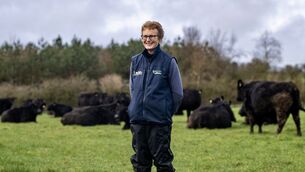
2013 silage costs almost doubled on suckler farms

A few fascinating figures emerged from this week’s Teagasc National Farm Survey for 2013.
2013 silage costs almost doubled on suckler farms

Most remarkable was the 92% increase in bulky feed costs on the 16,500 “Cattle Rearing” farms.

In other words, the cost of silage almost doubled on suckler farms. That was the fodder crisis effect, which contributed to a 14% rose in costs on suckler farms.

However, bulky feed expenditure increased by only 51% on dairy farms.

And total production costs declined by 1% on the 24,800 “Cattle Other” farms, so cattle fattening farms did not have a very costly year.

The detail of this comparison is that direct costs increased 17% on suckler farms and overhead costs increased 12%.

On fattening farms, direct costs increased 7%, overhead costs fell 9%. On the 15,500 specialist dairy farms, direct costs increased 16%, overhead costs increased 5%.

The late spring in 2013 affected early season grass growth.

So dairy, cattle and sheep farmers had to use much more feed, despite the high feed prices of 2013, and they incurred a large increase in fertiliser use to try to restore grass production later in the year.

Expenditure on concentrate feed was up 23% and bulky feed up 55% on average, on grassland farms.

Overall production costs increased by 6%.

On 12,650 sheep farms, direct costs increased 14%, overhead costs didn’t change.

On 6,650 tillage farms, total production costs fell 3%. direct costs increased 14%, overhead costs didn’t change.

Not having to spend money on livestock feed, tillage farmers saw their direct costs fall 4% in 2013, while overhead costs fell 2%.

However, because livestock farming on grassland is so important in Ireland, total production costs on the average Irish farm increased 6% in 2013.

Direct costs increased more, almost entirely due to higher concentrate feed (up 23%) and bulky feed (up 55%) expenditure, plus their increased applications of fertiliser in the second half of 2013, which boosted fertiliser expenditure on 16% compared to 2012.

Income on the average Irish farm ended up just 1% ahead of 2012, at €25,639.

But that average figure was completely lopsided by the 31% income increase on dairy farms.

This almost completely reversed the decline in incomes experienced in 2012, and returned milk income levels close to the historical highs of 2011.

Despite the possibility of repeated bad weather and fodder crises, dairy farming remains well ahead of the field in terms of Irish farming income, and 2013 may have convinced many to ditch their poorly paying enterprises and concentrate on dairying as soon as possible after EU milk quotas are scrapped next April.

Another fascinating figure from this week’s Teagasc National Farm Survey was 70% — for costs as a proportion of Irish farm output. In other words, you must spend 70c to make €1.

It is remarkable that costs as a proportion of Irish farm output has remained stable at about 70% over the years. Since 2005, it has swung from 58% to about 76% in 2009.

This year, it was only the near record sales by dairy farmers that kept the figure down at 70%.

In 2009, there was no fodder crisis to push up costs, but low milk prices ensured that the average Irish farmer had to spend about 76c to make €1.

IFA has rightly drawn the attention of Agriculture Minister Simon Coveney to soaring input costs hitting all farming sectors.

According to IFA President Eddie Downey, the dominant position of large multinational input suppliers is leading to a totally unbalanced bargaining position between them and the farmer, which must be tackled by Governments and regulatory authorities.

Unless something can be done to control costs, farmers are bound to encounter some years where Irish agriculture as a whole encounters the costs of production exceeding 100%.

More in this section

Farming

Newsletter

Keep up-to-date with all the latest developments in Farming with our weekly newsletter.

Cookie Policy Privacy Policy Brand Safety FAQ Help Contact Us Terms and Conditions

© Examiner Echo Group Limited